Four cities have been the capital of Morocco at different points, and the circuit that links them is the country's most-sold itinerary. It is sold so often that it has acquired a standard shape, and the standard shape has a flaw: it usually puts Marrakech first, because that is where the flights are cheap.
Marrakech first is a mistake. Here is why, and what to do instead.
Why the order matters
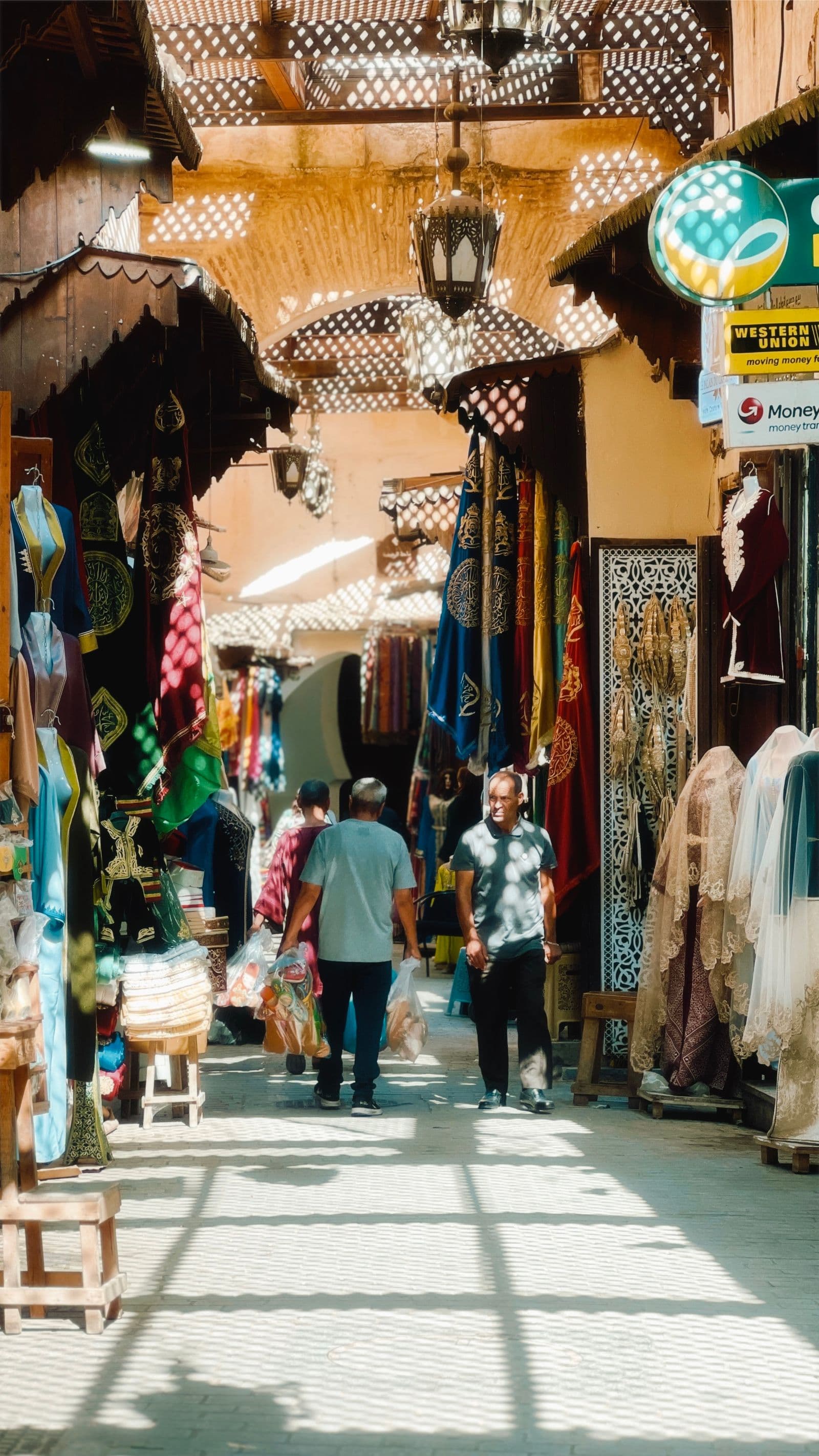
Marrakech is the loudest of the four by a wide margin. Its medina is the most commercially developed, the most practised at visitors, and the most exhausting. Arrive there on day one, jet-lagged, and you will spend two days recovering and form your impression of Moroccan cities from the least representative one.
Fez rewards the opposite treatment. It is older, denser, less performed, and considerably harder to read. Arriving there first, when you still have patience, gives you a baseline. Marrakech afterwards is a pleasure rather than an assault.
If your flights force Marrakech first, give it one day on arrival, leave, and come back to it properly at the end.
The four, briefly
Fez. Founded in the late 8th century, and the intellectual capital for most of Moroccan history. Fes el-Bali is the medieval core — a genuine labyrinth, and the one place in Morocco where a guide for the first half-day is money well spent, not because you will get lost but because you will not know what you are looking at. Two to three days.
Meknes. The smallest and most overlooked, and the one most people cut. Moulay Ismail made it his capital in the 17th century and built at a scale that still reads as slightly unhinged — the granaries and stables at Heri es-Souani were built for twelve thousand horses. Half a day to a full day.
Volubilis. Not a city on the list, but 33 kilometres from Meknes and the best Roman site in Morocco. Mosaics still in the floors, in the open, on a hillside. Half a day, easily combined with Meknes.
Rabat. The current capital, on the Atlantic, and the calmest of the four. The Kasbah of the Udayas, the Chellah necropolis, and the unfinished Hassan Tower. It also feels like a city people simply live in, which after Fez is restful. One to two days.
Marrakech. The southern capital, the Almoravid one, and the gateway to everything in this journal's mountain and desert sections. Two to three days.
Getting between them
Rabat, Meknes and Fez are on the train line, and the trains are good — clean, punctual, cheap. Rabat to Fez is about 210 kilometres and takes under three hours. There is no reason to drive this stretch.
Marrakech connects by train too, via Casablanca — roughly two and a half hours to Casa, then onward. Marrakech to Rabat is around 320 kilometres.
You do not need a car for this circuit. You need a car only if you want Volubilis without a taxi, or if you intend to detour into the Middle Atlas between Meknes and Fez — which, if you have the day, is worth it for the cedar forest and the change of air.
How long, realistically
Seven days is the honest minimum for all four, and it will feel brisk. Ten days lets you add Volubilis properly, a Middle Atlas night, and one unstructured day in Fez, which is the day most people say afterwards was the best one.
Five days means dropping something. Drop Rabat — it is the least essential of the four for a first visit, and it is the easiest to add on a later trip since it is on the way in from Casablanca.
What the circuit is not
It is not a way of seeing the Atlas or the Sahara. Those are separate journeys south from Marrakech, and trying to bolt three desert days onto an imperial-cities week produces a trip where you spend most of your waking hours in a vehicle. Choose one, do it properly, and come back.