Wellness tourism arrived in Morocco about a decade ago and it now sells something the country has always had for free. Retreats advertise "profound desert silence" at €2,000 a week. The silence is real. It is also lying around unbooked, roughly four hours from Marrakech, available to anyone who walks far enough from the generator.
This is not an argument against retreats — a well-run one gives you structure, teaching and other people, and those are worth paying for. It is an argument for knowing what you are buying, and for knowing that a contemplative trip to Morocco can be assembled yourself.
What Saharan silence is actually like
Most people have never experienced true acoustic silence. In a European or American "quiet" place there is always something: traffic two valleys over, an aircraft, a refrigerator, wind through leaves.
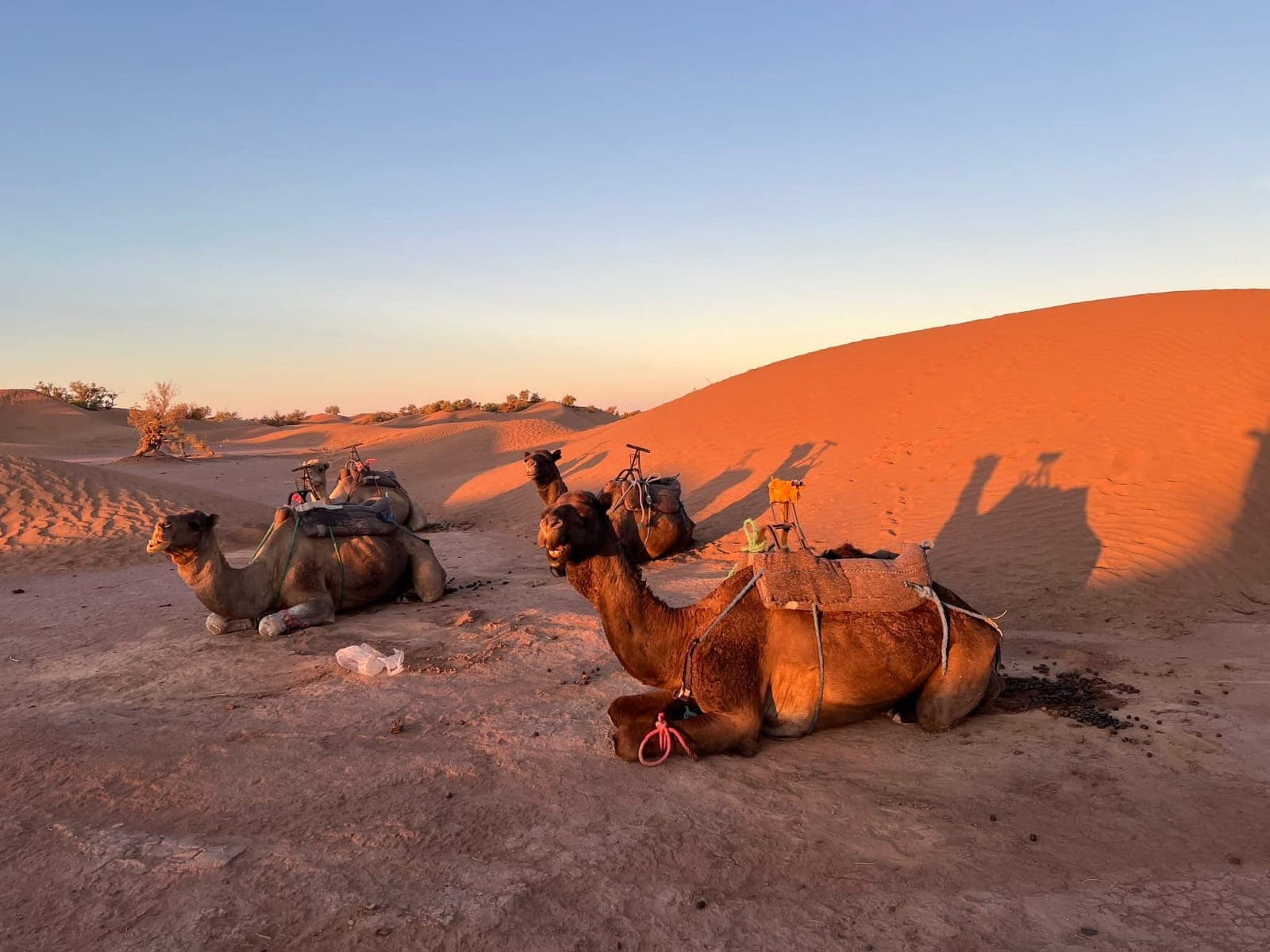
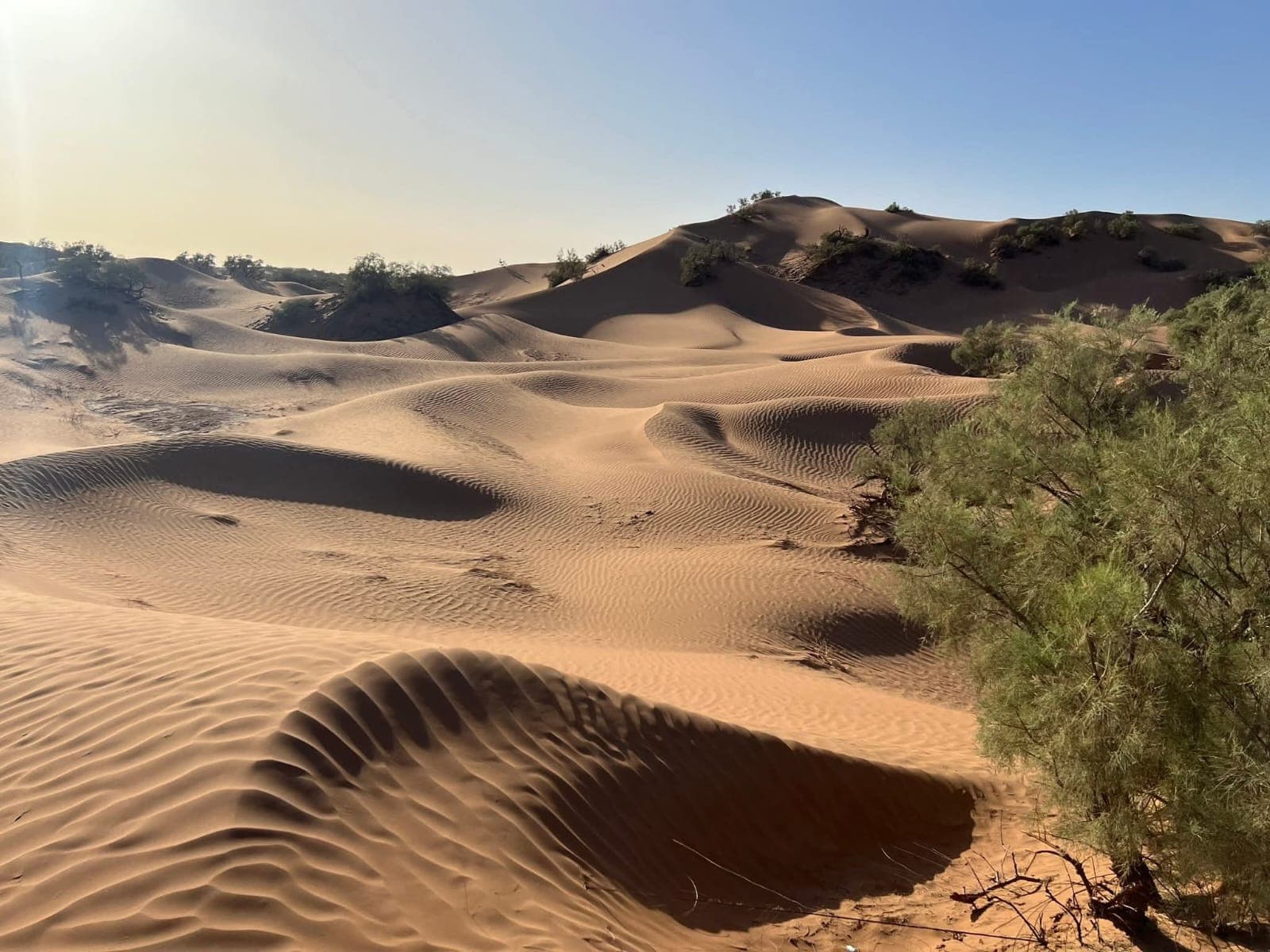
The erg has none of it. There is no vegetation to move, no water, no insects to speak of, no infrastructure. On a still night in Erg Chigaga you can hear your own pulse, and most people find this disconcerting for about twenty minutes before it becomes the thing they remember for years.
The practical conditions for it:
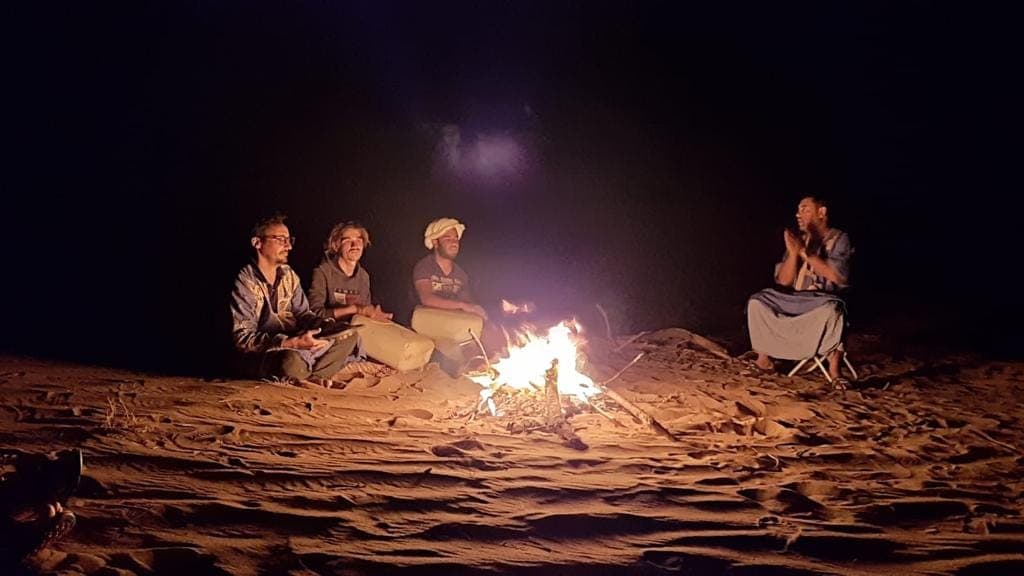
- Get away from the camp. Even a quiet bivouac has a generator, a kitchen and drumming after dinner. Walk ten minutes over the first dune ridge and it stops.
- Go in the still hours. Wind usually rises in the afternoon and drops after dark. Between about 9pm and dawn is when the desert is genuinely silent.
- Choose Chigaga over Chebbi if silence is the point. Erg Chebbi at Merzouga has tarmac to the sand and a great many camps; Chigaga is two hours of off-road from M'hamid and the difference is audible.
The three landscapes, and what each one does
The desert: emptiness
Nothing to look at, which is precisely the value. There is no view to consume, no sight to tick off, and after a day the mind stops looking for one. Desert traditions across every religion converge on this and they are not being poetic — the sensory deprivation is real and it does something.
Best for: people who want the radical version. Two nights minimum; one night is not enough to get past the novelty.
The High Atlas: altitude and rhythm
A different mechanism. Not emptiness but repetition — six hours a day of walking at a pace set by a mule, with no decisions to make and no phone signal to make them on. Multi-day trekking is contemplative in the way that long walking always is, and the Atlas adds thin air and cold nights.
Mountain gîtes are simple, unheated and lit by a single bulb. Evenings end early because there is nothing else to do.
Best for: people who meditate better while moving than while sitting.
The Atlantic coast: wind and routine
Essaouira and the coast south of it have the most established yoga scene in the country, largely because the climate is temperate year-round and the town is small enough to walk. The Atlantic wind is constant and loud, which some people find clarifying and others find the opposite.
Best for: a week-long practice-based stay with infrastructure — studios, teachers, vegetarian food, other practitioners.
The hammam, properly understood
The hammam is the one Moroccan wellness institution that is genuinely ancient and genuinely still in daily use. It is a public steam bath, organised around three rooms of increasing heat, and it has been a neighbourhood fixture since the medieval period.
There are two versions and they are not the same experience.
The neighbourhood hammam costs 15–50 dirham. You bring your own black soap (savon beldi), a kessa glove, and a mat. It is communal, single-sex, loud, sociable, and absolutely not a spa. Someone will scrub you if you pay them another 50 dirham and it will not be gentle. This is the real thing, and it is a social institution as much as a hygienic one — historically the place where marriages were arranged and news was exchanged.
The riad or spa hammam costs 300–800 dirham, is private or small-group, and is a treatment: steam, black soap, gommage, rhassoul clay, argan oil massage. It is genuinely lovely and it is a modern product built on an old form.
Do the neighbourhood one at least once. It is the more interesting hour.
Sufi practice, and the honest limits
Morocco has a deep living Sufi tradition — the zawiya brotherhoods, the hadra ceremonies, Gnawa music with its roots in sub-Saharan trance ritual. Retreats increasingly advertise "Sufi whirling" as a wellness activity.
Be clear-eyed about this. Sufism here is a religious practice within Islam, not a technique available for purchase. Gnawa lila ceremonies are healing rituals with real spiritual content for the people conducting them.
You can absolutely encounter this respectfully. Gnawa music is performed publicly and brilliantly — the Essaouira Gnaoua festival in June is one of the great music events in Africa. Some brotherhoods welcome visitors to public ceremonies. But a half-hour whirling workshop in a hotel is a performance, and it is worth calling it that rather than mistaking it for initiation.
Building a contemplative trip without a package
A version we have arranged more than once, and it costs a fraction of a retreat:
Days 1–2: Marrakech. One neighbourhood hammam. Ben Youssef Madrasa early, before anyone else — an empty courtyard of that quality is its own kind of meditation.
Days 3–5: The Atlas. Trek from Imlil or the Aït Bougmez valley, two nights in gîtes, walking six hours a day. No signal above the valley.
Days 6–8: The desert. Drive to M'hamid, 4×4 to Erg Chigaga, two nights. Walk out alone after dinner both nights.
Day 9: Back, slowly, via the Draa palm groves.
No teacher, no schedule, no fee beyond the trip itself. If you want instruction, add it; if you want silence, this is where it is.
Practical notes
Ramadan is the most contemplative month in the country and travelling during it puts you inside a nationwide practice of restraint. Non-Muslims are not expected to fast, but the rhythm of the day changes completely and the evenings are extraordinary.
Alcohol is largely absent outside licensed venues, which people on a contemplative trip generally find helpful rather than restrictive.
Phone signal disappears above the Atlas valleys and across most of the erg. This is the single most effective wellness intervention available and it is free.
Season matters more than anywhere. The desert is unbearable in July and August; the mountains are impassable in deep winter. October–April for the Sahara, May–September for the Atlas.
The thing worth saying
Morocco does not need to be turned into a wellness destination. It already contains the three ingredients — silence, heat, and a bathing tradition older than most European countries — and they are embedded in ordinary life rather than sold separately.
The best contemplative days we have witnessed were not on retreats. They were a guest who walked out past the dunes after dinner and came back an hour later without saying anything, and a woman who went to the Imlil hammam on a Tuesday afternoon with the village women and described it afterwards as the friendliest hour of her trip.