Moroccan food is one of the great cuisines and the version most visitors eat is a narrow slice of it — tagine, couscous, and a pastilla if the restaurant is feeling ambitious. That is not because the rest is hidden. It is because the tourist restaurant menu has calcified into about six dishes, and nobody tells you what the other forty are.
What is actually worth eating
Tagine, but the specific ones
"Tagine" is a pot, not a dish, and asking for tagine is like asking for casserole. The ones worth ordering by name:
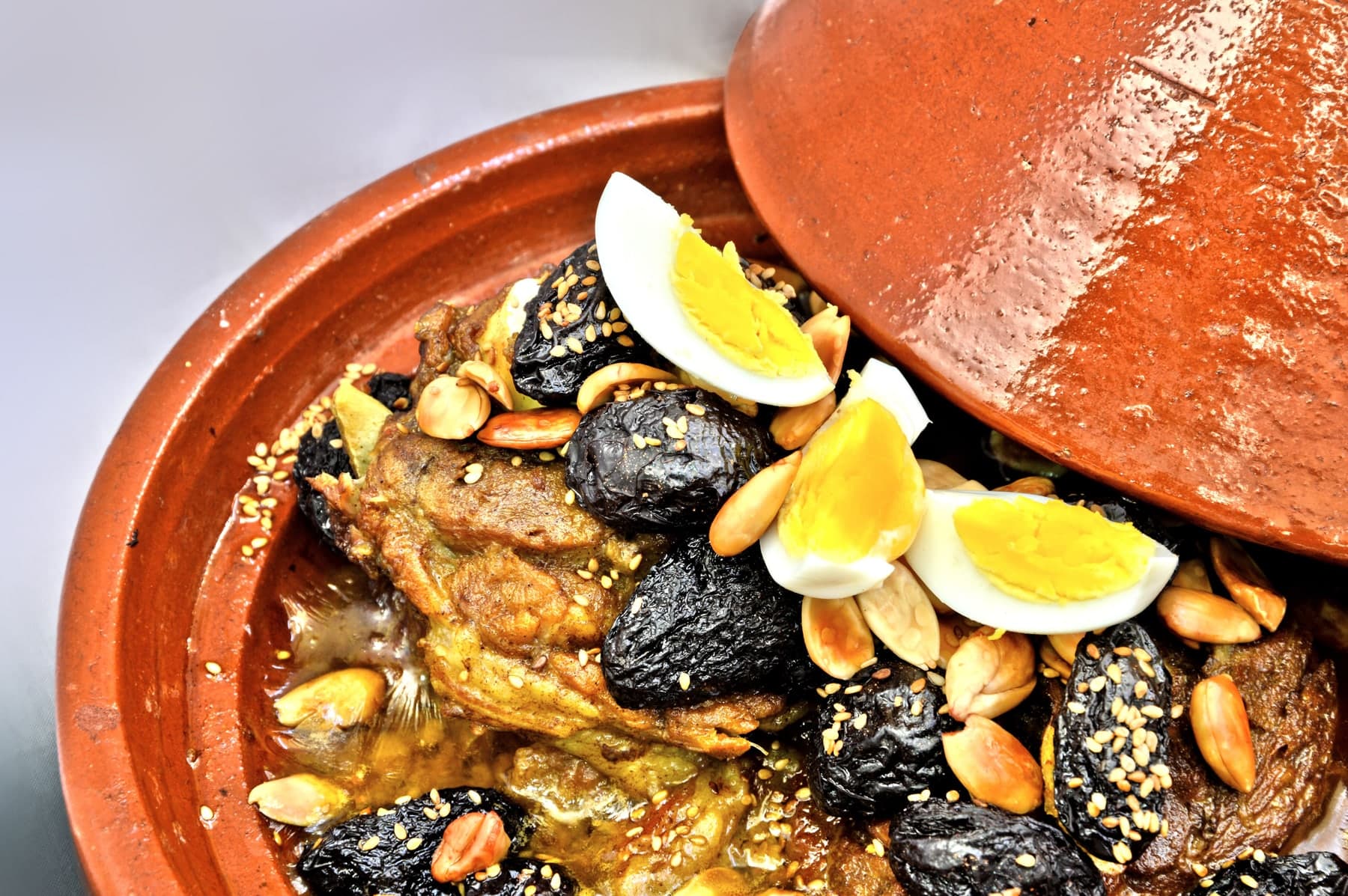
- Lamb with prunes and almonds — the sweet-savoury Fassi classic, and the best argument for Moroccan cooking that exists.
- Kefta with egg — meatballs in tomato and cumin with eggs cracked in at the end. A working-person's dish, cheap, and better than most of what is served in riads.
- Chicken with preserved lemon and olives — the standard, and genuinely good when the lemons are proper beldi ones.
- Tfaya — caramelised onion and raisin, usually with couscous. Underrated.
A tagine takes ninety minutes to two hours to cook properly. If it arrives fifteen minutes after ordering, it was cooked this morning and reheated.
Couscous on Friday
Couscous is a Friday dish. It is what families eat after midday prayer, and it is steamed three times over the broth, not boiled. A restaurant serving couscous on a Tuesday is serving something instant to a tourist expectation.
If you can arrange to eat couscous in a home on a Friday, do. It is a different food to the restaurant version — lighter, with the grain separate, and the vegetables stacked into a dome.
The breakfast nobody orders
Moroccan breakfast is excellent and hotels replace it with croissants. Look for msemen (laminated square flatbread, fried, eaten with honey and butter), baghrir (thousand-hole semolina pancakes, spongy, soak up honey), harcha (semolina griddle cake), and bissara — a thick fava-bean soup with olive oil and cumin, sold from small shops on winter mornings for a few dirham. Bissara is the best cheap food in Morocco.
Street and market food
- Tanjia — the Marrakech dish. Beef or lamb sealed in a clay urn with preserved lemon and smen, cooked for hours in the ashes of the hammam furnace. Traditionally a bachelor's dish. Order it a day ahead.
- Mechoui — whole lamb slow-roasted in a pit oven. The mechoui alley off Jemaa el-Fna sells it by weight, from a hole in the ground, from about noon until it runs out.
- Harira — tomato, lentil and chickpea soup, thickened with flour, eaten to break the fast in Ramadan and available year-round from hole-in-the-wall places.
- Sardines — Morocco is the world's largest sardine exporter. Grilled on the Essaouira dock or stuffed with chermoula, they are superb and cost very little.
- Snail soup (babbouche) — sold in the square from steaming cauldrons, drunk from the bowl with a pin. It is a broth of thyme and liquorice root and it is medicinal as much as culinary. Try it once.
Bread
Bread is central and free with every meal, and in many neighbourhoods it is still taken to a communal wood-fired oven — the ferran — to be baked, each family's loaves marked so they come back to the right house. Bread is also cutlery. Eating with the right hand, using bread to lift from the shared dish, is normal and correct.
What you will be sold
"Berber tagine" or "Berber pizza." The pizza — medfouna — is a real Saharan dish, a stuffed flatbread baked in sand or ash, and it is good in the south where it belongs. Sold on the Marrakech tourist strip, it is a novelty item.
Pastilla with everything. Pigeon bastilla is a genuine and extraordinary dish — layered warqa pastry, spiced poultry, almond, cinnamon and icing sugar. It is also laborious, so most tourist versions use chicken and taste of sugar. Worth ordering in Fez at a serious place; not worth it from a set menu.
The set tourist menu. Salad, tagine, orange with cinnamon, mint tea, fixed price. It is not bad food. It is just the same three dishes in every restaurant on the same street.
Alcohol. Available in licensed restaurants, hotels and some riads, invisible elsewhere. Morocco makes decent wine — look for Guerrouane or Volubilis — but do not expect to find it in the medina.
Mint tea
Green gunpowder tea, a great deal of fresh spearmint, and more sugar than you would choose. Poured from height to aerate it. It is hospitality first and a drink second: you will be offered it in every shop, and accepting does not oblige you to buy anything. Ask for it without sugar if you prefer — it is a normal request, not an insult, and the tea underneath is good.
Practical
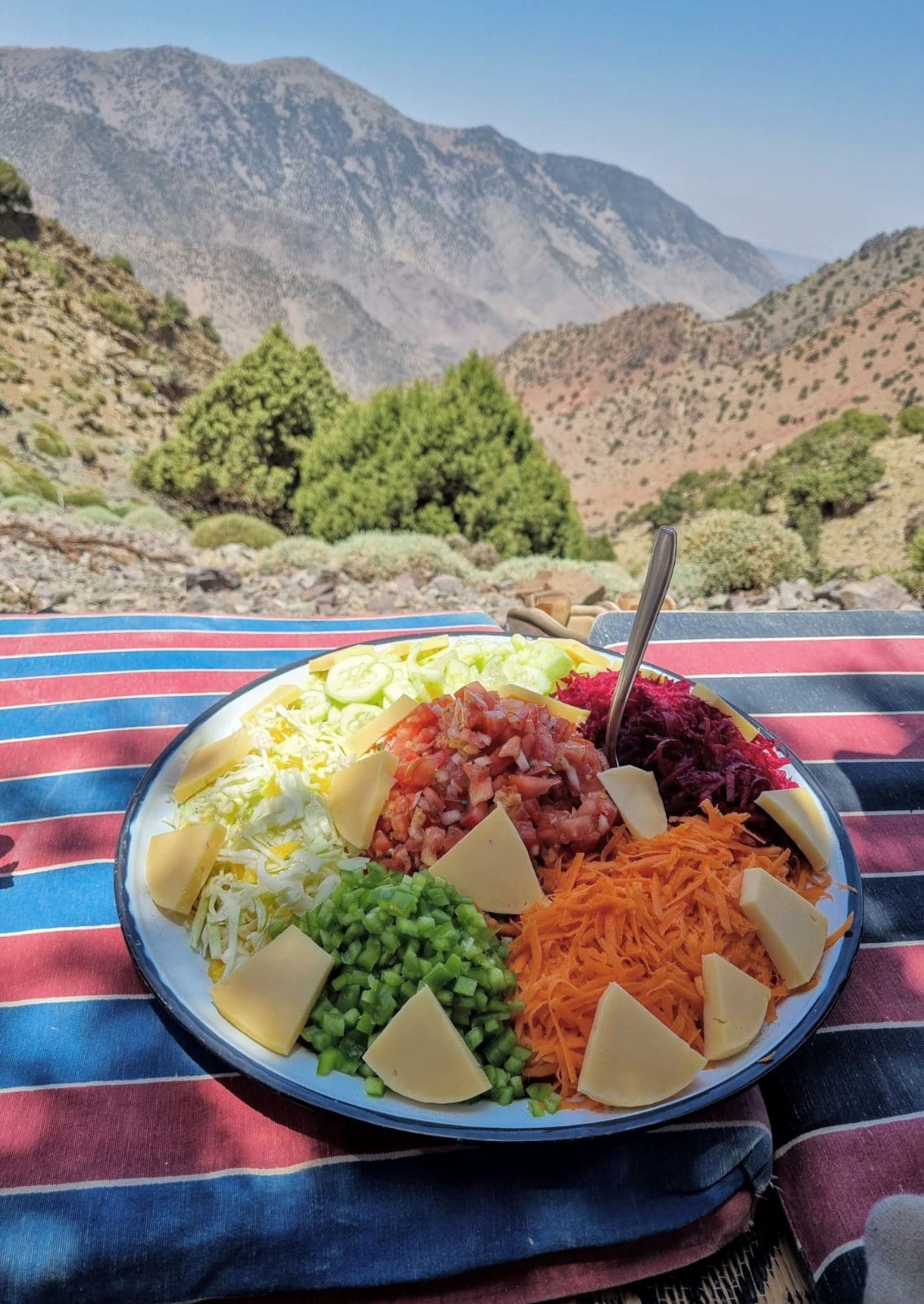
Vegetarians do reasonably well — vegetable tagine, couscous, zaalouk (smoked aubergine), taktouka (pepper and tomato), lentils, bissara — but should check that "vegetable" tagine was not built on a meat broth. Vegans have a harder time outside the cities.
Stomach trouble is usually from salads washed in tap water or from juice with ice, not from the cooked food. Cooked-to-order and hot is the reliable rule; the Jemaa el-Fna stalls that cook in front of you are safer than a buffet.
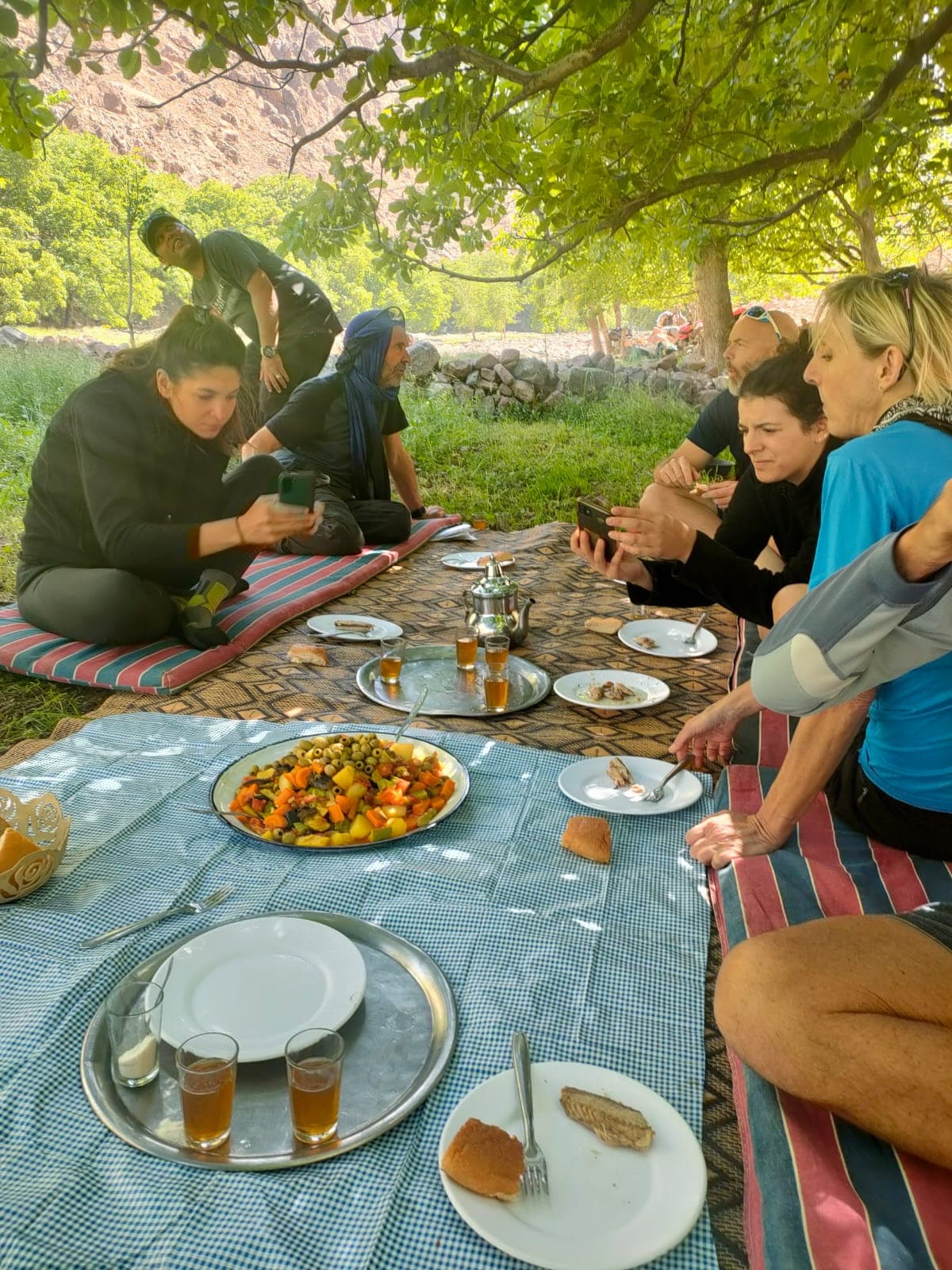
The best meal of your trip will almost certainly be in a house rather than a restaurant — a village lunch on a trek, or a family dinner arranged through a guide. That is not sentiment. It is a structural fact about a cuisine whose best form is domestic and slow, and which restaurants can only approximate.