Seven days is the most common length of trip we are asked to plan, and it is also the length that goes wrong most often. The reason is arithmetic. Morocco's distances are large, its mountain roads are slow, and a week contains fewer usable days than people think — the first and last are usually half-days lost to flights.
So a seven-day itinerary is really a five-day itinerary with travel attached. Plan it that way and it works beautifully. Plan it as seven full days and you will spend your holiday in a vehicle.
The distances nobody checks first
- Marrakech → Aït Ben Haddou: 3.5–4 hours over the Tizi n'Tichka pass
- Aït Ben Haddou → Merzouga: 6–7 hours
- Merzouga → Fez: 7–8 hours
- Merzouga → Marrakech direct: 9–10 hours
- Marrakech → Imlil (Atlas trailhead): 1.5 hours
- Marrakech → Essaouira: 2.5–3 hours
That last-but-one figure is the one that ambushes people. A Marrakech-to-desert round trip is a minimum of three days, and anyone selling you a two-day version is selling you eighteen hours in a car for one hour on a dune.
The itinerary we actually recommend
Day 1 — Arrive, Marrakech
Land, get to the riad, and do nothing ambitious. Walk to Jemaa el-Fna in the early evening when it comes alive, eat, and sleep. Do not schedule anything you would be upset to miss; flight delays are common and the medina is disorienting when you are tired.
Day 2 — Marrakech properly
One full day is enough to see the city well if you are selective. The Saadian Tombs, the Bahia Palace and the Ben Youssef Madrasa are the three that reward the time; the madrasa in particular is the best single room of zellij and carved cedar you will see in a week. Afternoon in the souks. Do not attempt all of it.
Day 3 — Over the Tichka, to the desert road
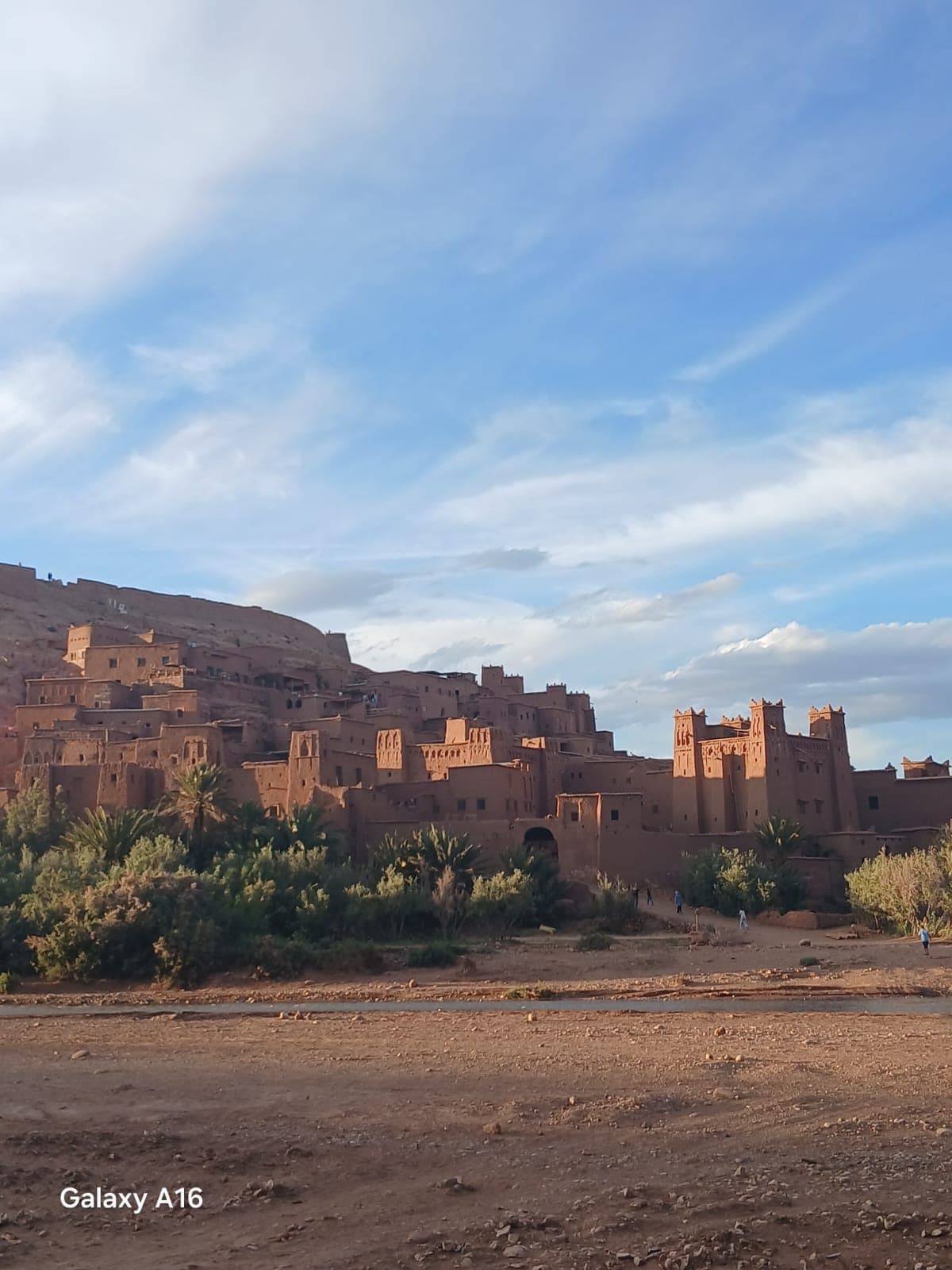
Leave early. The Tizi n'Tichka is a 2,260-metre pass and the drive is one of the best in the country, but it is genuinely winding and takes longer than the map suggests. Stop at Aït Ben Haddou — the ksar is a real Almoravid-era caravan halt, not a film set, though it has been in enough films to feel like one — and continue to Dadès or Skoura for the night.
Day 4 — Into the Sahara
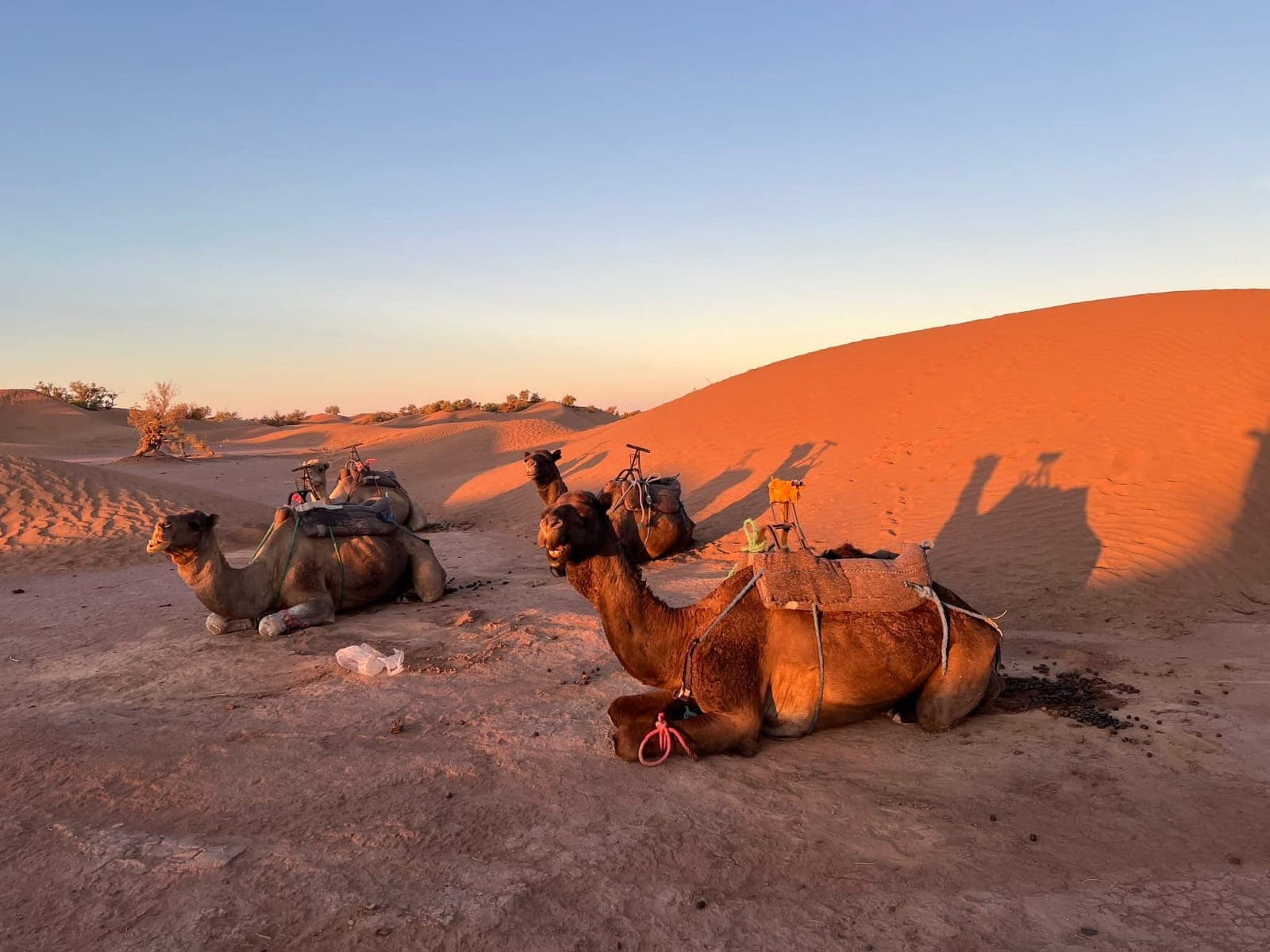
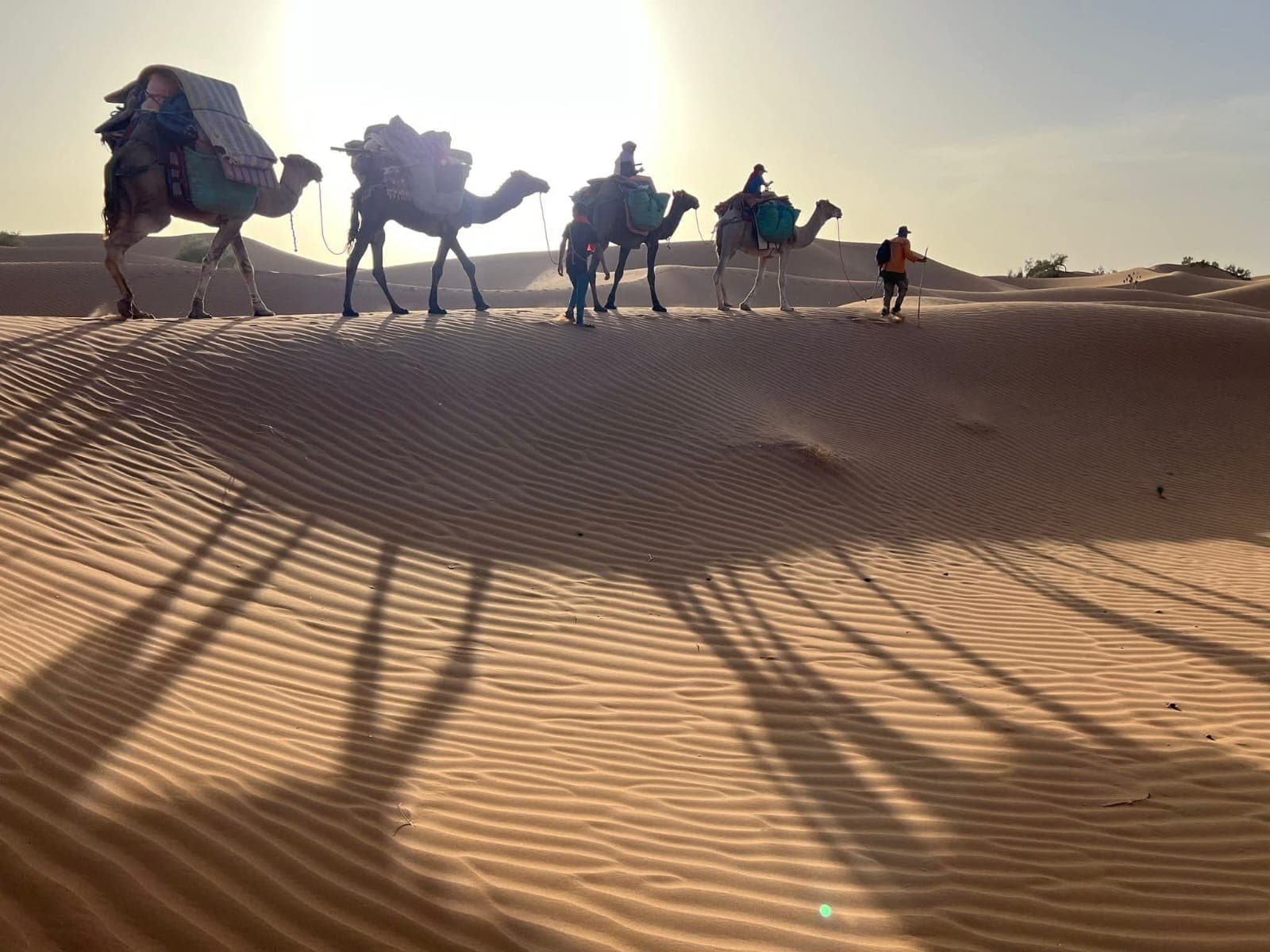
Through the Dadès and Todra gorges, then the long, flattening drive east until the stone hamada gives way to actual dunes at Merzouga. Camel out to the bivouac in late afternoon so you arrive with light. This is the night people remember.
Day 5 — Sunrise, then the long road back
Sunrise on the dunes is worth the early alarm — the light on Erg Chebbi at that hour is a different colour to anything at midday. Then either the long haul back toward Marrakech, breaking at Ouarzazate or the Draa valley, or continue north to Fez if you are on a one-way route.
Day 6 — The Atlas, from the other side
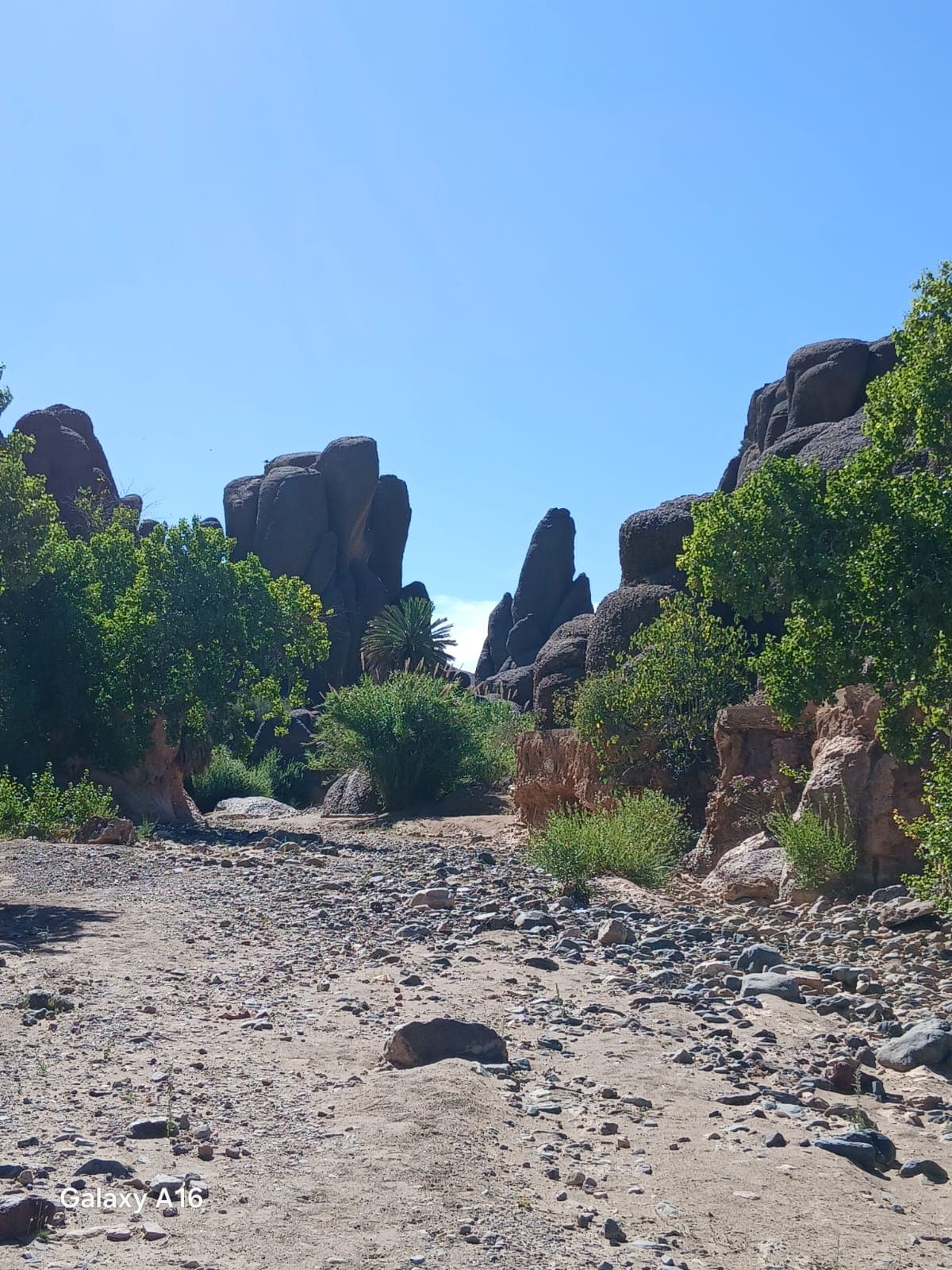
Back in Marrakech's orbit, spend the day in the Imlil valley. It is ninety minutes from the city and puts you in a working Amazigh farming valley with terraces, walnut groves and mule tracks. A half-day walk up toward Aroumd requires no particular fitness and gives you the mountains without another six hours of driving.
Day 7 — Marrakech, then out
Whatever you did not finish on day two. The Majorelle garden if you like gardens and can face the queue, the tanneries and the Mellah if you would rather see the working city.
The three ways people break this
Adding Fez. Fez is superb and it deserves two days of its own. Slotting it into a seven-day loop means either an eight-hour drive or an internal flight plus two airport transfers, and you will have seen neither city properly. Do Fez on the next trip, or drop the desert and do Marrakech–Fez–Chefchaouen instead.
Adding Essaouira. The coast is only three hours away, so it looks free. It is not — it is a full day gone, and it does not combine with the desert in a week. Pick one or the other.
Compressing the desert to two days. Covered above. It is the single most common regret we hear.
If you would rather not drive at all
There is a version of this week that never leaves the Marrakech region: two days in the city, three days trekking in the Atlas from Imlil with a night in a mountain gîte, a day in the Ourika or Ouirgane valley, and a final day back in the medina. Total driving: under six hours for the entire week. It is a quieter trip and, for a lot of people, a better one.
The desert is spectacular and worth the road. But it is worth knowing that the road is the price, and deciding deliberately whether you want to pay it.