Morocco is one of the best trekking countries in the world and almost all of the traffic goes to one mountain. Toubkal takes the overwhelming majority of trekkers because it is the highest, and "highest" is an easy thing to want. It is also, by some distance, not the best walk in the country.
Here are the real options, compared on the things that decide whether you enjoy them.
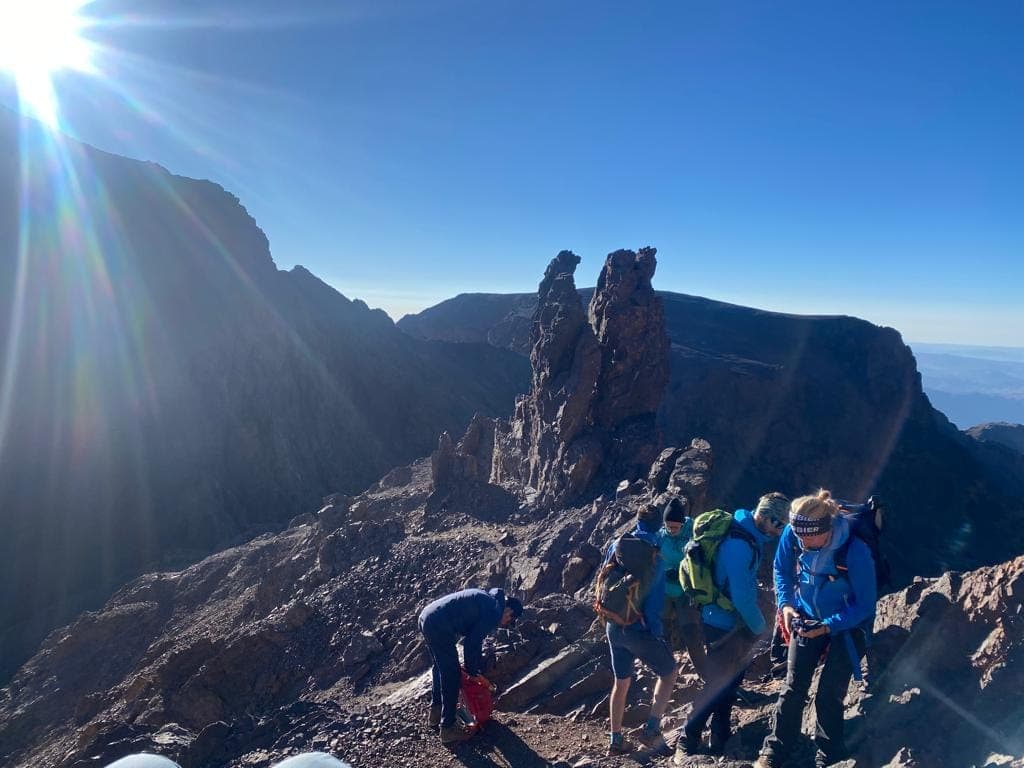
Toubkal — 2 to 3 days, 4,167 m
What it is: the standard ascent from Imlil, a night at the Neltner refuge at 3,207 m, and a pre-dawn summit push up a scree slope to the highest point in North Africa.
Difficulty: no technical skill required between roughly May and October. The difficulty is altitude and scree. The final 900 metres are relentless loose rock at a gradient that punishes anyone who started too fast.
Who it suits: fit walkers who want a summit and have limited days.
The honest caveat: it is busy, the refuge is a dormitory operation, and the scenery on the standard route is grand rather than varied — you are in one valley, then on one slope. The summit view is enormous and the walk to it is monotonous.
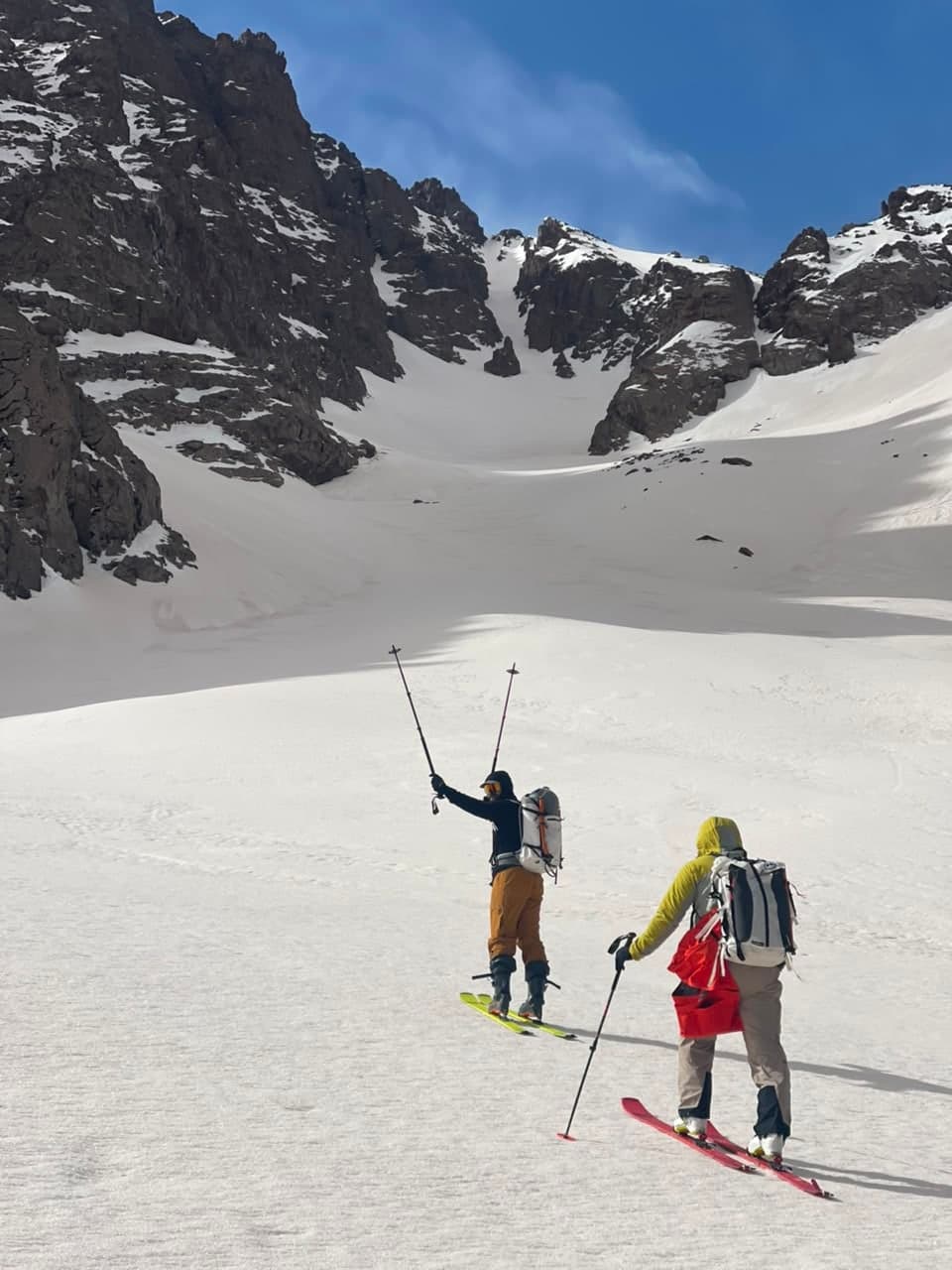
Winter: a genuine mountaineering objective. Crampons and ice axe required from roughly November to April, and the ability to self-arrest. Guided winter ascents are some of the best days in the Moroccan calendar.
The M'Goun Traverse — 5 to 7 days, 4,068 m
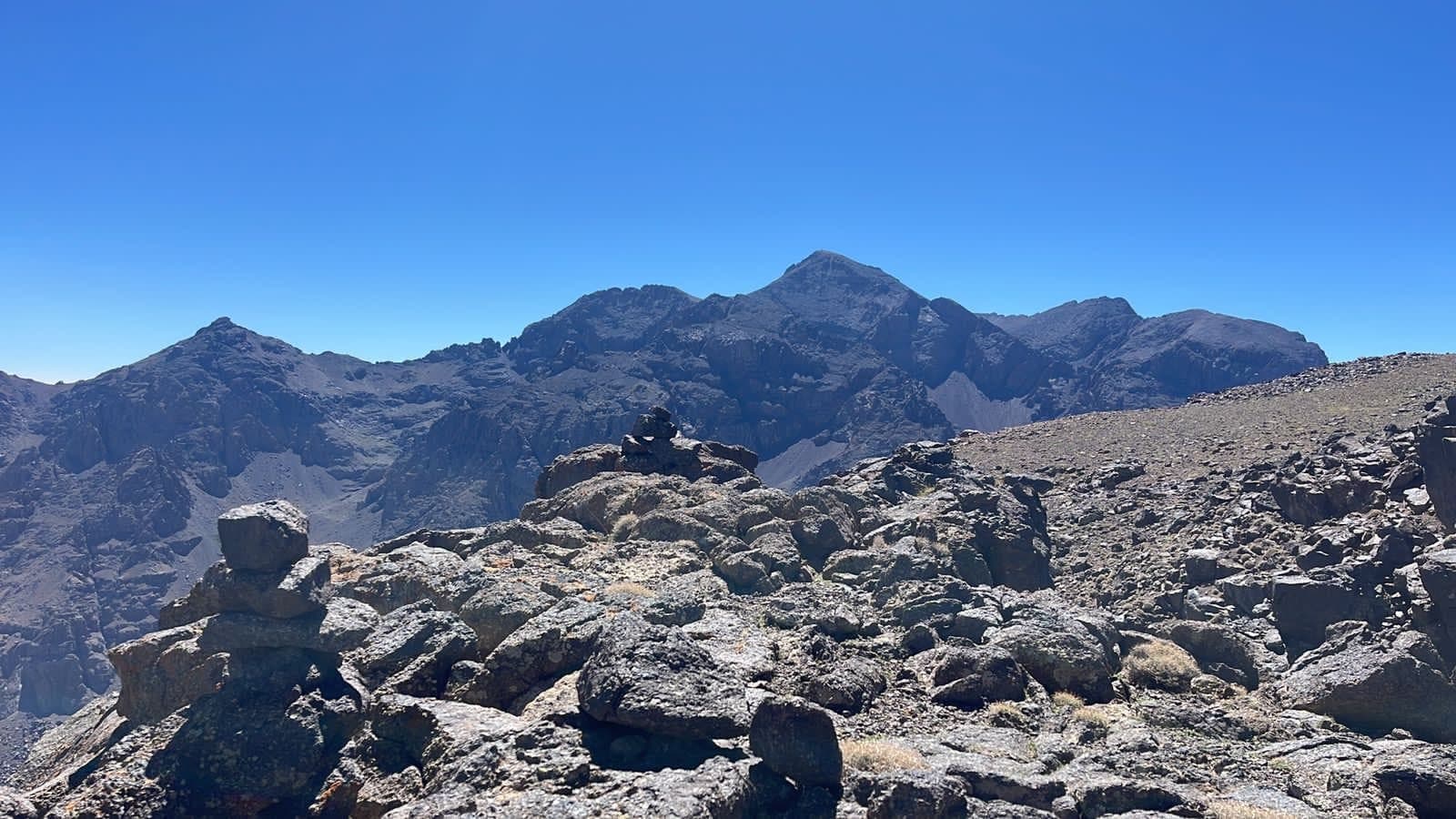
What it is: a full traverse of the M'Goun massif, generally from the Aït Bougmez valley, crossing the Tarkeddit plateau at 2,900 m and following a long limestone ridge to the summit.
Difficulty: more sustained than Toubkal but with no harder single day. It is a walking route with one high crossing, not a scramble.
Who it suits: anyone with five days who wants the better mountain. This is the walk we recommend most and the one fewest people ask for.
Why it is better: it is a traverse rather than an out-and-back, so the landscape changes daily — irrigated valley, then gorge, then the vast plateau, then bare limestone ridge with cirques dropping away to the north. You will meet transhumance shepherds and very few other trekkers.
Jebel Saghro — 4 to 6 days, up to 2,712 m
What it is: a volcanic range between the High Atlas and the Sahara. Black rock towers, table mountains, gorges, and almost no vegetation.
Difficulty: moderate. Low altitude by Moroccan standards, so no acclimatisation concern; the challenge is heat and water.
Who it suits: winter trekkers. This is the crucial point — when the High Atlas is under snow, Saghro is at its best. December to March is its season.
The character: semi-nomadic Aït Atta families still winter here with their herds, moving to the high Atlas pastures in summer. It is the closest thing to walking through a functioning nomadic landscape.
The Anti-Atlas and Jebel Aklim — 3 to 5 days, up to 2,531 m
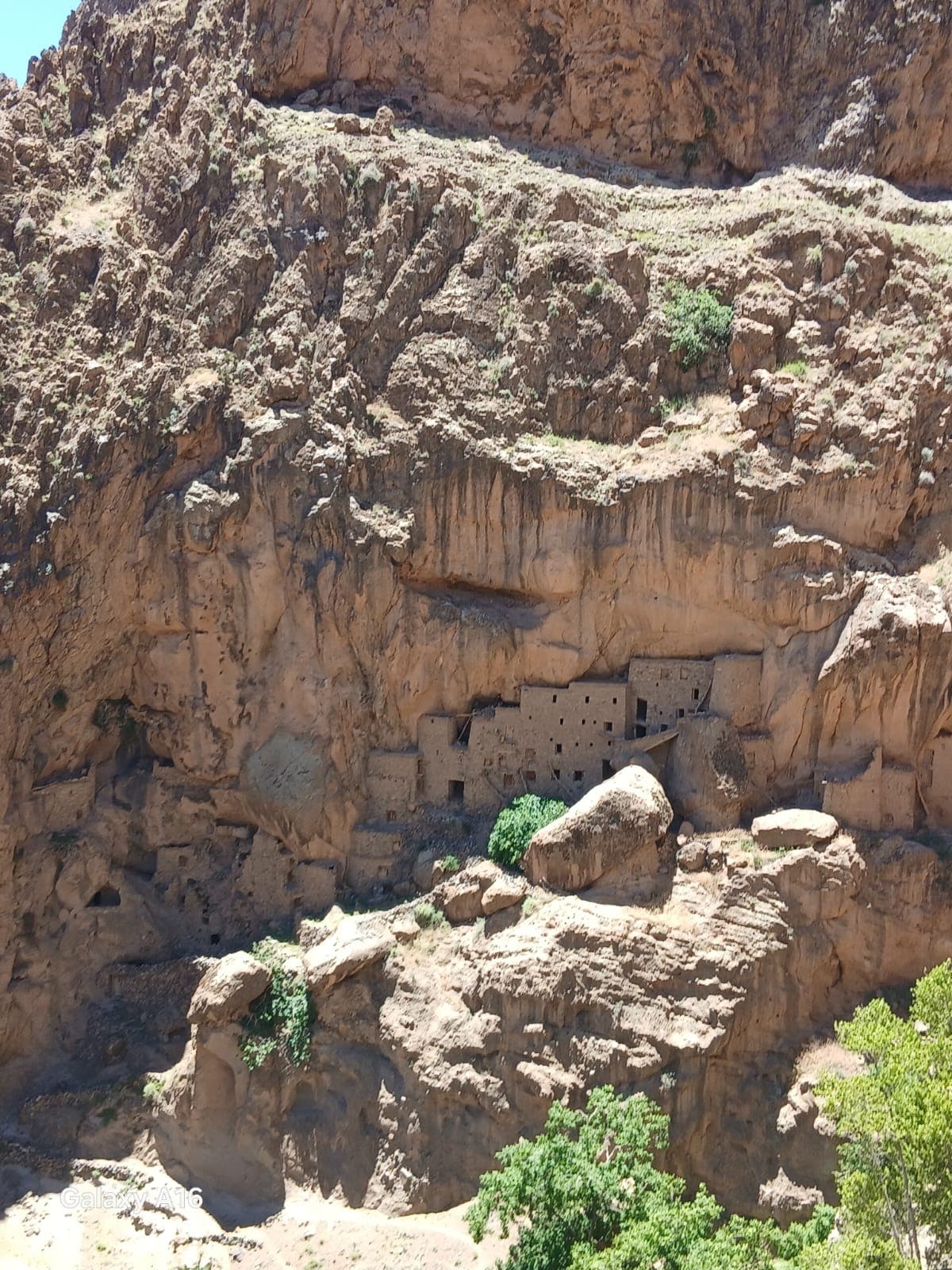
What it is: ancient, eroded granite and quartzite country in the far south around Tafraoute — painted rocks, palm oases, blue-grey villages, and almond groves that blossom in February.
Difficulty: easy to moderate. Villages are close together, so days are short and nights are in houses rather than tents.
Who it suits: people who want culture and landscape more than ascent, and anyone travelling in winter or early spring.
Nomad routes and the Sahara — 3 to 6 days
What it is: walking with a camel caravan across the erg and the stone hamada between M'hamid and Erg Chigaga, sleeping under canvas or open sky.
Difficulty: physically the easiest on this list — flat, low altitude — and mentally the hardest for some. Sand walking is tiring, the days are hot, and there is nothing to look at but the thing you are walking through.
Who it suits: people who want the desert as an experience rather than an overnight photograph.
Season: October to April only. Absolutely not summer.
The Toubkal Circuit — 5 to 7 days
Worth naming separately: rather than the up-and-down ascent, the circuit loops around the massif over several 3,500 m-plus passes, taking in Lac d'Ifni and the Tazaghart plateau, with the summit as an optional day.
If you want Toubkal and variety, this is the answer to the standard route's monotony.
Choosing, quickly
| If you want… | Take |
|---|---|
| The highest point, in 2–3 days | Toubkal standard route |
| The best walk in Morocco | M'Goun traverse |
| To trek in winter | Jebel Saghro |
| Villages and culture over summits | Anti-Atlas |
| The desert on foot | Sahara nomad route |
| Toubkal without the tedium | Toubkal circuit |
What every route requires
A licensed guide — mandatory in the Toubkal park, strongly advisable everywhere else. Atlas paths are unmarked mule tracks, not waymarked trails.
Mules. Standard on all multi-day routes. You walk with a daypack; the mule carries the rest. This is not luxury, it is how the mountains work, and the muleteer is usually the person who knows the ground best.
Broken-in boots. The ground is loose stone almost everywhere.
Acclimatisation for anything over 3,500 m. Two nights above 2,500 m before a summit push prevents most of the altitude problems we see.
Cash. Gîtes, muleteers and village lunches are cash-only.
Seasons, compressed
- High Atlas (Toubkal, M'Goun): June to September for walking; November to April is mountaineering.
- Saghro: October to April. Best in winter.
- Anti-Atlas: October to May. February for almond blossom.
- Sahara: October to April.
There is no month with nothing to walk. There are only months where the obvious choice is the wrong one.