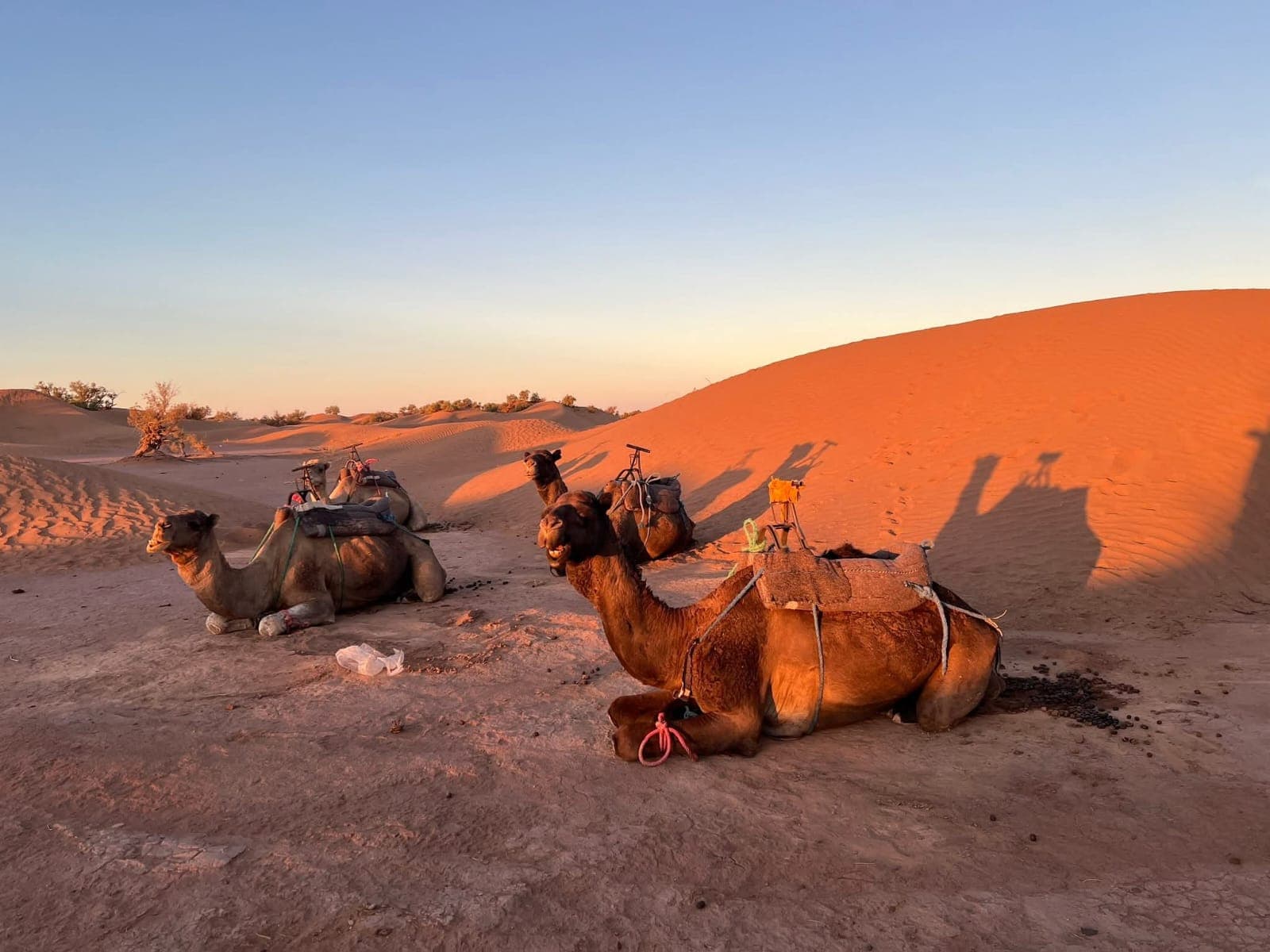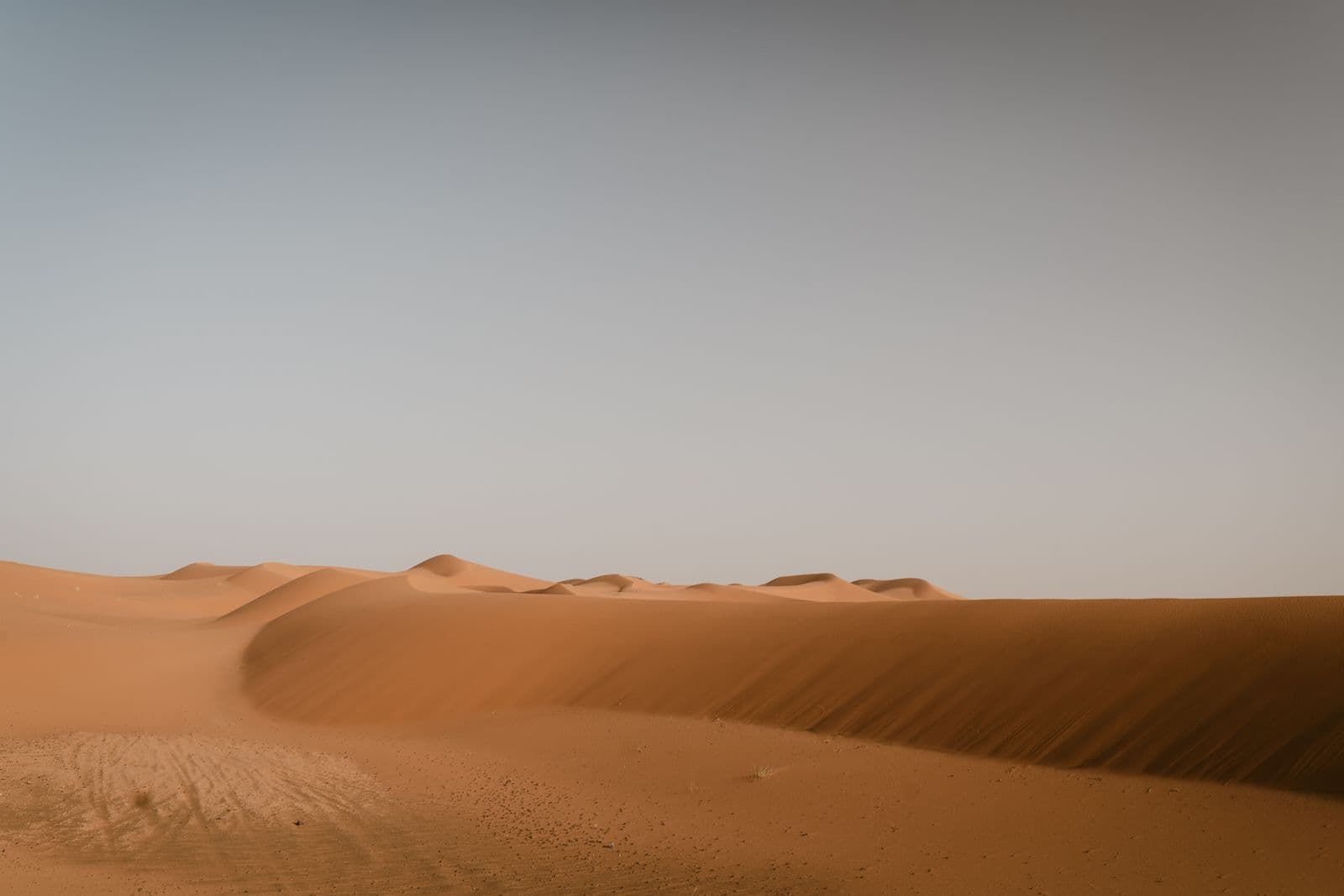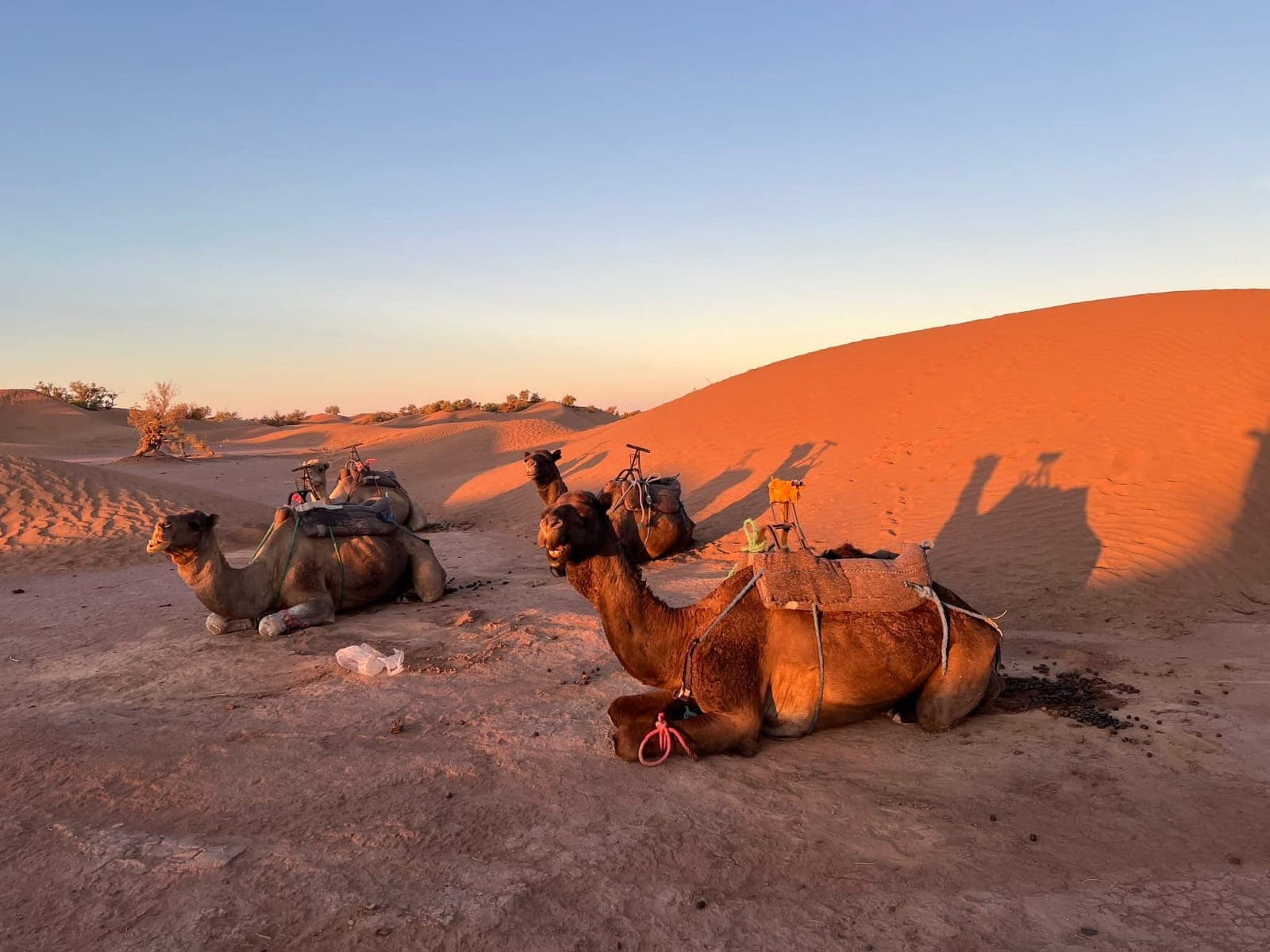
Bivouac is one of those words that survived the translation into tourism with its meaning stretched almost to breaking. In French military usage it meant a temporary camp without proper shelter. In Moroccan desert marketing it now covers everything from a blanket on the sand to a tent with a flushing toilet and a power socket beside the bed.
Both are sold with the same photograph of a camel at sunset. It is worth knowing which one you are getting.
The three kinds
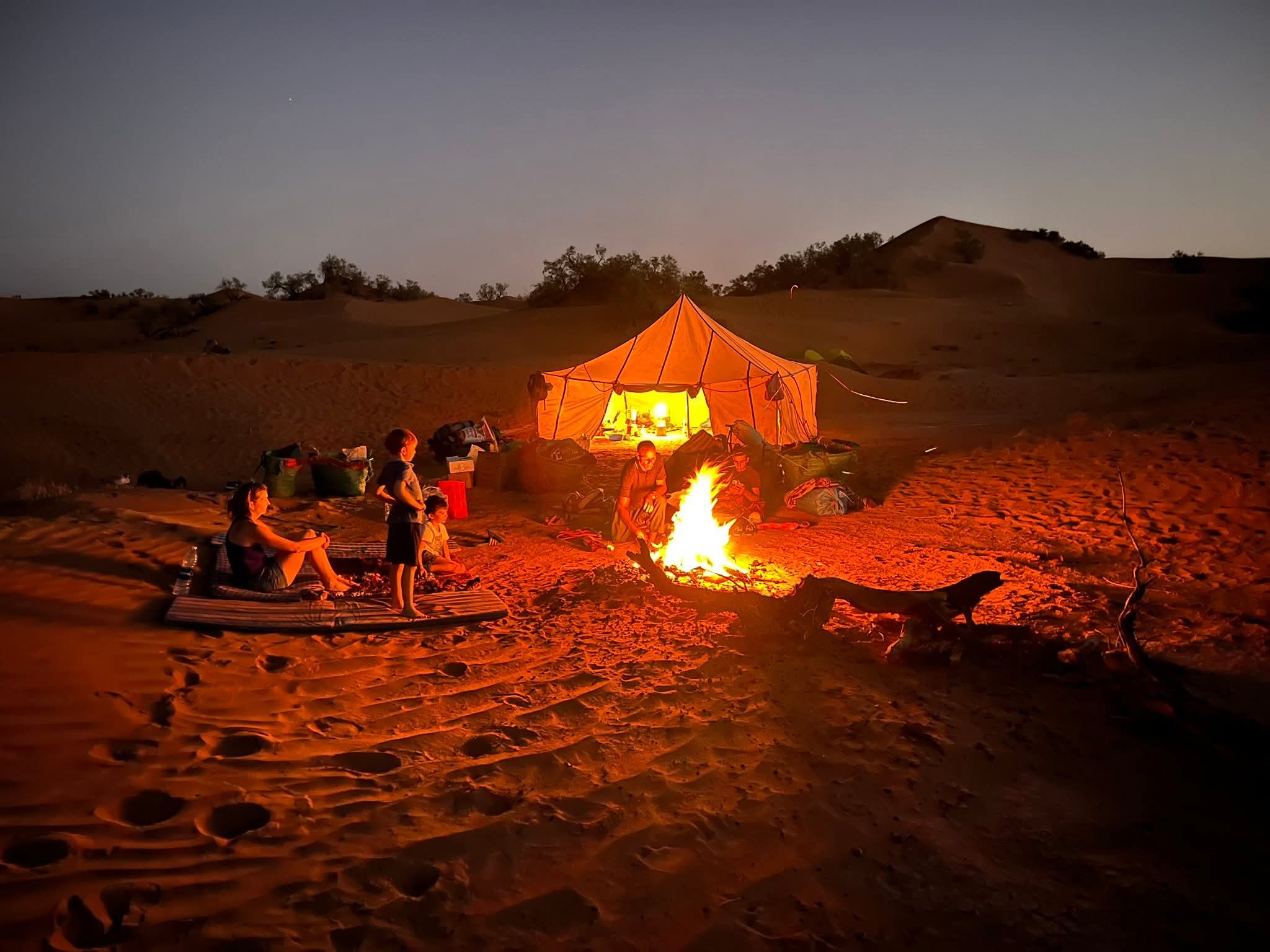
Standard. A cluster of dark wool or canvas tents, mattresses on rugs, shared washing facilities — often a bucket, sometimes a basic block. Dinner is a tagine cooked on site, eaten communally. Blankets are provided. This is the honest middle, and for most people on a one-night desert trip it is the right choice.
Luxury. Larger tents, a real bed, an ensuite with running water and a hot shower, rugs and lanterns and a dining tent. In Erg Chebbi these are genuinely good. They are also, unavoidably, a hotel that happens to be made of fabric — which is fine if that is what you want.
Wild or nomad. No fixed camp at all. You carry what you need, sleep where you stop, and the "facilities" are the horizon. Usually only available as part of a multi-day walking trip. This is the original meaning of the word, and it is a different experience in kind, not degree.
What you actually need to ask
The brochure word tells you nothing. Three questions settle it:
- Is there a private bathroom, a shared block, or neither? This is the single biggest comfort variable and the one most often left vague.
- How many tents are in the camp? Six is intimate. Forty is a village with a generator.
- How far from the road? Ten minutes by camel means you will hear vehicles. An hour means you will not.
The cold, again
Desert nights get cold because sand holds no heat. In December and January it can approach freezing after dark. Standard camps give you heavy blankets and they are usually enough, but a fleece and long trousers turn a night you endure into one you enjoy. In summer the opposite problem: a tent that baked all afternoon stays warm long after you want it to, and many people end up dragging a mattress outside, which is the correct decision.
The part nobody photographs
The generator. Most fixed camps run one, and it usually goes off somewhere between ten and midnight. That is when the camp gets dark and quiet and becomes the thing you came for. If you only stay awake for one hour of the trip, make it that one — the sky after the generator stops is the entire point of sleeping on sand.
Bring a head torch. The walk back to your tent in genuine darkness, across sand, past identical tents, is funnier in the retelling than at the time.