The standard desert trip is a vehicle transfer, an hour on a camel, a night in a fixed camp and a drive back. It works, and for a lot of travellers it is exactly the right amount of desert.
The older version is a walking trip. Several days, a small caravan of camels carrying water and food, a different camp every night wherever you happen to stop. It is still available, mostly in the Drâa valley and out toward Chigaga, and it is a fundamentally different experience.
The pace changes everything
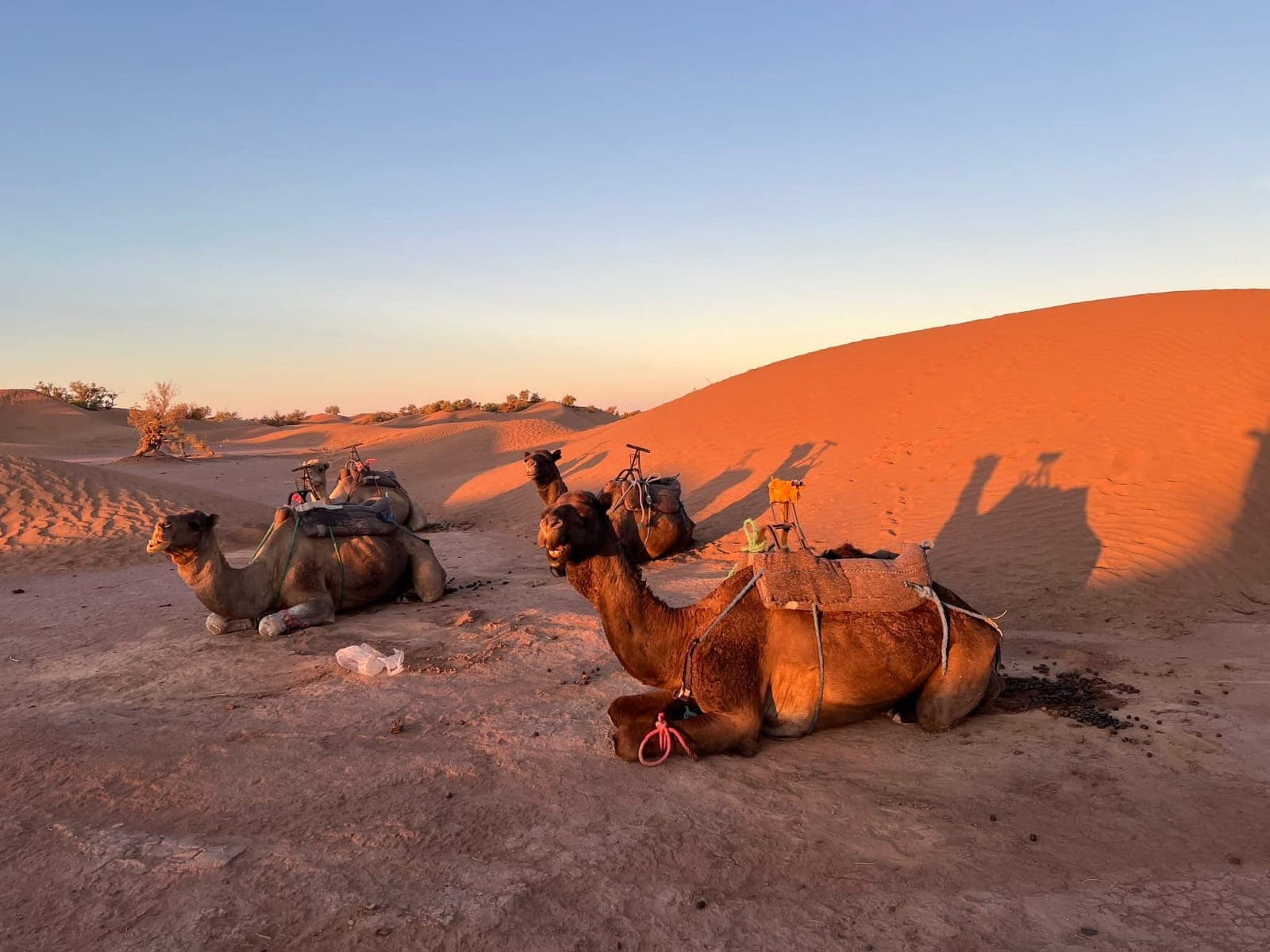
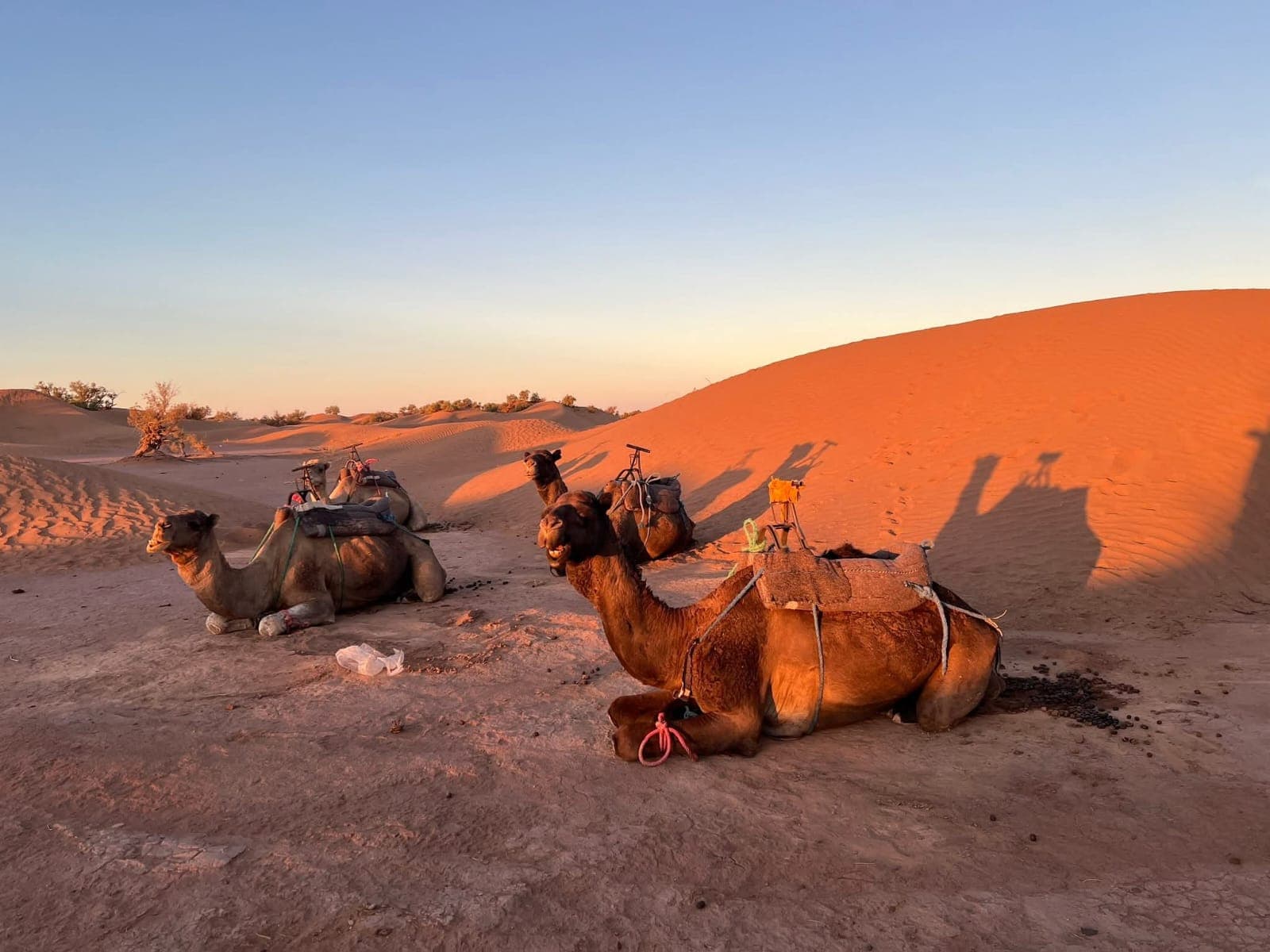
A loaded camel walks at roughly four kilometres an hour and you walk beside it, not on it. Camels carry the load; people ride only occasionally and briefly. A day is five or six hours of walking, split around the middle of the day.
That midday break is the part that surprises people. Between roughly noon and three the caravan stops, unloads, and everyone lies in the shade of a tarpaulin or an acacia. Bread is made, tea is made twice, nobody does anything. It feels like wasted daylight for about two days, and then it starts to feel like the most sensible arrangement you have ever encountered.
What the ground is actually like
Very little of a multi-day desert walk is sand dunes. Most of it is hamada — flat stone desert, dark gravel, occasional scrub — and reg, coarser gravel plain. Dunes are the exception and usually the destination rather than the route.
This disappoints people who booked expecting the postcard. It should not. The hamada is where you see the actual structure of the desert: dry riverbeds that run once a decade, the black stone pavement, the way vegetation tracks water you cannot see. It is also much easier to walk on than sand.
Water and weight
You carry very little. The camels carry water for the group, and water discipline is the organising fact of the trip — how far you go between wells decides the route, and always has.
That is the thing a walking trip teaches that a vehicle trip cannot. The wells and the foggara channels are not scenery; they are the reason any route exists at all. Nomadic movement in the Sahara is not wandering, it is a circuit between known water, timed to grazing.
Who you walk with
The guides on these trips are usually from nomadic or formerly nomadic families, frequently Aït Atta or Sahrawi depending on the region. Many households are now semi-settled — a house in a village, animals moved seasonally — which is the real current state of Moroccan pastoralism rather than the fully mobile version in the brochures.
Ask about it. Most people are happy to talk about how their family's movement has changed within their own lifetime, and it is more interesting than any of the scenery.
Practicalities
Season. October to April. May onwards is too hot to walk safely and no reputable operator runs it.
Length. Three days is enough to feel the shift in pace. Six to eight is where it stops being a trip and starts being how you live.
Fitness. Low bar. Flat ground, moderate distances, long rests. Heat management matters far more than fitness.
Feet. Closed shoes for the hamada — the stone is sharp. Sandals for sand and for camp. Gaiters if you have them, otherwise expect to empty your shoes often.
Washing. There is none, beyond what you do with a bottle. Three days is fine. Eight requires a certain attitude.
The night
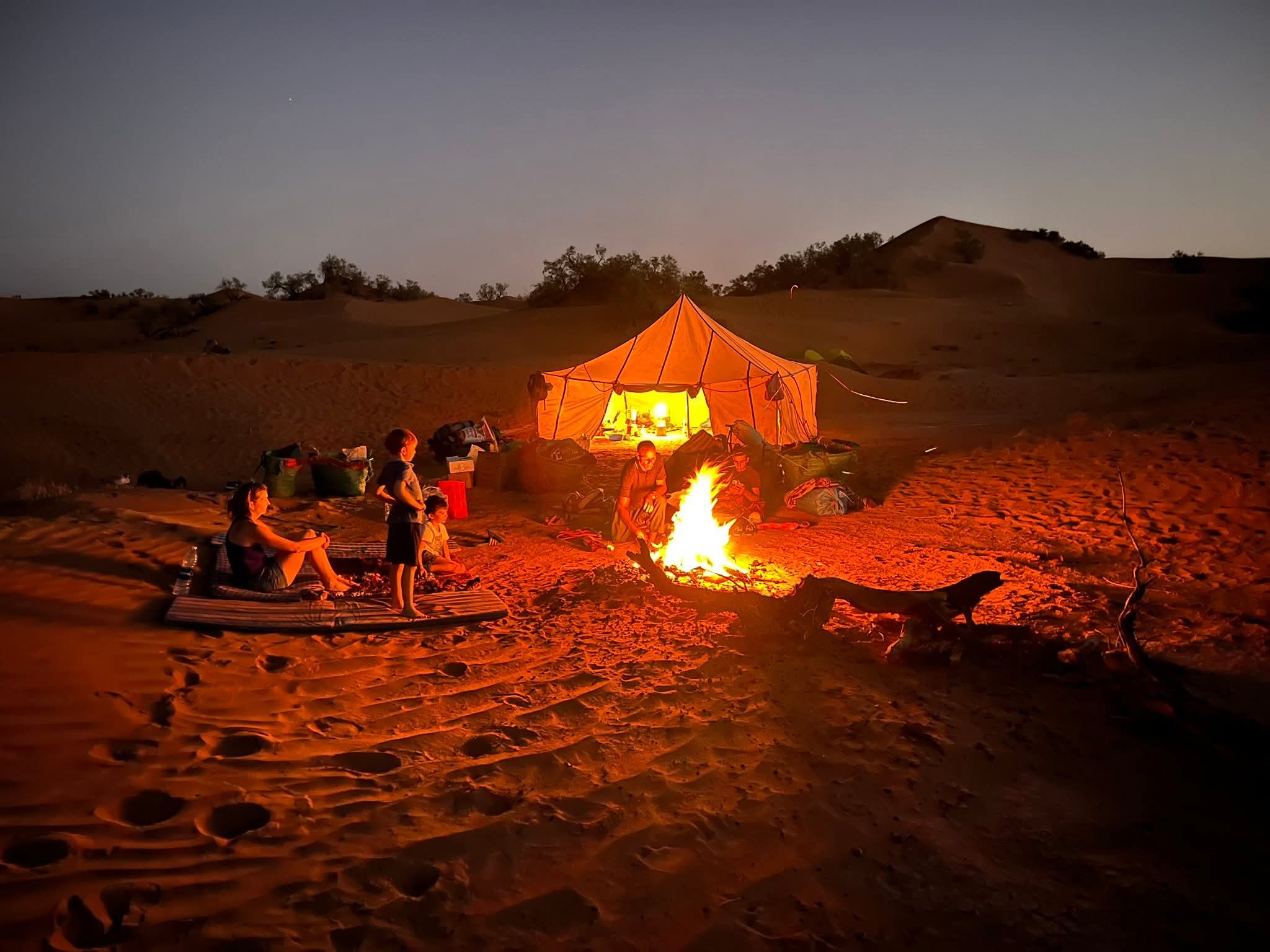
No generator, because there is no camp. The fire is small — wood is scarce and carried or gathered sparingly. Dinner is cooked on it, and bread is baked in the sand underneath the embers, which produces a loaf with a crust of grit you brush off and a middle that is genuinely excellent.
Then it gets dark in a way that most visitors have never experienced, and everyone stops talking for a while.