Ask for a tagine in Fez and in Marrakech and you will be served two dishes that share a pot and very little else. This is obvious to any Moroccan and almost never explained to visitors, who come away thinking Moroccan food is one thing that varies by restaurant quality.
It is at least five things, and they correspond to geography, trade history and what will grow.
Fez: the refined one
Fez is the old imperial and scholarly capital, and its cooking is the closest thing Morocco has to a court cuisine. Andalusian refugees arriving after 1492 brought techniques from Muslim Spain that never fully spread south, and the city's wealth supported kitchens that could afford time.
The markers:
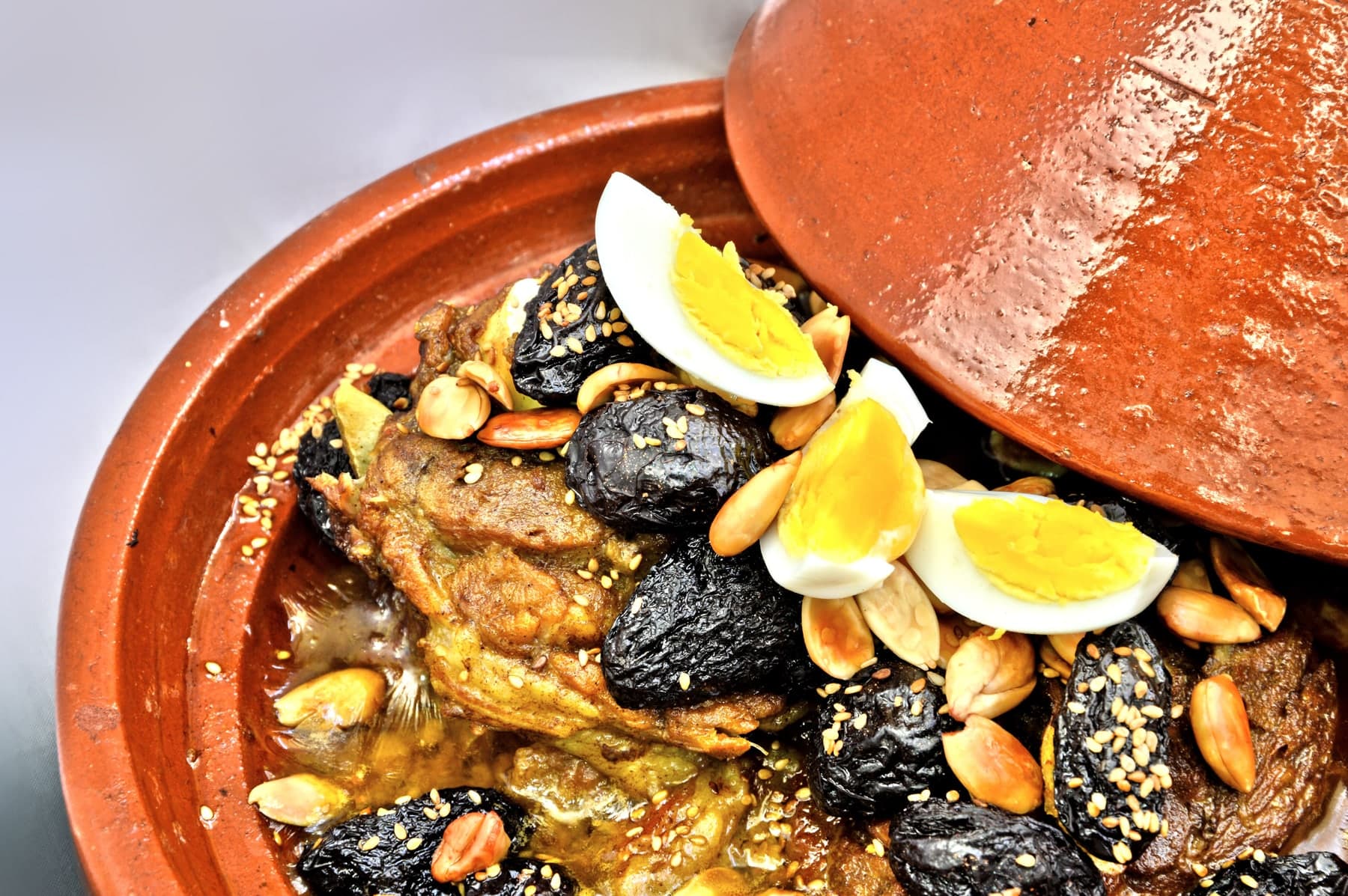
- Sweet and savoury together, deliberately. Lamb with prunes and almonds; chicken with caramelised quince; tfaya onion and raisin over couscous.
- Pastilla in its serious form — layered warqa pastry, pigeon or chicken, egg, almond, cinnamon and icing sugar over the top. Laborious, and Fez is where it is still made properly.
- Restraint with chilli. Fassi cooking is aromatic rather than hot — cinnamon, saffron, ginger, mace.
- Pastry. Kaab el ghazal (gazelle horns), almond briouats, and the fine sugar work that other cities buy in from Fez.
If you eat one serious restaurant meal in Morocco, eat it here.
Marrakech: the earthy one
Marrakech was a caravan terminus, an Amazigh market town and a place where people worked. The cooking reflects that: heavier, smokier, less delicate, and often built around long slow heat rather than technique.
- Tanjia is the city's own dish and it is unlike anything else in the country. Beef or lamb, preserved lemon, cumin, saffron and smen, sealed in a clay urn and buried in the ash of the hammam furnace for six or seven hours. Traditionally a bachelor's dish — men without a wife to cook took the urn to the furnace man on their way to work and collected it after. It is still made that way.
- Mechoui — whole lamb lowered into a clay pit oven and roasted for hours. Sold by weight from the ground in the alley off Jemaa el-Fna.
- Harder spicing, more cumin, more paprika, and the influence of the Atlas behind the city.
The Souss and Agadir: the argan one
South of the High Atlas, the argan tree grows and almost nowhere else on earth. It changes the entire flavour base of the region.
- Culinary argan oil — pressed from roasted kernels, deep amber, intensely nutty. Nothing like the cosmetic version. Drizzled over couscous, stirred into tagines at the end, poured onto bread.
- Amlou — argan oil, ground roasted almonds and honey, worked into a thick spread. It is served at breakfast and it is one of the best things in Moroccan cooking.
- Fish tagines on the coast at Agadir and Essaouira, built on chermoula — coriander, garlic, cumin, paprika, preserved lemon.
- Amazigh cooking more broadly: simpler, vegetable-forward, barley rather than wheat in the mountains behind.
The Rif and the north: the mountain one
Chefchaouen and the Rif run on different rules again — cooler, wetter, closer to Spain, and historically poorer.
- Goat cheese (jben), fresh and soft, which barely exists further south.
- Mountain herbs and wild greens in the cooking.
- Couscous with prunes and carrots, sweeter than the southern versions.
- Spanish traces in the north from the protectorate era — the seafood around Tangier and Tetouan shows it.
Chefchaouen is also where you will find bissara, the fava bean soup, at its best: thick, greenish, olive oil and cumin on top, eaten on cold mornings for a handful of dirham.
The Sahara and the south-east: the survival one
Desert cooking is built around what keeps and what can be cooked without an oven.
- Medfouna — the so-called "Berber pizza." A round of dough stuffed with spiced meat, onion and almond, sealed and baked. In the deep south it is genuinely cooked in hot sand and embers.
- Dates, in enormous variety, from the Draa and Tafilalet palm groves. Majhoul is the famous one and there are dozens of others sold by name in the markets at Erfoud and Rissani.
- Camel meat, in tagines and grilled, in the Rissani markets.
- Bread baked in sand on nomad routes, the dough laid directly into hot ash and brushed clean.
The four ingredients that define all of it
Preserved lemon (hamd markad). Lemons packed in salt for a month until the peel goes soft and the flavour turns from sharp to floral and deep. You use the rind, not the flesh. It is in more Moroccan dishes than any other single ingredient.
Smen. Clarified butter, salted, sealed in a jar and aged — sometimes buried underground — for months or years. It is pungent, cheesy, and closer to a strong blue cheese than to butter. A spoonful goes into couscous and tanjia. Older smen is prized and given as a gift; some families keep a jar aged for a child's wedding.
Ras el hanout. Literally "head of the shop" — the merchant's best blend, and therefore different in every shop. Ten to thirty spices, sometimes more, leaning floral and warm: rosebud, cinnamon, mace, cardamom, cubeb, galangal. Buy it from a spice merchant who blends it, not pre-packed.
Argan oil, discussed above, and worth carrying home.
How to eat well as a visitor
The single highest-value move is to eat one street back from wherever you are. Main squares and riad-terrace restaurants serve the standardised tourist repertoire at four times the price of the place around the corner where a tagine costs 45 dirham and has been cooking since morning.
The second is to eat regionally. Order pastilla in Fez, tanjia in Marrakech, fish chermoula in Essaouira, amlou anywhere in the Souss, medfouna in the desert. The country's menu is not uniform and treating it as if it were is how people conclude that Moroccan food is repetitive.
The third: accept an invitation. Every serious cook we know here learned at home, and the cuisine's best form is domestic.