Most Morocco packing lists are written for a week in a Marrakech riad. That is a real trip, but it is not the trip most of our guests take, and the standard list fails badly the moment you add altitude or a desert night.
The organising problem is this: a single Moroccan itinerary can contain a 45°C afternoon in the medina, a night at 3,200 metres where the temperature drops below zero, and a desert camp where it does both within twelve hours. You are packing for three climates, and the bag has to stay liftable.
Clothing: the layering answer
Forget "hot country, pack light". Pack layers that compress.
Base. Two or three long-sleeved lightweight tops in merino or synthetic. Long sleeves are counter-intuitive in heat and correct in practice: they block sun, reduce burn, and are more culturally comfortable in rural areas. Cotton t-shirts are fine in the cities and useless once you sweat in them at altitude.
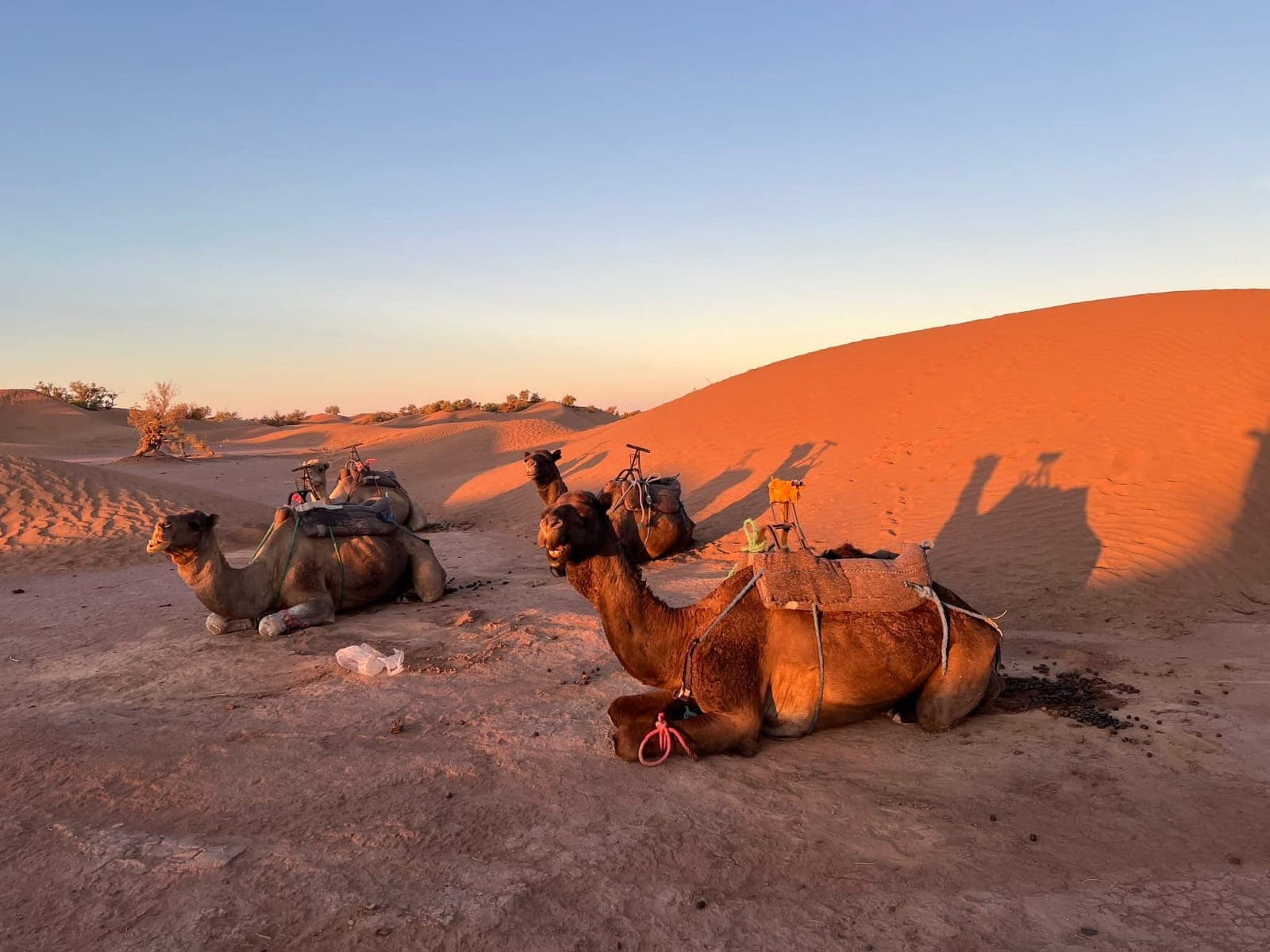
Mid. One fleece or light down jacket that packs to nothing. This is the item people leave behind and regret. Desert nights in November through February drop to 2–5°C. Mountain gîtes are unheated.
Shell. A windproof layer. Rain is unlikely outside winter and the north, but wind at altitude and blown sand in the erg both make a shell worth its weight.
Legs. Lightweight trousers that dry fast. Two pairs. Shorts are acceptable for men in cities and on treks but read as odd in villages; knee-length is the sensible compromise. For women, loose trousers or a long skirt will draw less attention than anything above the knee, which is a practical observation rather than a rule.
A scarf. The single most useful object in the bag. Sun on the neck, dust in the gorges, blown sand on a dune ridge, shoulders covered when entering somewhere that warrants it, and a pillow on a long drive. Buy one there — they are better and cheaper.
Footwear
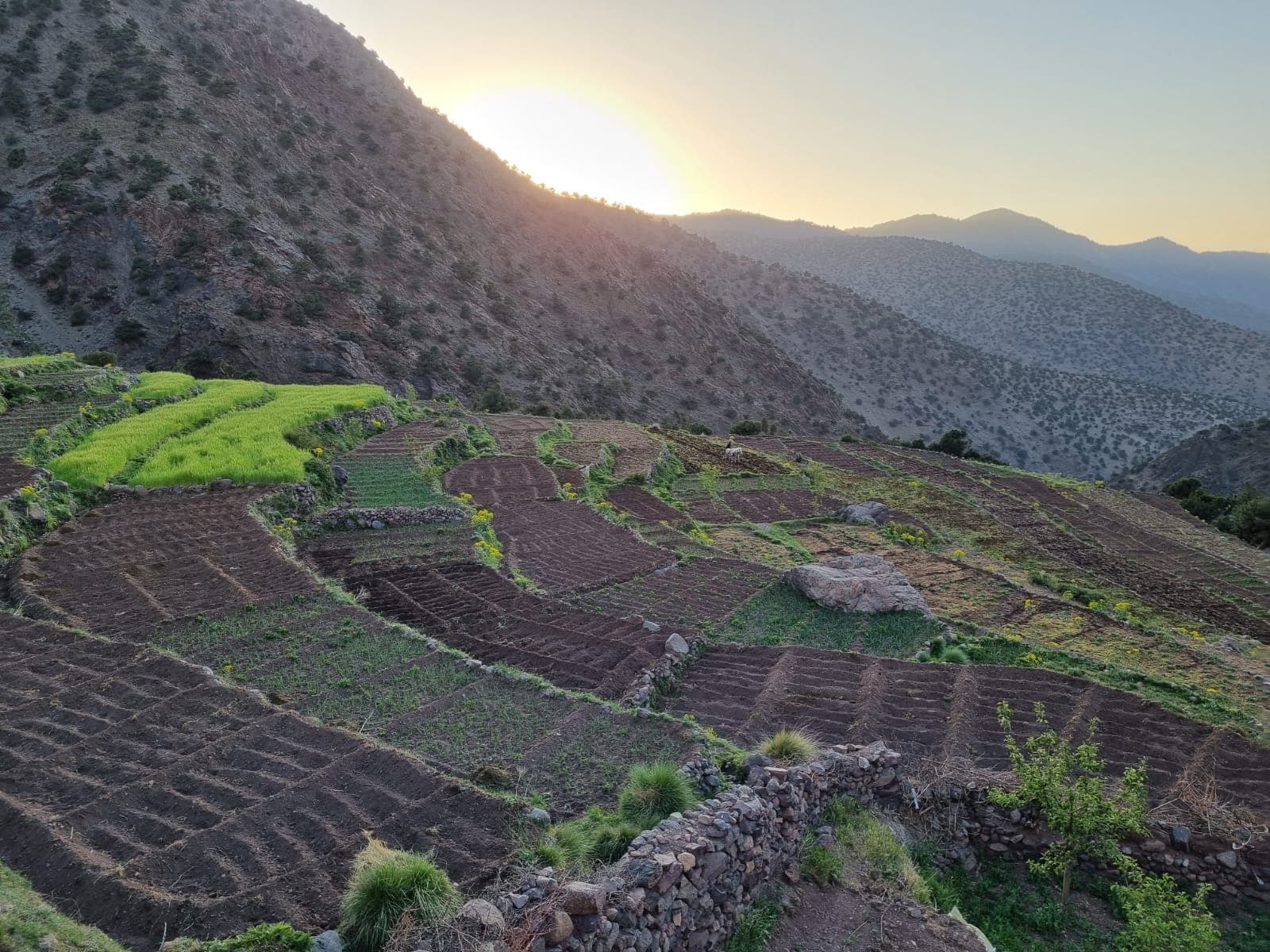
If you are trekking: proper boots with ankle support, broken in before you arrive. The High Atlas is loose scree and rock, not path. Blisters acquired on day one of a five-day traverse are a serious problem.
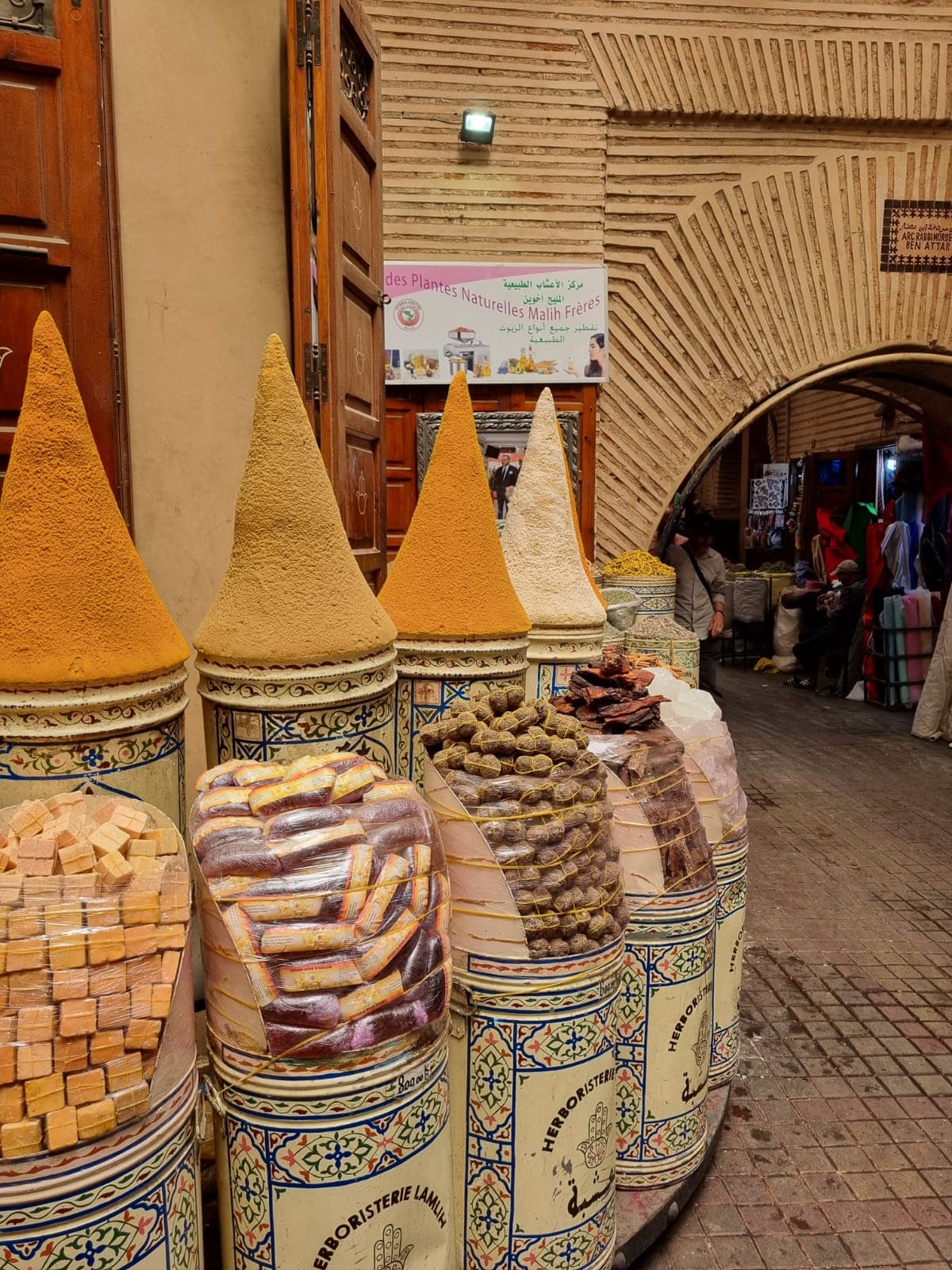
If you are not: closed walking shoes for the medina. Medina streets are uneven, often wet in the tanneries and fish sections, and shared with mules and scooters. Sandals are for the riad roof.
For the desert: whatever you already have, plus the knowledge that sand gets into everything above the ankle. Low shoes plus gaiters, or just accept it.
The desert-specific items
- A head torch. Camps are lit by lantern and the walk to the toilet tent is dark.
- A dry bag or ziplocks for camera gear. Fine sand is invasive.
- Sunglasses that wrap. Blown sand on a windy ridge is genuinely painful.
- Lip balm with SPF. The combination of altitude, dry air and reflected light cracks lips within two days.
The altitude-specific items
If Toubkal or any 3,500-metre-plus route is in the plan:
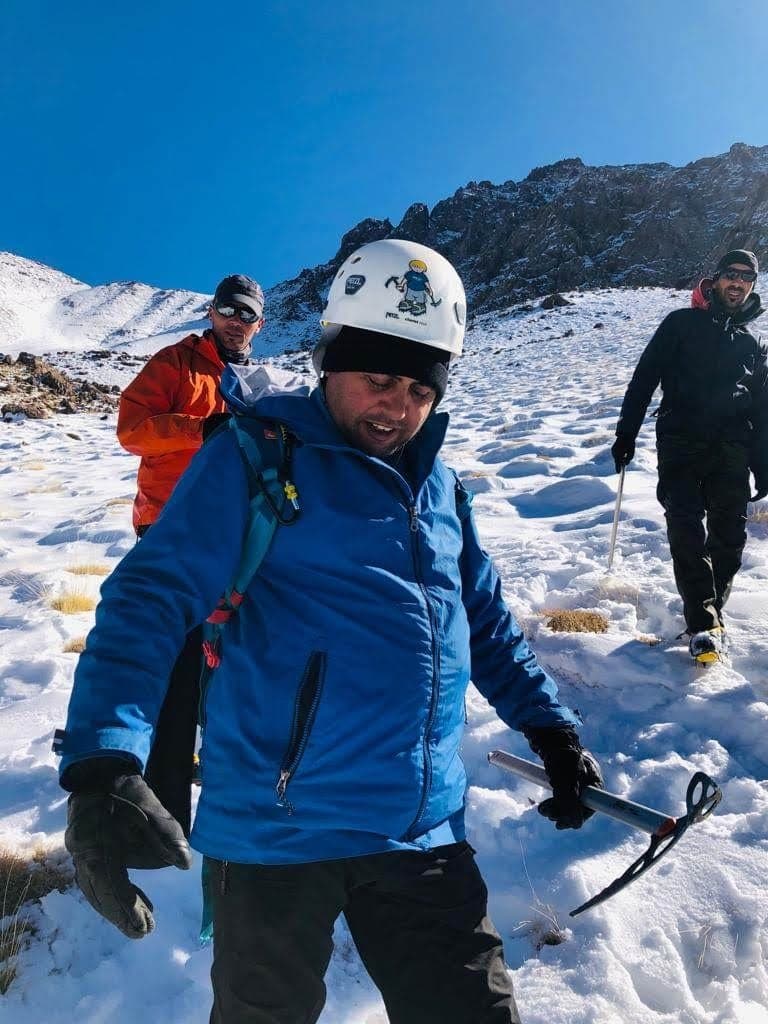
- Gloves and a warm hat. Summit pushes start at 4 or 5 a.m. It is below freezing at that hour, at that height, in any month.
- Sun cream, factor 50. UV at 4,000 metres is severe, and the summit ridge offers no shade whatsoever.
- A one-litre bottle minimum, two preferred. Dehydration is the main cause of failed summit attempts we see.
- Crampons and an ice axe between roughly November and April. Rentable in Imlil; do not improvise this.
Medical
A small kit does most of the work: rehydration salts, loperamide, ibuprofen, plasters and blister dressings, antiseptic, any personal prescriptions in their original packaging. Rehydration salts are the item worth emphasising — they resolve both heat exhaustion and a bad stomach, which are the two most likely things to disrupt your trip.
Pharmacies in Moroccan cities are excellent, well stocked and staffed by pharmacists who will diagnose minor complaints across a counter. You do not need to bring a field hospital.
Documents and money
- Passport valid six months beyond entry.
- A card that works — Visa and Mastercard are widely accepted in cities, almost nowhere in the mountains or desert.
- Cash. This is the one people underestimate. Rural Morocco is a cash economy: gîtes, muleteers, village shops, tips, small cooperatives. Withdraw in Marrakech or Ouarzazate before you go south or up.
- A photograph of your passport, stored somewhere that is not your phone's camera roll.
What to leave at home
Drone, unless you have a permit. They are confiscated at customs regularly and the paperwork is not casual.
Anything valuable you would be upset to lose, not because theft is likely but because a mule bag falling off in a river crossing is.
A full-size towel. Riads provide them; gîtes and camps expect a small quick-dry one.
Excessive clothing. Laundry is cheap and fast everywhere, and you will buy something — nearly everyone does.
The bag itself
A soft duffel or a rucksack, not a hard-shell wheeled case. If any part of your trip involves a mule, a camel or a medina alley, wheels are a liability — medina streets are cobbled, stepped, and too narrow for a case to be dragged without becoming a public nuisance. A 40–60 litre soft bag plus a daypack covers almost every itinerary we run.