The High Atlas begins about an hour from Marrakech, which makes a day trip genuinely easy and also makes it the most commodified excursion in the country. "Atlas Mountains day trip" is sold on every corner of the medina, and it can mean four completely different days depending on which valley the vehicle turns into.
They are not interchangeable. Here is what each one is.
Ourika: the busy one
Forty-five minutes from Marrakech, the closest and by a wide margin the most visited. The road runs up a green river valley lined with cafés built on stilts over the water, ending at Setti Fatma where a chain of seven waterfalls climbs the hillside.
Who it suits: people with half a day, families who want a short walk and a river lunch, anyone who wants green scenery without effort.
The reality: on a Sunday, Ourika is where Marrakech goes on holiday, and the first waterfall is reached by a scramble shared with a great many other people. The walk to the higher falls thins the crowd substantially and most day-trippers do not do it.
Go if: you leave early, and you commit to walking past the first fall.
Imlil: the mountain one
Ninety minutes out, at 1,740 metres, and the trailhead for Toubkal. This is where the landscape stops being foothills and becomes an actual mountain valley — terraced fields on every buildable slope, walnut groves, stone villages, mule tracks instead of roads above the village.
Who it suits: anyone who wants to walk properly, or who wants to see how a High Atlas farming valley works.
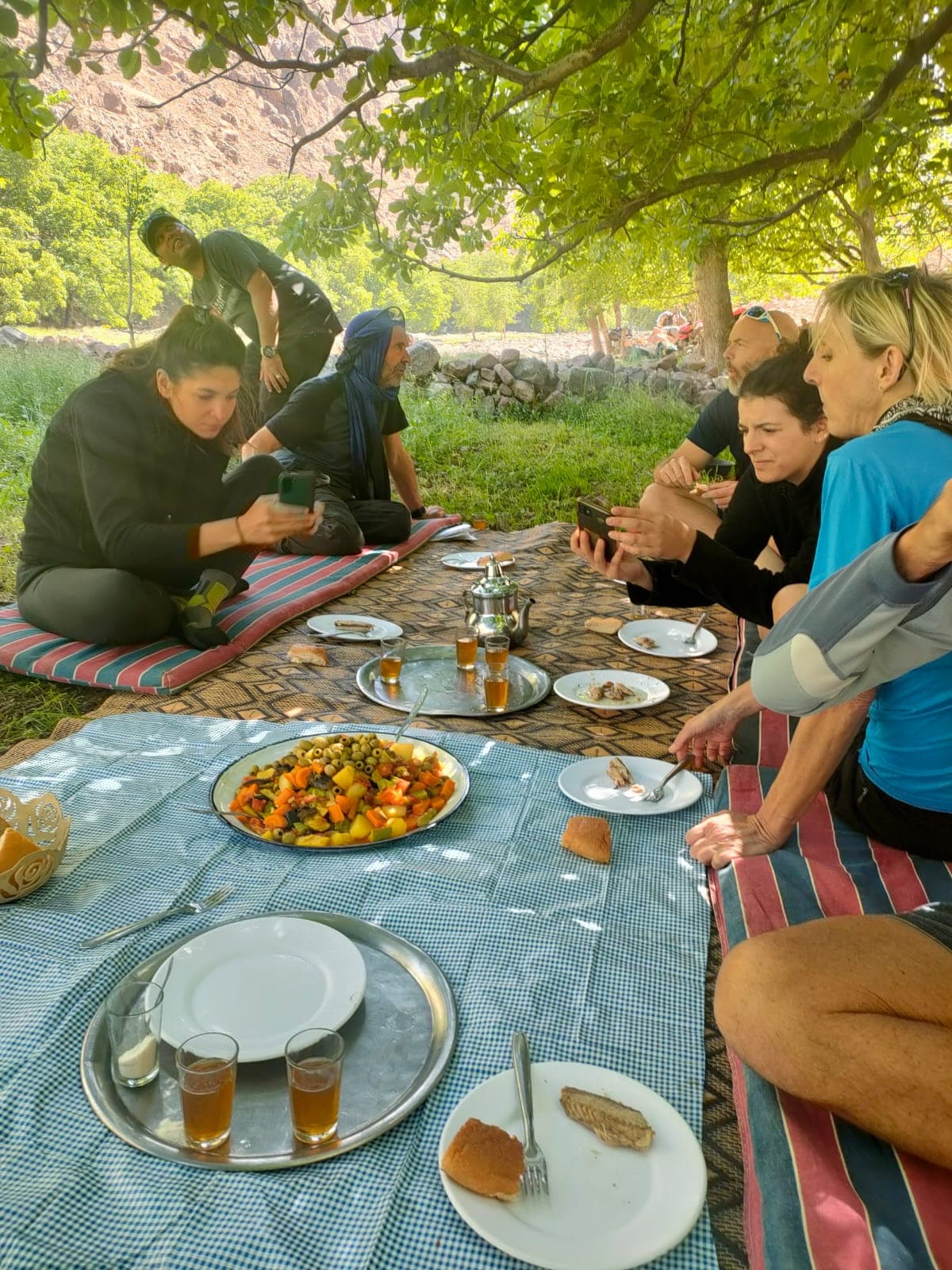
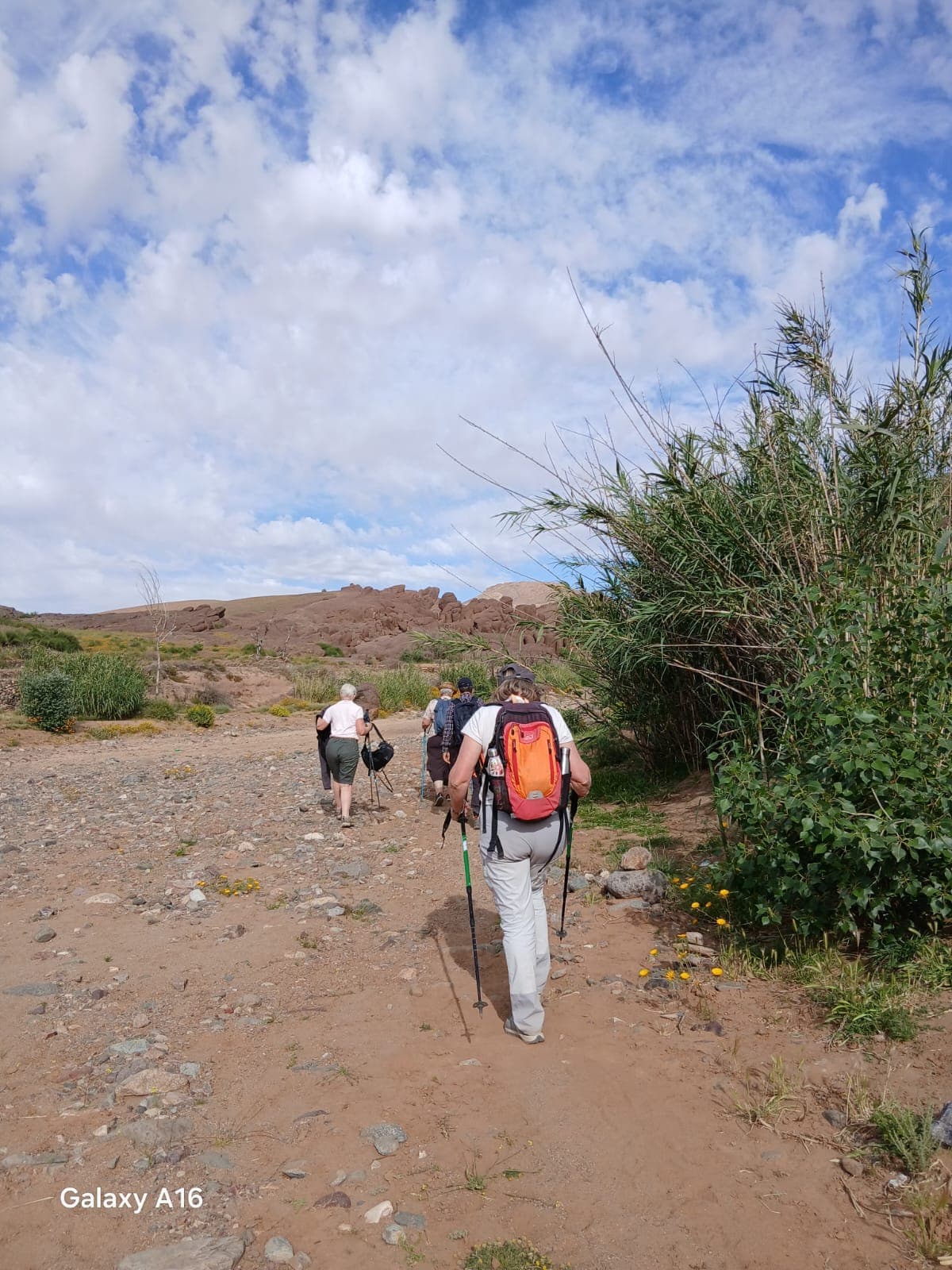
What a day looks like: drive to Imlil, walk up to Aroumd (about an hour, gentle, past the terraces), lunch at a village house or the Kasbah du Toubkal terrace, continue toward the Sidi Chamharouch shrine if you have the legs, and back down.
The caveat: Imlil is not undiscovered. The village itself is busy with trekking logistics. But you walk out of it within ten minutes and the crowd disappears entirely.
This is the one we recommend most often.
Ouirgane: the quiet one
An hour southwest, lower and greener, set around a reservoir with juniper and olive country either side. There is no headline sight — no waterfall, no summit — and that is exactly the point.
Who it suits: people who want a beautiful day without a target. Walkers who prefer rolling terrain to ascent. Anyone travelling with someone who does not actually want to hike.
Why it stays quiet: because it is not on the excursion circuit. There is nothing for a coach to stop at.
Asni and the Kik plateau
Asni is the market town on the Imlil road, and its Saturday souk is a real regional market rather than a tourist one. Above it, the Kik plateau gives you the single best panorama of the Toubkal massif available without walking — a long flat tableland with the whole snow-capped range laid out opposite.
Who it suits: photographers, and anyone whose main goal is to see the High Atlas rather than enter it.
What to expect from a standard booked tour
The typical medina-sold day trip goes to Ourika, stops at an argan cooperative and a Berber house presented as a cultural visit, allows an hour at the waterfall, and returns. It is cheap and it is not a scam, but it is a shopping-stop itinerary with scenery attached.
If you want walking, book something that names the route rather than the region. "Atlas Mountains day trip" is not a route. "Imlil to Aroumd and back via the Mizane" is.
Practical notes
Season. Spring is best — the terraces are green and the peaks still hold snow. Summer is hot in the valleys but far cooler than the city, which makes it a good escape from a July Marrakech. Winter is beautiful and can involve snow on the Imlil road.
Altitude. Imlil is 1,740 m and Aroumd 1,900 m. That is enough to be noticeably cooler than Marrakech and no more; there is no altitude concern on a day trip.
Footwear. Trainers are fine for Ourika. For anything above Imlil, wear something with grip — the mule tracks are loose stone.
Guides. Not required for valley walking. Required by law above Imlil on the Toubkal routes.
Lunch. Eating in a village house, arranged through a guide, is consistently the best meal on any of these days and costs a fraction of the valley-floor restaurants.
The one-line version
Ourika if you have half a day and want water. Imlil if you want mountains. Ouirgane if you want calm. The Kik plateau if you want the view. And in every case, leave Marrakech by eight — the difference between an eight and a ten o'clock departure is the difference between a valley and a car park.