We run guided trips, so treat this page with the scepticism it deserves. We have still tried to write it straight, because we would rather someone had the trip they wanted than book something from us they did not need.
There are three separate categories here and they get muddled constantly: where a guide is a legal requirement, where a guide transforms the experience, and where a guide is a convenience you are paying a premium for.
Where it is legally required
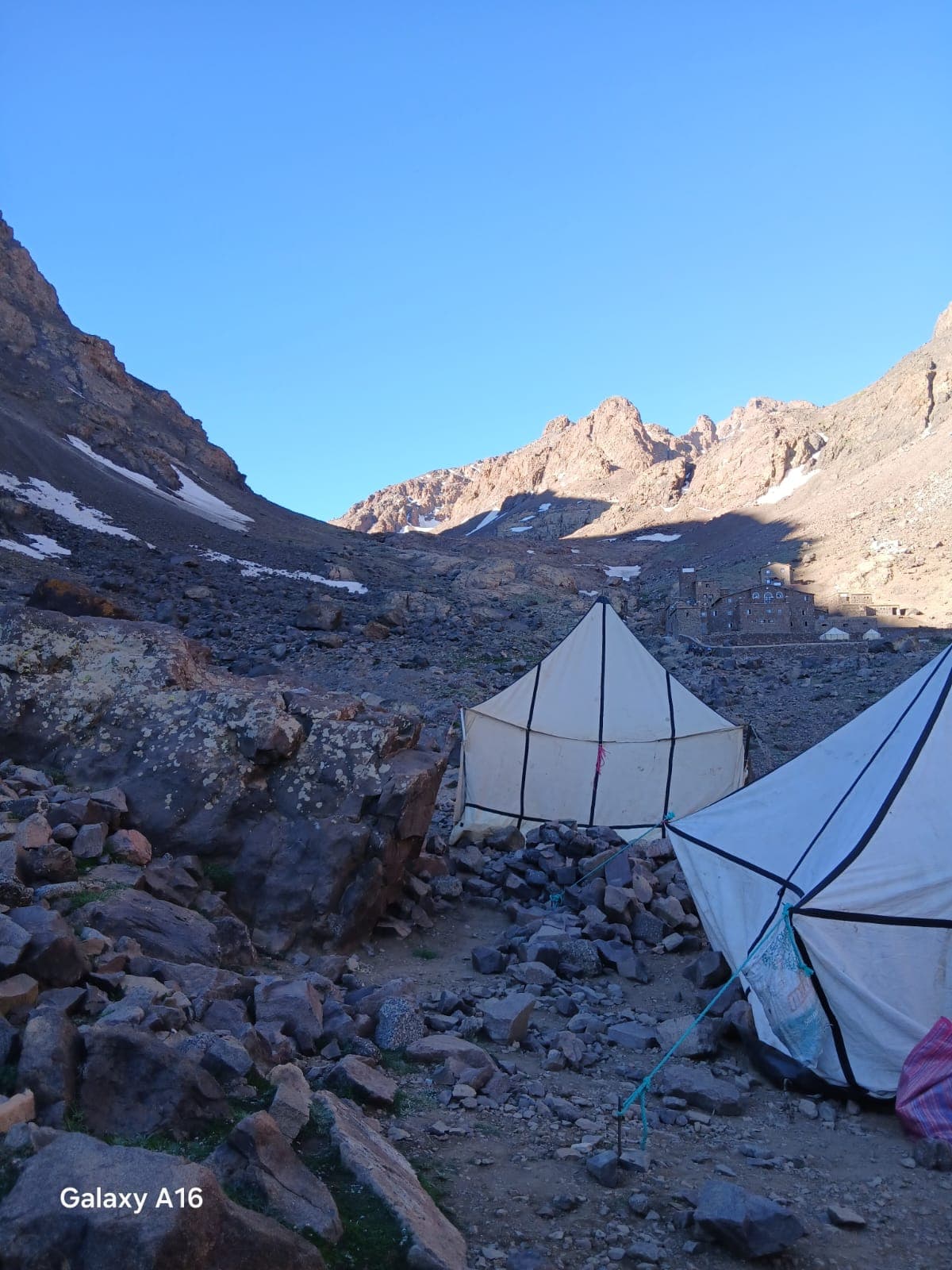
Toubkal and the Toubkal National Park. A licensed mountain guide is mandatory. This is enforced at the Imlil trailhead and it is not negotiable. The requirement followed a serious incident in 2018 and it has been checked consistently since.
Registered monuments with official guide schemes in Fez and Marrakech — technically, though in practice you can walk into most sites with a ticket.
Everything else in the country you can do independently.
Where a guide genuinely changes the trip
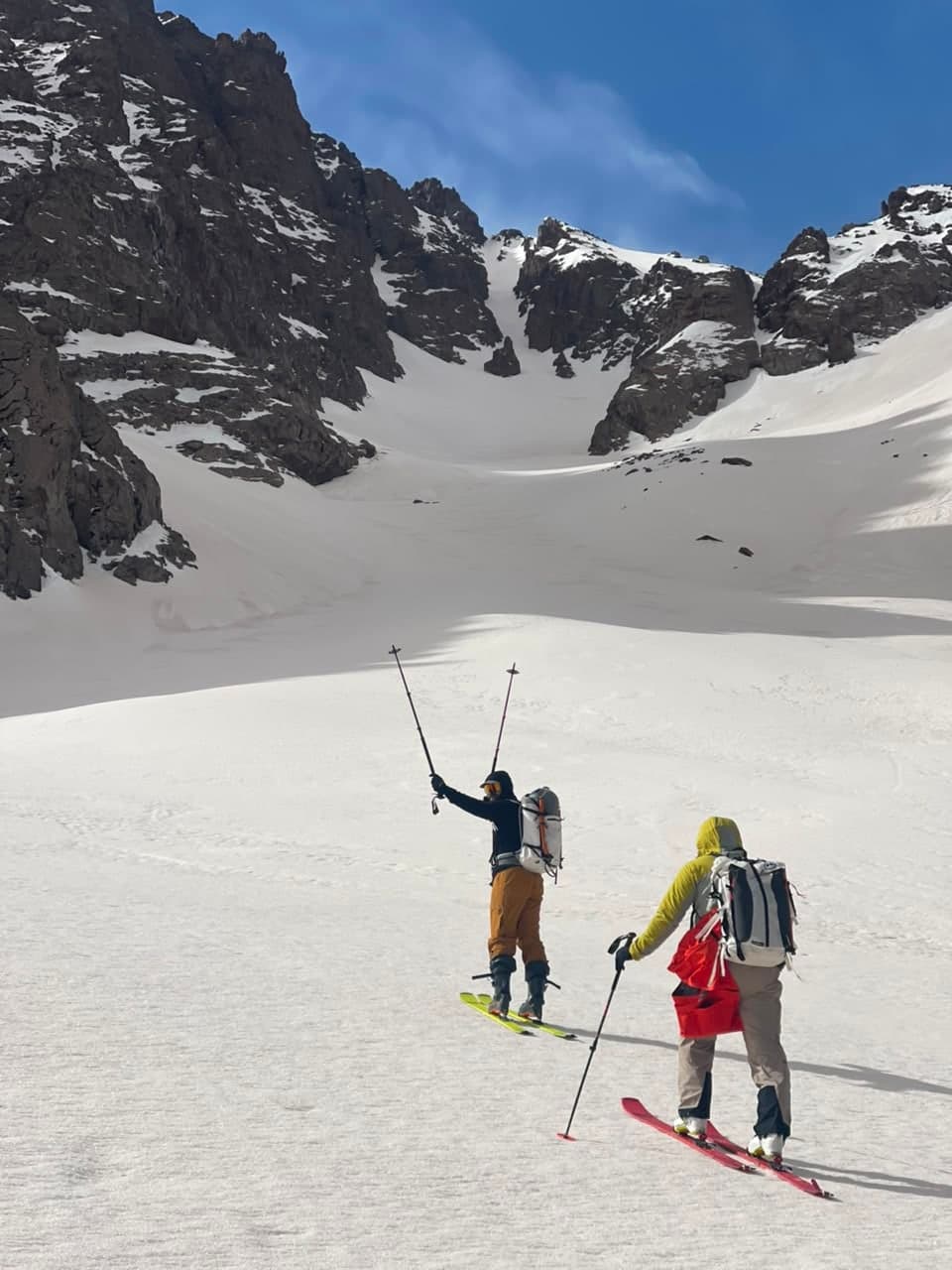
Trekking above the valleys
Beyond the legal question, High Atlas routes are not waymarked in the European sense. There are no red-and-white paint flashes and no reliable signage. What exists is a network of mule tracks that braid, fade across scree, and look identical to the one you want. GPS helps and does not solve it — the tracks on OpenStreetMap are frequently wrong, and route-finding in cloud on a broad ridge is a real skill.
Add to that: gîte arrangements in villages with no online presence, mules and muleteers, water sources that are seasonal, and weather that changes fast above 3,000 metres. This is the clearest case for a guide in the country.
The medinas, for the first two hours
Fez el-Bali has something like 9,000 lanes and is genuinely the largest car-free urban area in the world. Marrakech's souks are smaller but no more legible.
A half-day guide at the start of your stay is unusually good value — not because you cannot find your way, but because you will spend those hours actually looking at things rather than at a phone, and because a guide's presence ends the constant approach from touts almost entirely. After that half day you will navigate fine alone.
Anywhere you want to be let in
This is the thing that is hard to buy independently: a house in an Amazigh village where you eat with the family, a workshop where a craftsman is working rather than selling, a cooperative that is a cooperative rather than a shop with the word on the sign. These are relationships, not bookings. A good guide has them and a good itinerary uses them.
Where you do not need one
Marrakech, Fez, Essaouira, Chefchaouen — after the first day. The cities are walkable and the main sights are ticketed and self-explanatory.
The main sights themselves. Ben Youssef, the Saadian Tombs, Bahia, Volubilis — all fine with a good guidebook or an audio guide.
Getting between cities. The train network is genuinely good. The Marrakech– Casablanca–Rabat–Tangier line, including the Al Boraq high-speed section, is modern, punctual and cheap. CTM and Supratours run reliable long-distance coaches to everywhere the train does not.
The coast. Essaouira and the Atlantic are straightforward independent travel.
Day walks in the valleys. Ourika, Ouirgane, the Imlil-to-Aroumd path — these are obvious, populated and fine alone.
Driver versus guide
These are different jobs and conflating them costs people money.
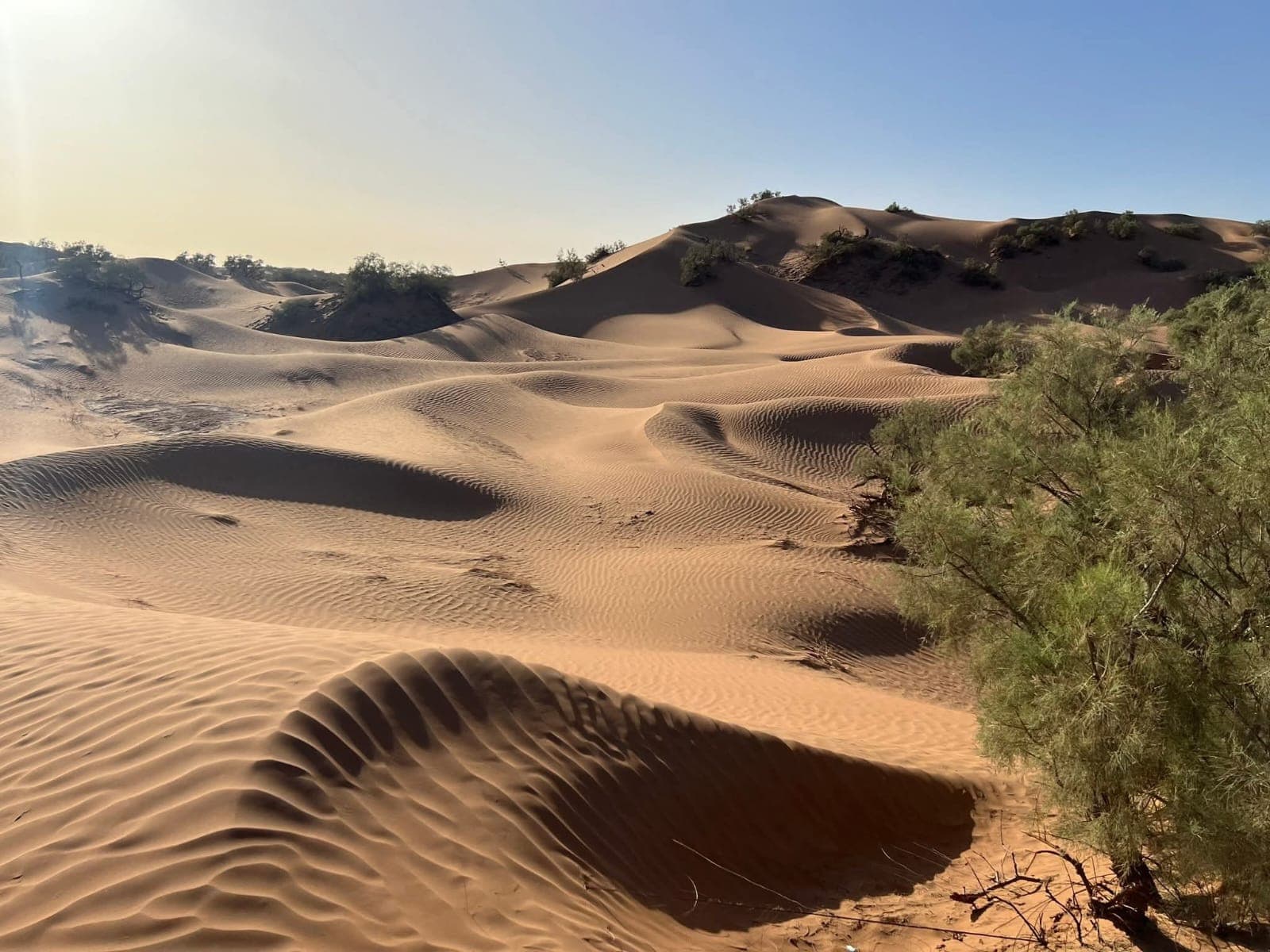
A driver takes you from place to place. On the Marrakech–Sahara route this is often the right purchase: the driving is long and hard, and a driver is far cheaper than a guide.
A guide interprets, translates, arranges access, and handles the social navigation. On a cultural itinerary this is where the value sits.
Many desert tours sell a driver and call him a guide. Ask directly which you are getting.
What it costs, roughly
- Half-day city guide, official: 300–500 dirham
- Full-day city guide: 500–800 dirham
- Licensed mountain guide, per day: 600–800 dirham (covers the group, not per person)
- Muleteer with mule: 150–200 dirham per day
- Driver with vehicle, long-distance: 1,000–1,500 dirham per day
Mountain guides are certified by CFAMM, the national guide school at Tabant. Ask to see the card. It is a normal request and a real guide will produce it without offence.
The honest recommendation
For most seven-to-ten-day trips: hire a guide for half a day in each major medina, a driver for the long transfers, and a licensed mountain guide for anything above the valleys. Do the rest yourself.
That is not the most we could sell you. It is what we would book for our own families, and the difference between it and a fully guided trip is largely a question of how much you enjoy logistics.