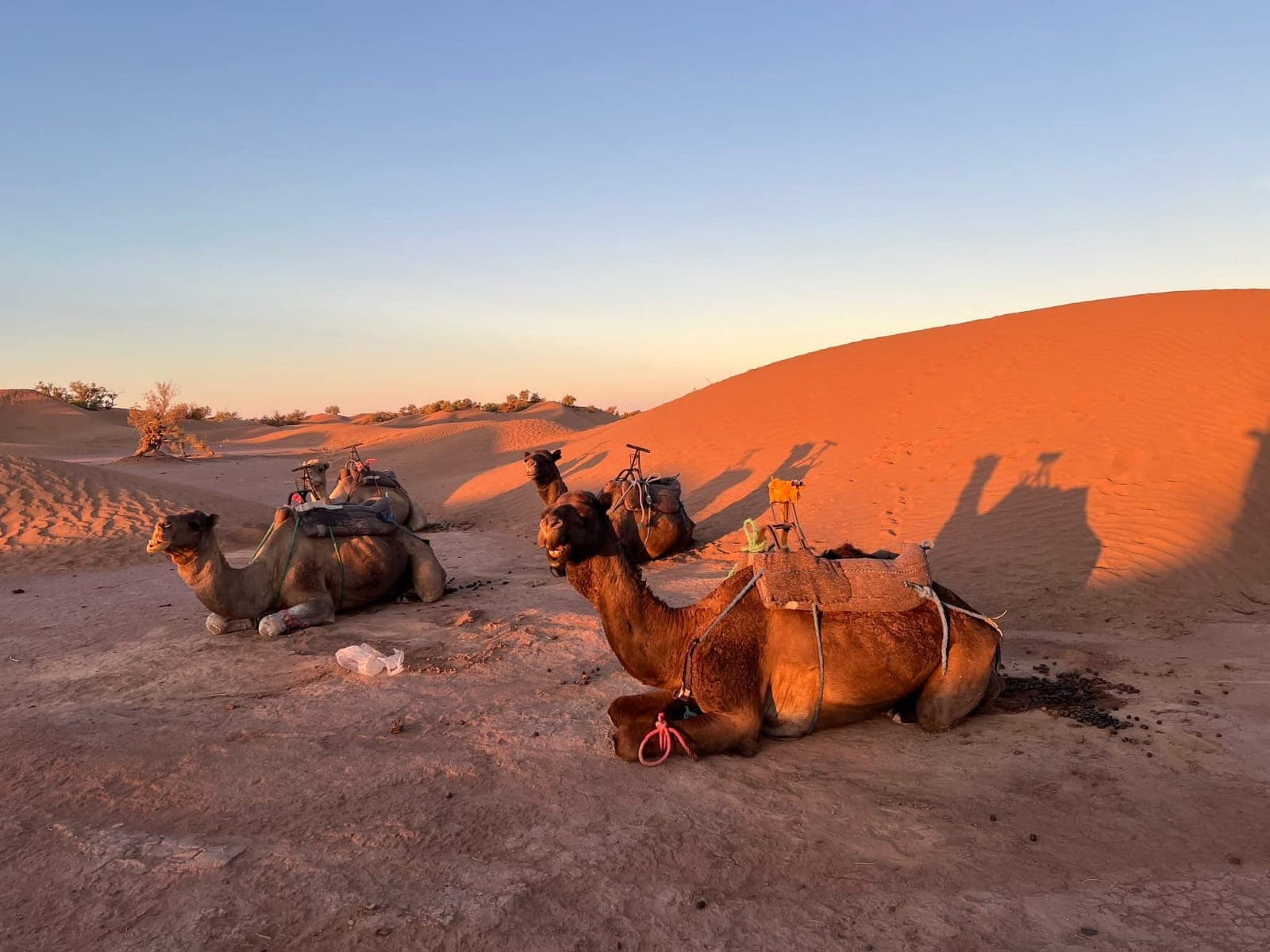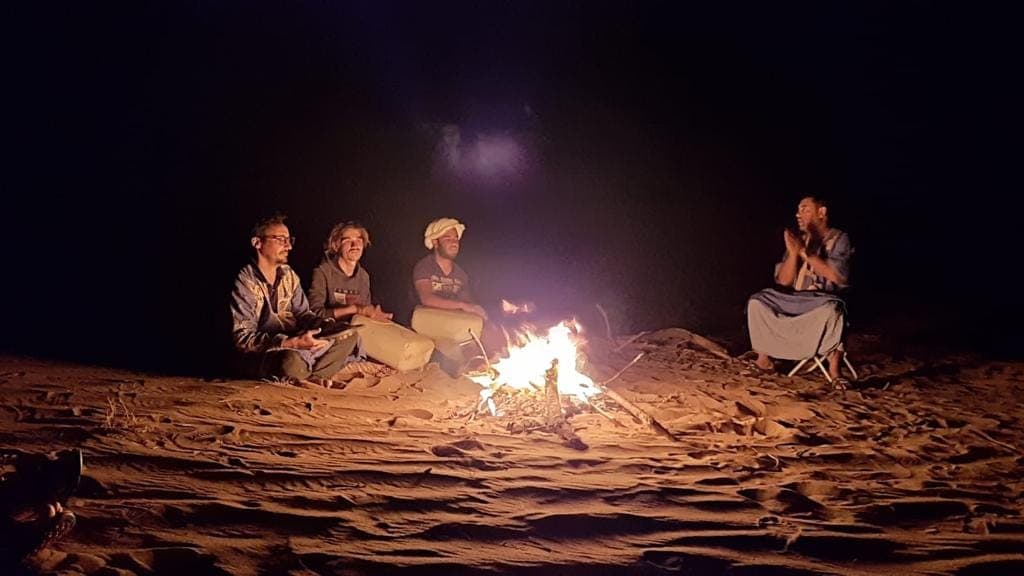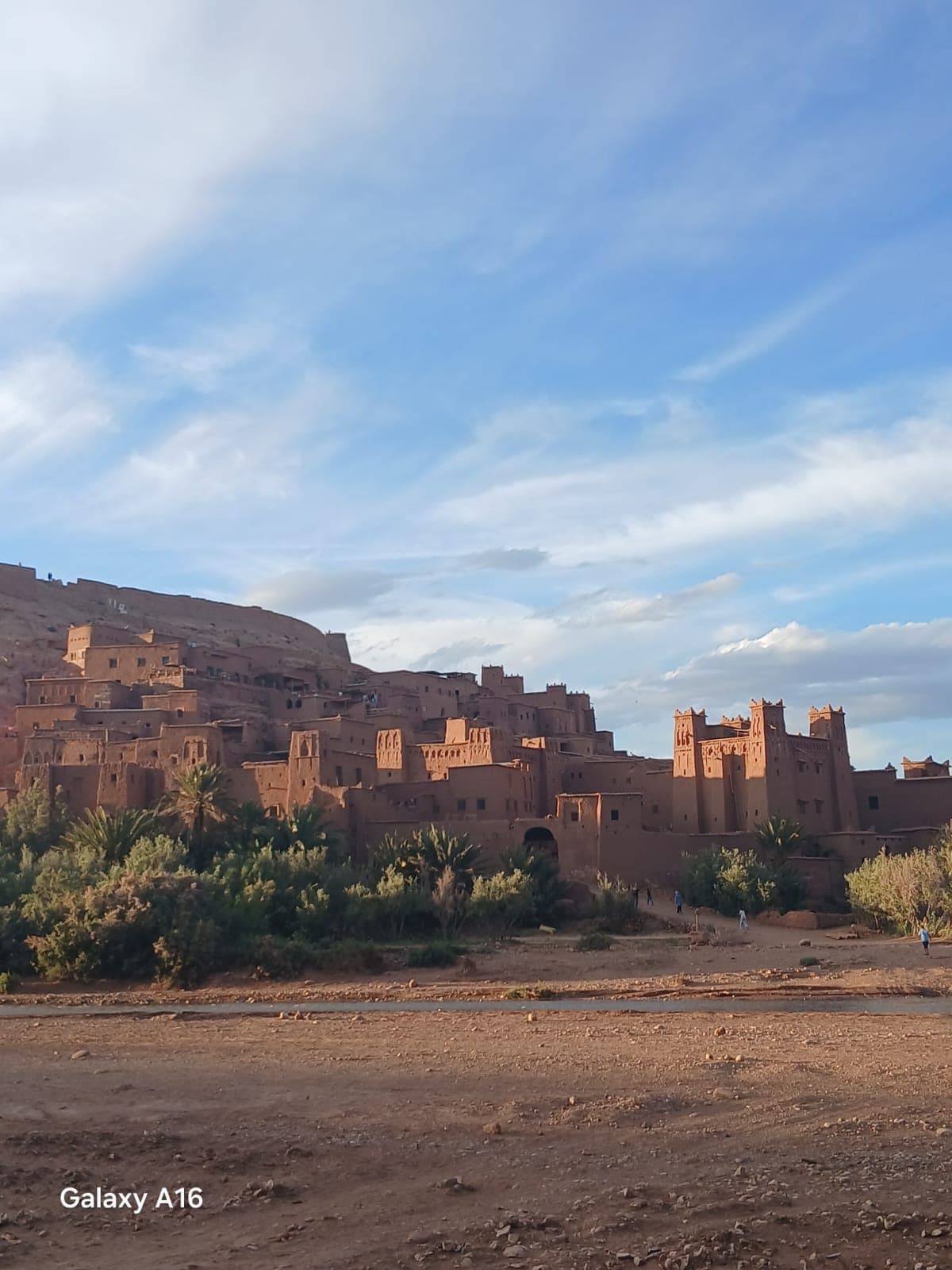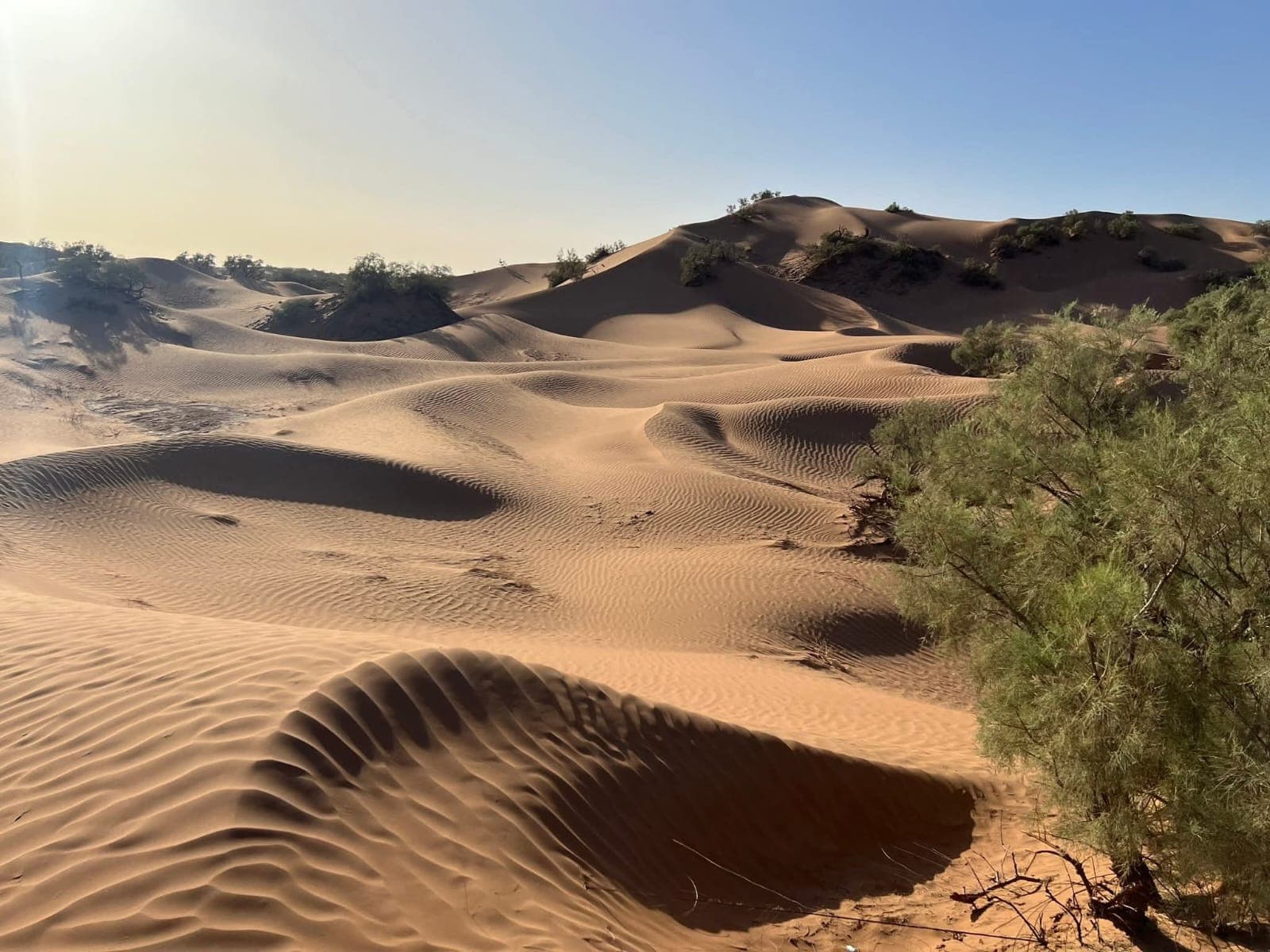
A raid is not a desert tour. The word gets used loosely by agencies selling a minibus to Merzouga, so it is worth stating what it means among people who actually do it: a multi-day crossing on piste — unsurfaced track — in a convoy of 4×4s, navigating by GPS trace and roadbook, carrying your own fuel, water and recovery gear, and camping where the day ends rather than where a hotel is.
Morocco is the best country in the world for this and it is not close. Southern Europe is a two-day drive and a ferry away, the terrain runs from hard hamada to 150-metre dune fields inside a single afternoon, the tracks are legally open, and the country is stable. That combination does not exist anywhere else within reach of Europe.
Piste, not off-road
An important distinction that catches people out. Morocco has thousands of kilometres of existing tracks — trade routes, mining roads, riverbeds, links between villages that predate tarmac. A raid follows these.
It is not free driving across open desert. Driving off established piste damages terrain that recovers extremely slowly, and in the erg it is also how vehicles get buried. The Iriki lakebed has visible tyre scars from the 1990s. Stay on the track.
The classic routes
Merzouga → Erg Chigaga (the east–west traverse)
The route most raids are built around, roughly 500 km of piste depending on the line taken.
From Erg Chebbi you drop south-west across the Kem Kem escarpment — Cretaceous fossil beds, and the terrain that most looks like what people imagine when they say "desert" without meaning sand. Then the long crossing to Zagora and down the Draa, then Mhamid, then the erg itself.
Time: 5–7 days of piste, plus getting to and from Marrakech.
Foum Zguid → Chigaga → Mhamid
The best short raid in the country, and the one we would recommend to anyone doing their first. About 230 km, split into two very different halves.
The northern half is fast hard piste across the Lake Iriki basin — a dry lakebed, dead flat, where you can hold 80 km/h and see the curvature of the ground. The southern half climbs into the western dune fields of Erg Chigaga and becomes genuine sand driving.
Time: 2 days, comfortably 3 with a night in the erg.
The Draa valley and Jebel Bani
Less famous and technically easier, following the Draa from Agdz down through the palm groves, then west along the Bani ridge to Tata and Tissint. This is the cultural half of Moroccan off-road travel — ksour, oases, rock engravings — rather than the dune half.
Time: 3–4 days.
The Atlas pistes
Often forgotten because everyone looks south. The tracks over the High Atlas — the old Tizi n'Test cols, the pistes around Jebel Saghro and the Aït Bougmez approaches — are mountain driving: exposure, loose surface, and altitude, with snow closing them from roughly December to March.
Vehicles
Two vehicles minimum. This is the single non-negotiable rule of desert piste travel. A stuck vehicle needs a recovery vehicle; a broken vehicle needs a way out. Solo crossings of the erg are how people end up on the news, and every experienced raid organiser refuses them.
What works:
- Toyota Land Cruiser (HZJ78/79, KDJ120) — the default across North Africa for a reason: parts and mechanics exist in every southern town.
- Land Rover Defender — capable, and you should carry more spares.
- Nissan Patrol Y61 — very common in Morocco, well supported.
- Older Mitsubishi Pajero / Jeep Cherokee — fine for the easier routes.
What does not work: soft-roaders without low range or a locking differential. Sand driving needs low range and it needs ground clearance. A Duster on the Iriki flats is fine; a Duster in the Chigaga dunes is a recovery exercise.
Sand technique, briefly
The things that actually matter, in order:
Tyre pressure. The largest single factor and the one beginners get wrong. Drop to 0.8–1.2 bar for soft sand — this lengthens the contact patch and lets the tyre float rather than dig. Reinflate the moment you are back on hard ground: running low pressure at speed on hamada destroys sidewalls.
Momentum, not power. Sand is climbed with steady momentum. Wheelspin digs; it does not propel. If you lose forward motion, stop immediately rather than pressing harder — every extra second of spin buries you deeper.
Straight lines up, diagonal never. Climb a dune face perpendicular. A diagonal line risks a sideways slide and, on a steep face, a roll.
Crest carefully. The far side of a dune is invisible until you are on it, and slip faces are much steeper than windward faces. Approach crests slowly and look before committing.
Recovery. Sand ladders under the driven wheels, dig out around the axles, drop pressure further if needed. Snatch straps are a last resort — sand recoveries are usually dug, not yanked.
Kit list
Vehicle:
- Two full-size spare wheels
- Compressor and pressure gauge
- Sand ladders (two per vehicle)
- High-lift jack plus a base plate, and a bottle jack
- Tow and snatch straps, shackles
- Basic spares: belts, hoses, filters, fluids, fuses
Fuel and water:
- 80 litres of reserve fuel beyond your calculated need. Piste consumption runs 30–50% above road figures, and the gap between stations south of Zagora is real.
- 5 litres of water per person per day, plus a reserve.
Navigation:
- GPS with the route loaded, plus a backup device
- Paper maps — the Michelin 742 is the standard
- Compass
- Satellite messenger or phone. There is no mobile coverage across most of the erg. This is not optional equipment on a serious route.
Navigation and why it needs a guide
The tracks are not signposted, and the ones in the erg genuinely move. Wind erases tyre marks within days, and the passable corridors between dunes shift between seasons. A GPS trace recorded two years ago may lead into sand that has since closed.
You can do the hard-piste routes independently with good preparation. For the erg crossings — Chigaga in particular — take someone who has driven it recently. The cost of a local guide is trivial next to a recovery, and the knowledge of where the corridors currently run is not something you can download.
Permits and paperwork
- Vehicle: registration document, international green-card insurance or Moroccan insurance bought at the border, and a temporary import declaration (D16ter) issued at the port. Valid six months.
- Licence: an EU or international licence is accepted.
- Drones need prior authorisation and are routinely confiscated at customs without it.
- Restricted zones: the far south-east near the Algerian border is closed without military permission. Do not improvise near it.
Ferries run Algeciras or Almería to Tanger Med or Nador, roughly 1–2 hours or overnight respectively.
When to go
October to April. Outside that window the southern desert regularly exceeds 45°C, which is dangerous for both crew and vehicles.
- October–November — warm days, comfortable nights. The best window.
- December–February — clear and cool by day, near freezing at night. Excellent driving conditions; bring a proper sleeping bag.
- March–April — good, with rising sandstorm risk in the chergui season.
- May–September — no.
What it costs
Bringing your own vehicle, two weeks, per vehicle with two people:
- Ferry return: €350–600
- Fuel, Europe and Morocco: €700–1,100
- Insurance: €100–200
- Food, camping, occasional hotel: €500–800
- Local guide for the erg sections: €120–180 per day, shared across the convoy
Roughly €2,000–2,800 per vehicle for a fortnight.
Organised raid with vehicle provided: €1,800–3,500 per person for 7–10 days, including 4×4, guide, fuel, camping and most meals.
Vehicle rental in Morocco: a proper equipped Land Cruiser runs €120–200 per day, and most rental companies prohibit erg driving in their terms — read them before you plan a Chigaga crossing on rented tyres.
Driving it responsibly
The southern piste network runs through inhabited country, however empty it looks. Some things that matter:
- Stay on existing tracks. Desert crust takes decades to recover.
- Carry your rubbish out. All of it, including grey water residue.
- Slow down through villages and past livestock. A convoy at speed through a ksar is exactly why some communities have grown hostile to raids.
- Ask before photographing people, and accept no.
- Buy locally — fuel, food, a guide, a night in a village gîte. It is what makes the tracks welcome rather than tolerated.
Would we recommend a first raid
Yes — with the Foum Zguid–Chigaga route, in November, in a convoy of at least two properly equipped vehicles, with someone along who has driven the erg in the last season.
It is two days of driving that will teach you more about sand than a week of reading, and it ends in one of the few places left within reach of Europe where you can stand at night and hear nothing at all.