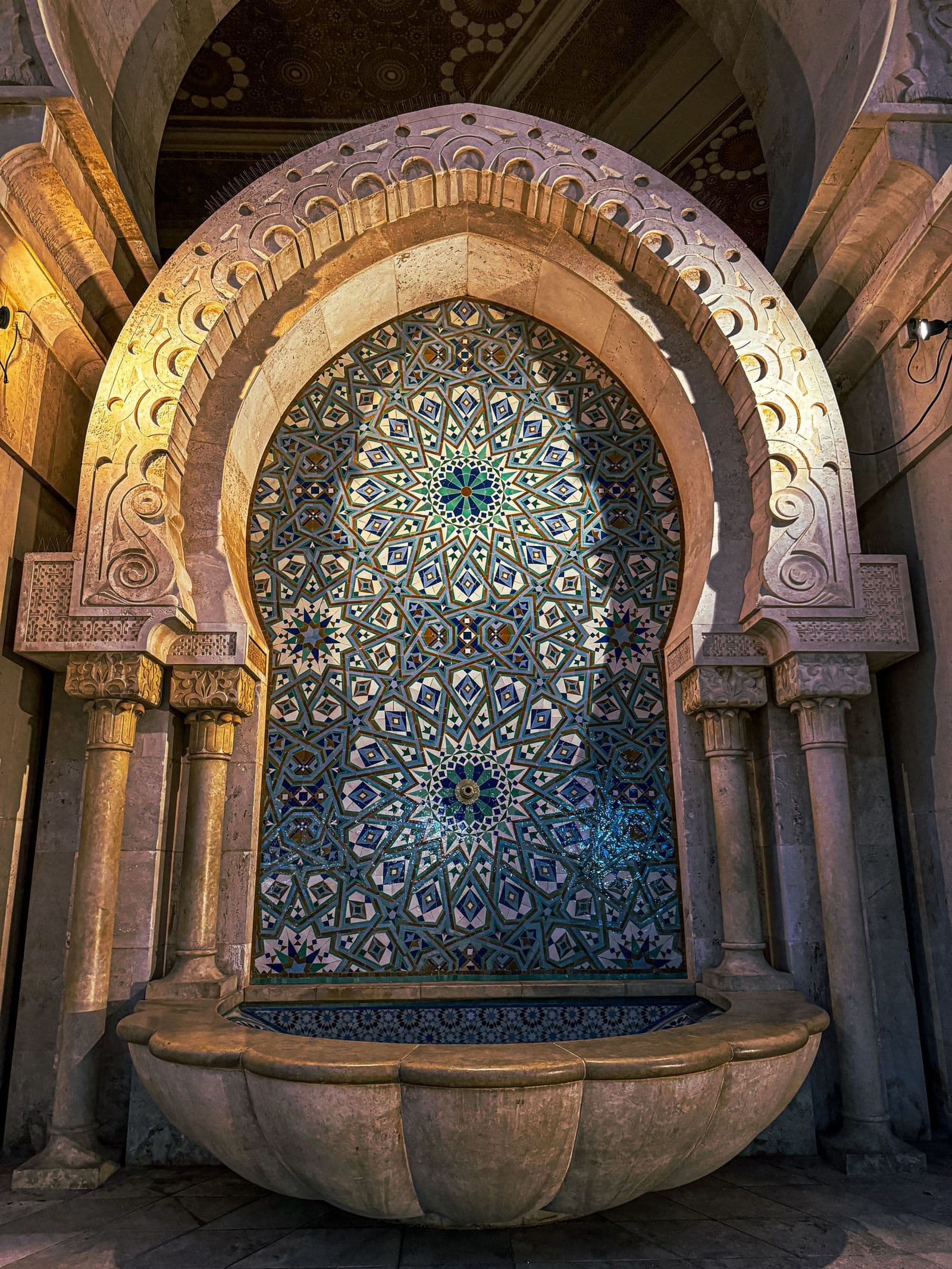
The word riad comes from the Arabic for garden, and that is the giveaway. It is not a house with a garden attached; it is a garden with a house built around it.
The plan
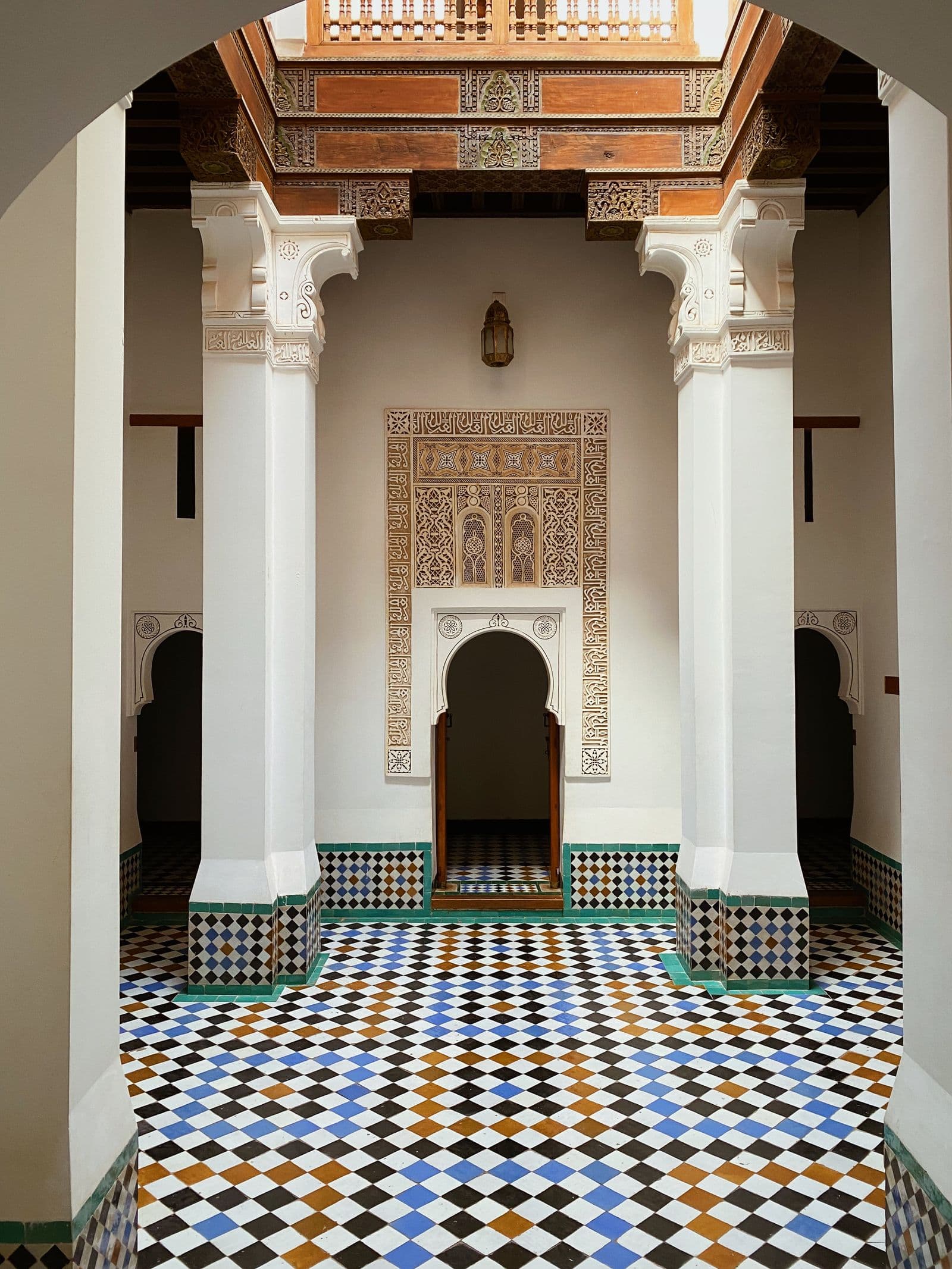
A riad is organised around a courtyard open to the sky, traditionally planted with four symmetrical beds — the four rivers of paradise — with a fountain at the crossing. Rooms are arranged around that void on every side, often over two or three storeys, and the symmetry is not decoration. It is the organising rule.
Everything faces in. The street elevation is a blank wall and a door.
Why the wall is blank
Visitors read those walls as hostile. They are not. They are doing three jobs at once:
- Thermal. Thick earth or brick with almost no openings keeps a courtyard ten degrees cooler than the lane outside in July.
- Acoustic. The medina is loud. The courtyard is not.
- Social. Domestic life is private. The wall is where that privacy is enforced, and the door is the only negotiation.
A riad does not present a façade to the street, because it does not consider the street its audience.
The vertical logic
Height does real work here. The courtyard functions as a chimney: hot air rises out of the open top and draws cooler air through the ground-floor rooms. Upper floors get the breeze and the views; ground floors get the cool.
The roof terrace is the last room in the house — for drying food, for sleeping in the worst of the summer, and for the only view that includes anybody else's building.
What to look for
- Zellij to about shoulder height, then carved plaster above it, then cedar. That vertical sequence is near-universal, and it tracks how easily each material takes damage.
- A bent entrance. The door rarely opens straight onto the courtyard; there is usually a dog-leg, so no one standing in the street can see in.
- Mismatched columns. Older riads absorbed material from wherever it could be got. Perfect consistency usually means a recent restoration.