A cooking class is the single most reliable good day in a Moroccan city trip. It is also one of the easiest things to book badly, because the format has been industrialised — there are classes in Marrakech that assemble forty people around pre-measured bowls and produce a tagine nobody learned anything from.
The difference between the good and the bad version is visible before you book.
What a good class looks like
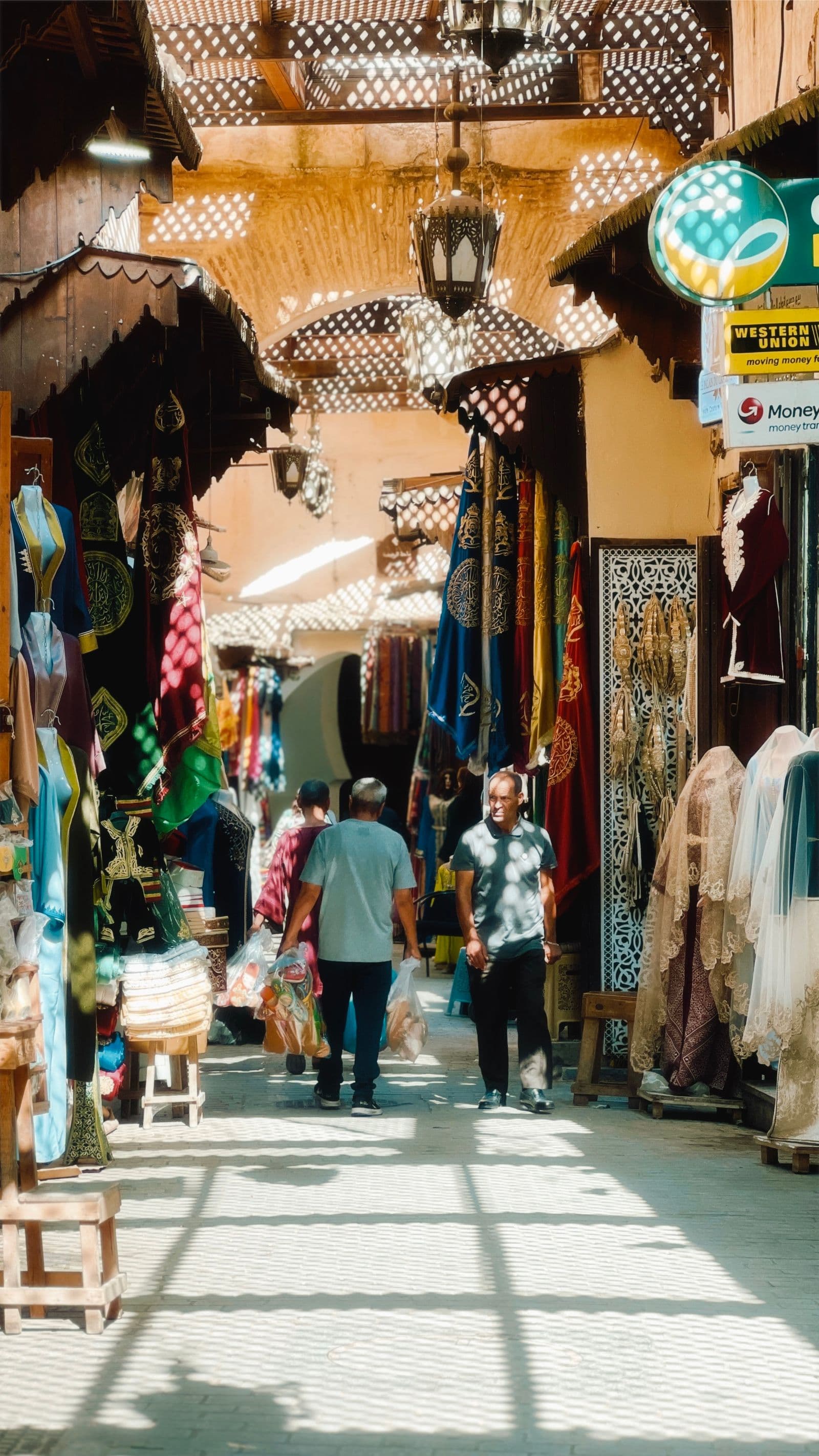
It starts at the market. The real ones begin with a basket and a walk to the souk — not to a shop the school owns, but to the vegetable sellers, the herbalist, the butcher. You buy what you are cooking. This is half the value, because the market is where the actual education is: what a beldi lemon is, how preserved lemons are sold from the barrel, why the butcher asks which cut and what for.
Small numbers. Six to eight people. Above that nobody gets to the stove.
You do the work. If someone else chops, browns and assembles while you watch, that is a demonstration, not a class. In a real one your hands are in the semolina for the twenty minutes it takes to work couscous grain properly.
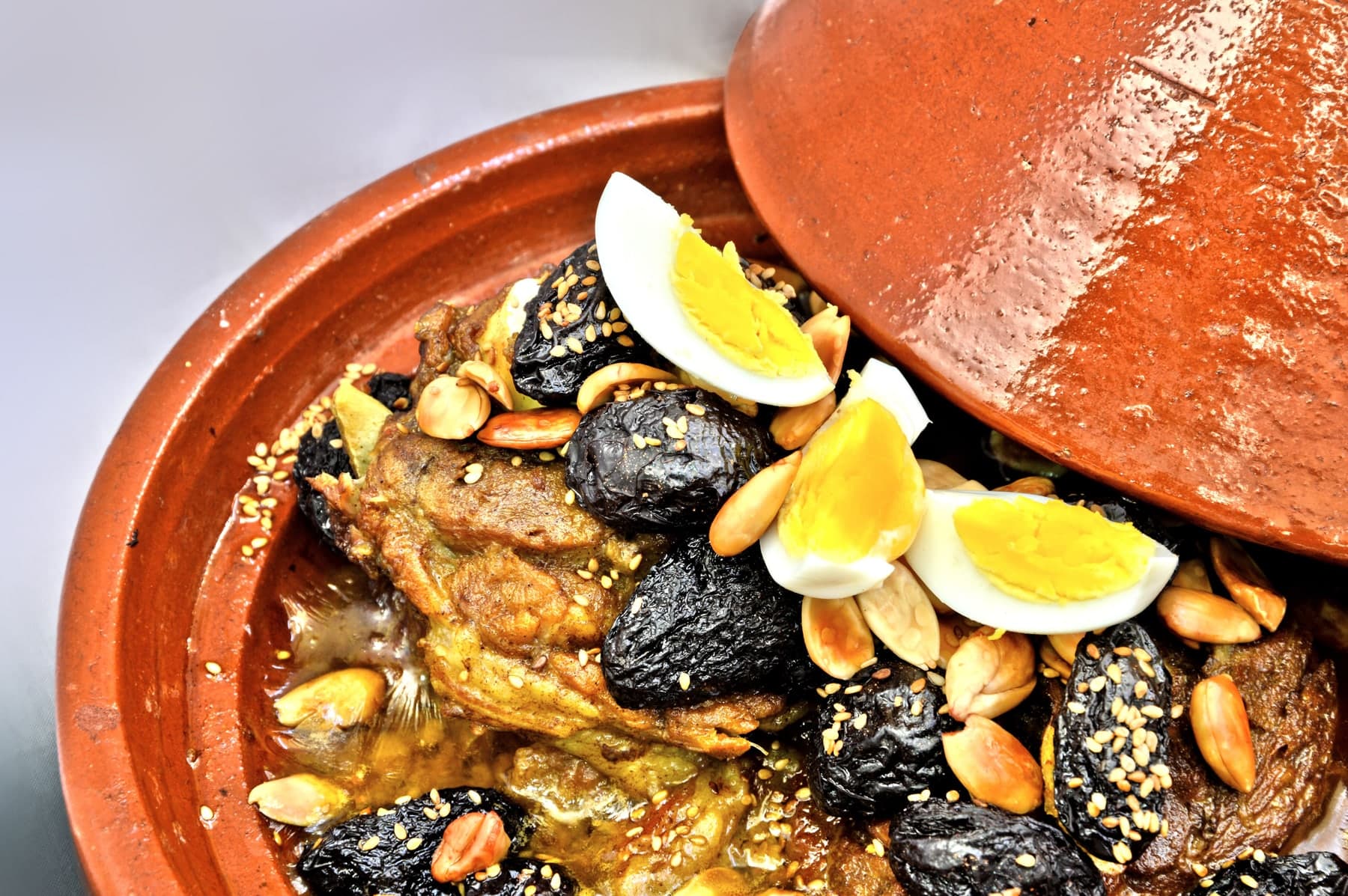
It teaches technique, not recipes. The useful things are transferable: how to layer a tagine so the meat steams rather than fries, why the conical lid matters, how to balance the sweet-savoury axis, how to make warqa pastry or at least watch someone do it.
A local cook teaches it. Often a dada — the professional household cooks who carry the real repertoire — and in the better classes she is the teacher, not the assistant.
What you should come away able to make
Ask what is on the syllabus before booking. A worthwhile class covers:
- A tagine, built from raw, with the layering explained — aromatics on the base, meat in the middle, vegetables leaning against the cone, liquid minimal.
- Moroccan salads — the cooked ones. Zaalouk (smoked aubergine and tomato), taktouka (pepper and tomato), carrot with cumin. These are the dishes visitors most want afterwards and the easiest to reproduce at home.
- Bread, ideally taken to the communal oven if the school is in a medina with a working ferran.
- Couscous rolled and steamed properly — three separate steamings over the broth, never boiled. Almost nobody outside Morocco does this and it is the thing that makes the difference.
- Mint tea, poured. Trivial, and everyone wants to learn it.
If the class produces only a tagine in ninety minutes, it is a lunch with steps.
Marrakech or Fez
Marrakech has the most classes and the widest range of quality. It is also where the industrialised versions are concentrated.
Fez is the better city to learn in, if your itinerary allows. The cuisine is more technical, the classes are generally smaller because there is less volume, and the market walk through Fez el-Bali is a considerably richer hour than the equivalent in Marrakech.
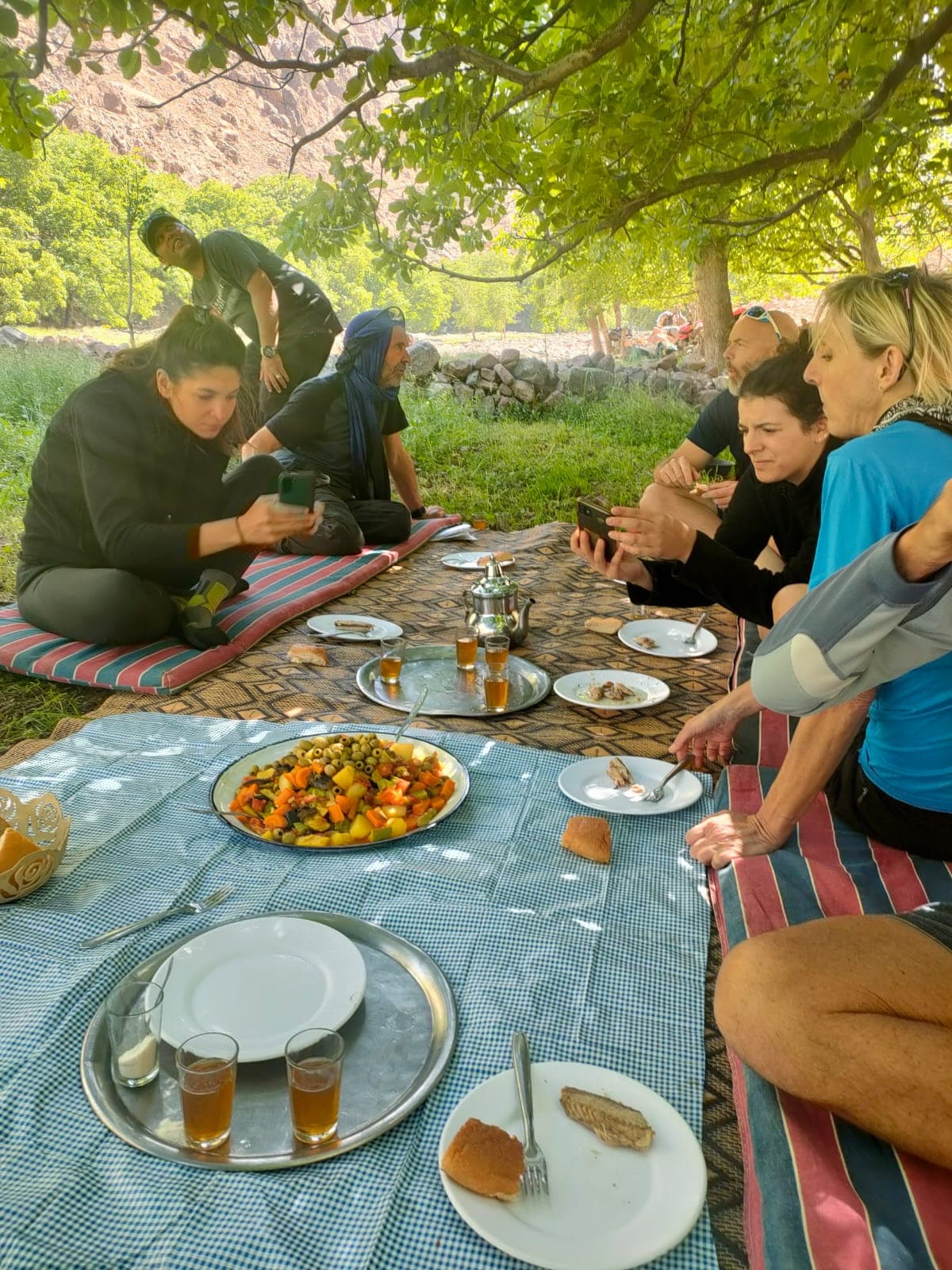
A rural class — in an Atlas village, cooking on gas or wood in a house — is a different and often better experience again, less polished and more genuinely domestic.
Shopping the souk: what to actually buy
The market half of the day is also when people buy things to take home, usually badly. The essentials:
Spices
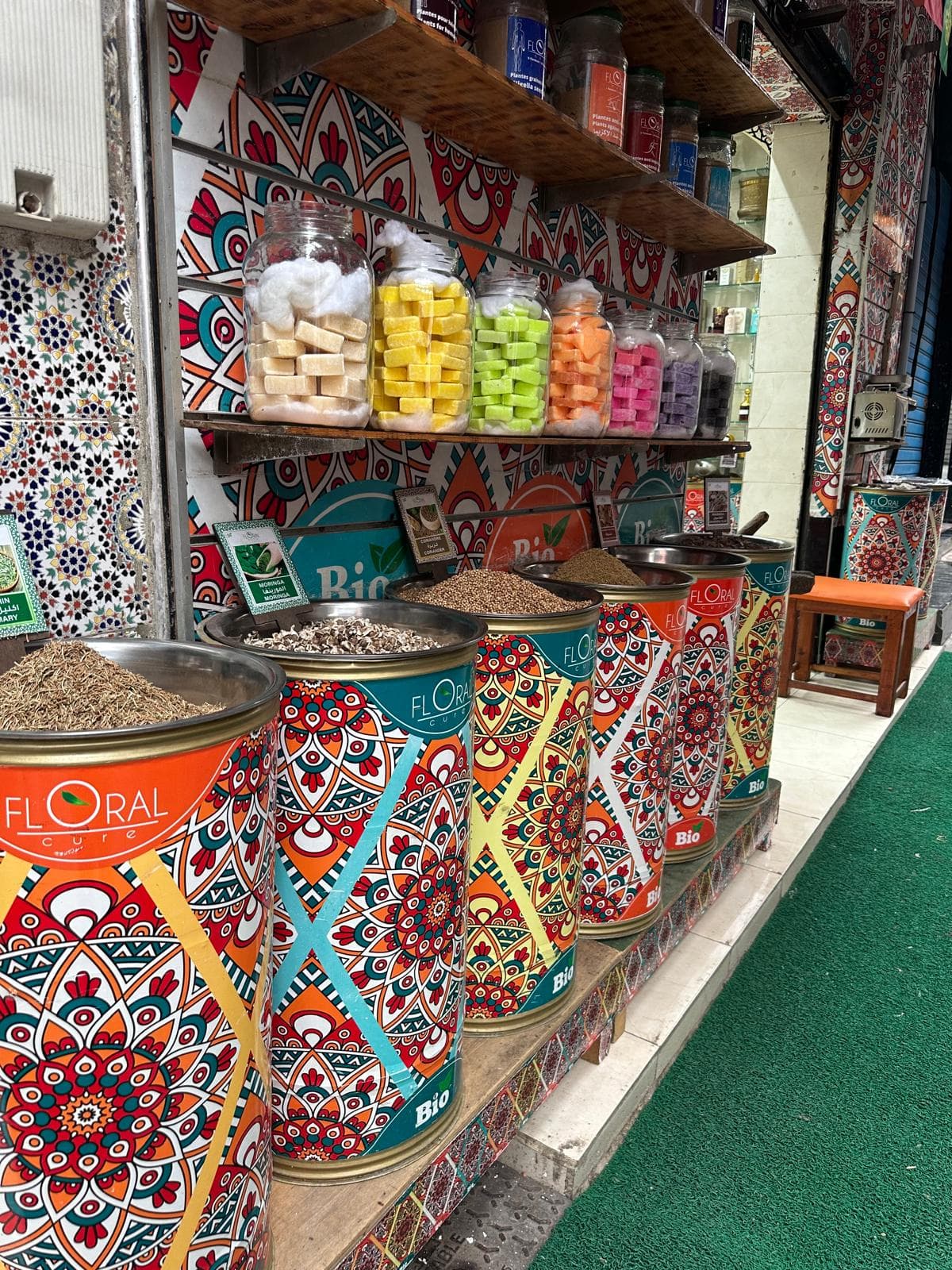
Buy from a spice merchant, not a "herboriste" with a display. The tourist-facing shops sell pretty pyramids and pre-boxed sets at four or five times the price, often mixed with filler.
Ras el hanout should be blended in front of you, or at least come from a shop that grinds. Every merchant's blend differs — that is the point of the name. Smell it: it should read floral and warm, with rosebud and cardamom, not just cumin and paprika.
Saffron comes from Taliouine in the Souss and it is real Moroccan saffron, one of the best in the world. It is sold by the gram and it is expensive; anything cheap is safflower or dyed. Buy threads, never powder.
Cumin is the workhorse and worth buying whole.
Avoid the pre-packed "Moroccan spice gift box." It is assembled for tourists and the contents are ordinary.
Argan oil
Two entirely different products with the same name.
Culinary argan oil is pressed from roasted kernels — deep amber, strongly nutty, and what you want for food. Cosmetic argan is unroasted, pale, and nearly odourless.
Buy from a women's cooperative in the Souss if you are passing — Essaouira and the Agadir hinterland have genuine ones — and be aware that many roadside "cooperatives" on the tourist route are shops using the word. Real culinary argan is not cheap; a 100ml bottle at a low price is cut with other oil.
Amlou — argan, almond and honey — travels well and is the best edible souvenir in the country.
Preserved lemons
Sold from open barrels in every market for very little. They keep for months in their own brine. Far better than anything you will find at home, and easy to carry in a sealed jar.
What not to bother with
"Berber tea" and generic herbal mixes aimed at visitors. Pre-ground spice blends in printed boxes. Argan sold in the medina at tourist prices when the cooperatives are two hours away. And saffron powder, always.
Practical
- Classes run roughly 350–700 dirham per person for a half day including the market walk and lunch; rural and private ones cost more.
- Most run morning into lunch, which is the right shape — you shop, cook, then eat what you made.
- Vegetarian and vegan versions are straightforward; Moroccan cooked salads and vegetable tagines carry a whole menu. Say so when booking.
- Bring a notebook. The recipes are given verbally and the quantities are approximate, because that is how the cuisine is taught.
- Ask whether the market walk is included. If it is not, the class is a kitchen session, and you should pay less for it.
The reason it is worth a half day
Moroccan food is difficult to understand from restaurants, because the restaurant repertoire is narrow and the good version of this cuisine is domestic. A cooking class is the most straightforward way into a kitchen, and the market hour beforehand explains more about how the country eats than a week of ordering from menus.
It is also the one souvenir that survives the trip. The carpet will end up in a hallway; the way to layer a tagine stays.