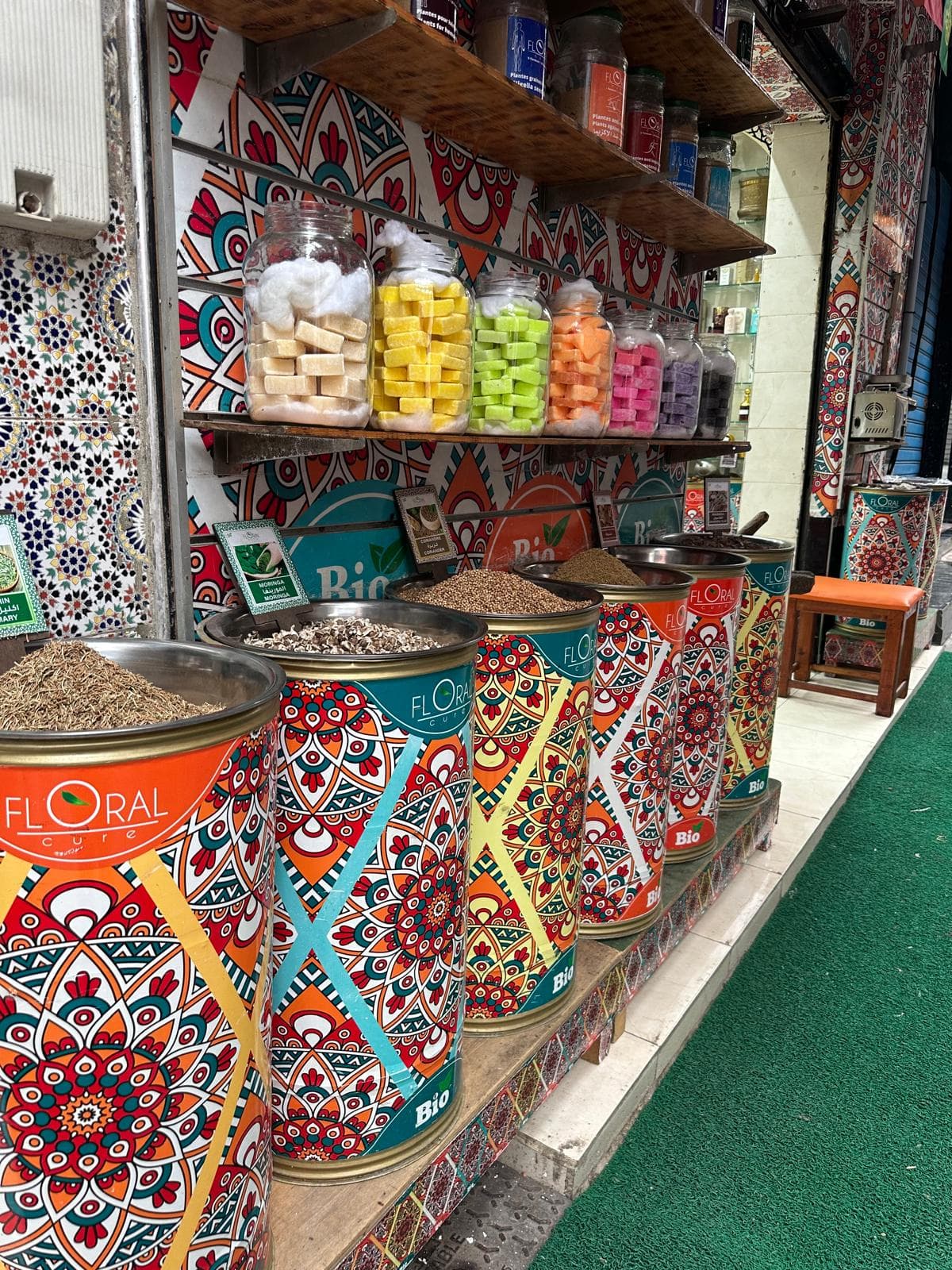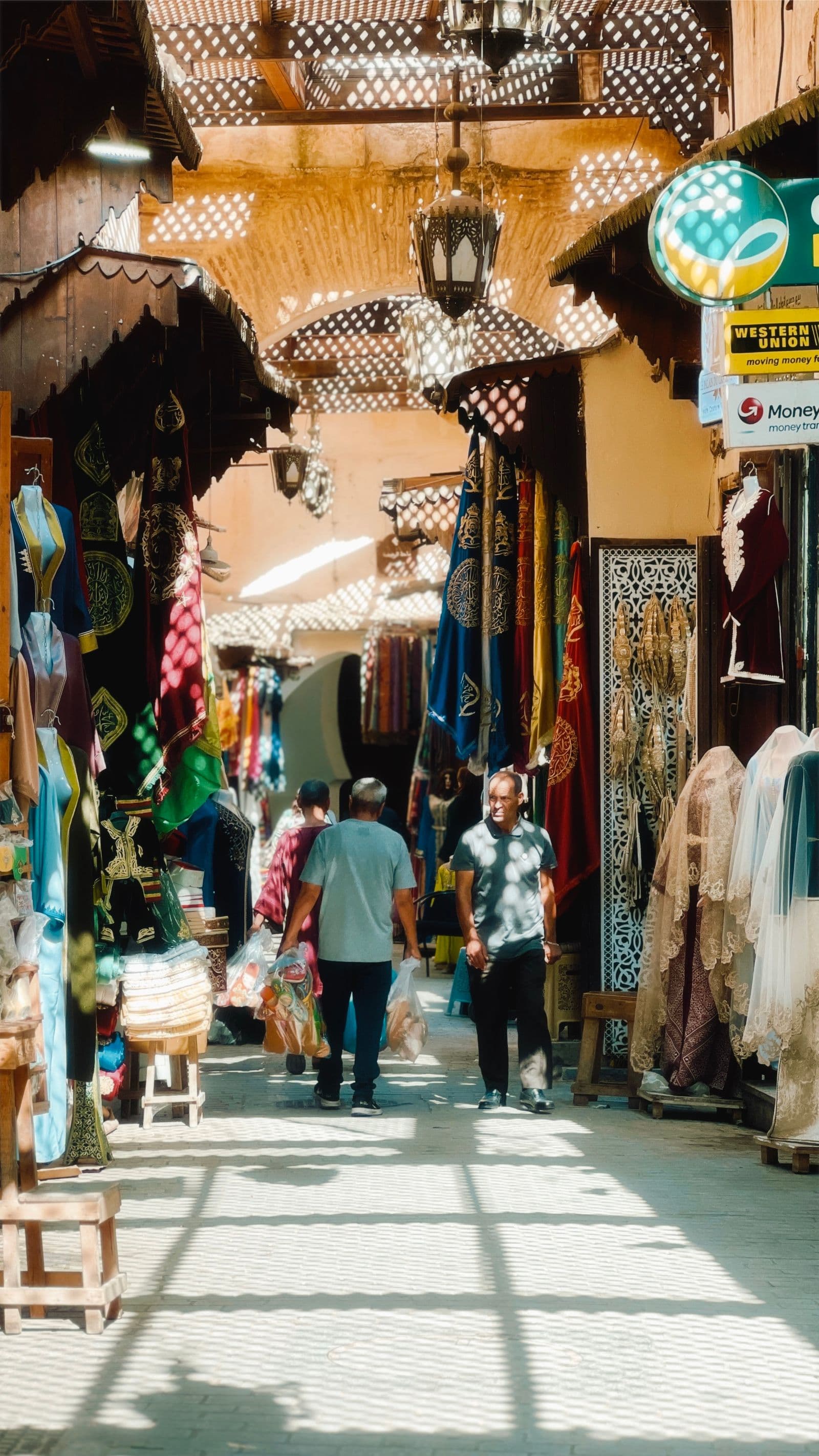
The first hour in the Fez or Marrakech souks feels like chaos, and visitors generally conclude the layout is random. It is not. Medina markets follow a spatial logic that is roughly a thousand years old, and it is legible once you know what orders it.
The organising principle is the mosque
Trades are arranged by their relationship to the congregational mosque, and the ordering is by cleanliness and nuisance.
Closest to the mosque: booksellers, bookbinders, perfumers, candlemakers. Clean, quiet, associated with scholarship and worship.
Next ring out: textiles, babouches, jewellery, metalwork in precious materials. Valuable, quiet enough, and requiring a customer who has come deliberately.
Further: carpenters, coppersmiths, ironmongers. Noise. You can hear this quarter before you reach it, which is the point — it is placed where the noise does not reach prayer.
Furthest, and usually near a gate and running water: tanneries, dyers, slaughterers, potters. Smell, waste and fire risk. The Chouara tannery in Fez is at the edge of the medina beside the river for exactly these reasons, and it has not moved in something like nine hundred years.
So: if you can smell it, you are near the edge. If you can hear hammering, you are in the middle. If it is quiet and smells of cedar and perfume, you are close to the mosque. That is a working navigation system.
The other structures
Within that pattern, four building types repeat.
The fondouk (or funduq) — a courtyard building, two storeys, arcaded. Ground floor for animals and goods, upper floor for merchants sleeping. These were the wholesale infrastructure of the caravan trade. Many now house workshops; a few in Fez and Marrakech have been restored and can be walked into.
The qissariya — the covered, lockable heart of the market where the highest-value goods were sold. Gated at night. Usually the densest and best-preserved part.
The hammam and the oven — every quarter had both, along with a mosque, a fountain and a Quranic school. That set of five is what defined a residential quarter as a functioning unit.
The fountain — tiled, often the finest thing on its street, and endowed as a charitable act. A good indication you are on a significant route rather than a back lane.
Practical navigation
Downhill in Fez goes toward the river and the tanneries; uphill goes toward the gates. Fes el-Bali is on a slope and this single fact resolves most disorientation.
Follow the flow of people in the late afternoon and you will be carried toward a main artery and eventually a gate.
The minarets are the landmarks. Kairaouine in Fez, Koutoubia in Marrakech. Look up at junctions.
Your phone works. GPS is imperfect between high walls but not useless, and downloading the offline map before you go in is sensible rather than defeatist.
On buying
Prices are negotiated for craft goods and fixed for food and household items. Attempting to haggle over vegetables marks you out immediately.
For craft: the first price is an opening, not an insult. A counter at somewhere between a third and a half is normal, and the settlement usually lands around sixty per cent of the opening. None of this is adversarial — it is a social transaction with a form, and doing it briskly and cheerfully is the correct register. Walking away is a legitimate move and is sometimes met with a better price at the door.
If you genuinely do not want to buy, do not begin. Engaging with a price and then leaving wastes real time for someone working on margin.
What is worth buying
Things where the workshop is visible: carpets in the Middle Atlas and the southern towns, pottery in Safi and Fez, leather in Fez, metalwork in Marrakech, argan oil from a women's cooperative in the Souss.
Ask to see the work happening. In Fez and Marrakech you generally can, and the back rooms of the souks are more interesting than the fronts.