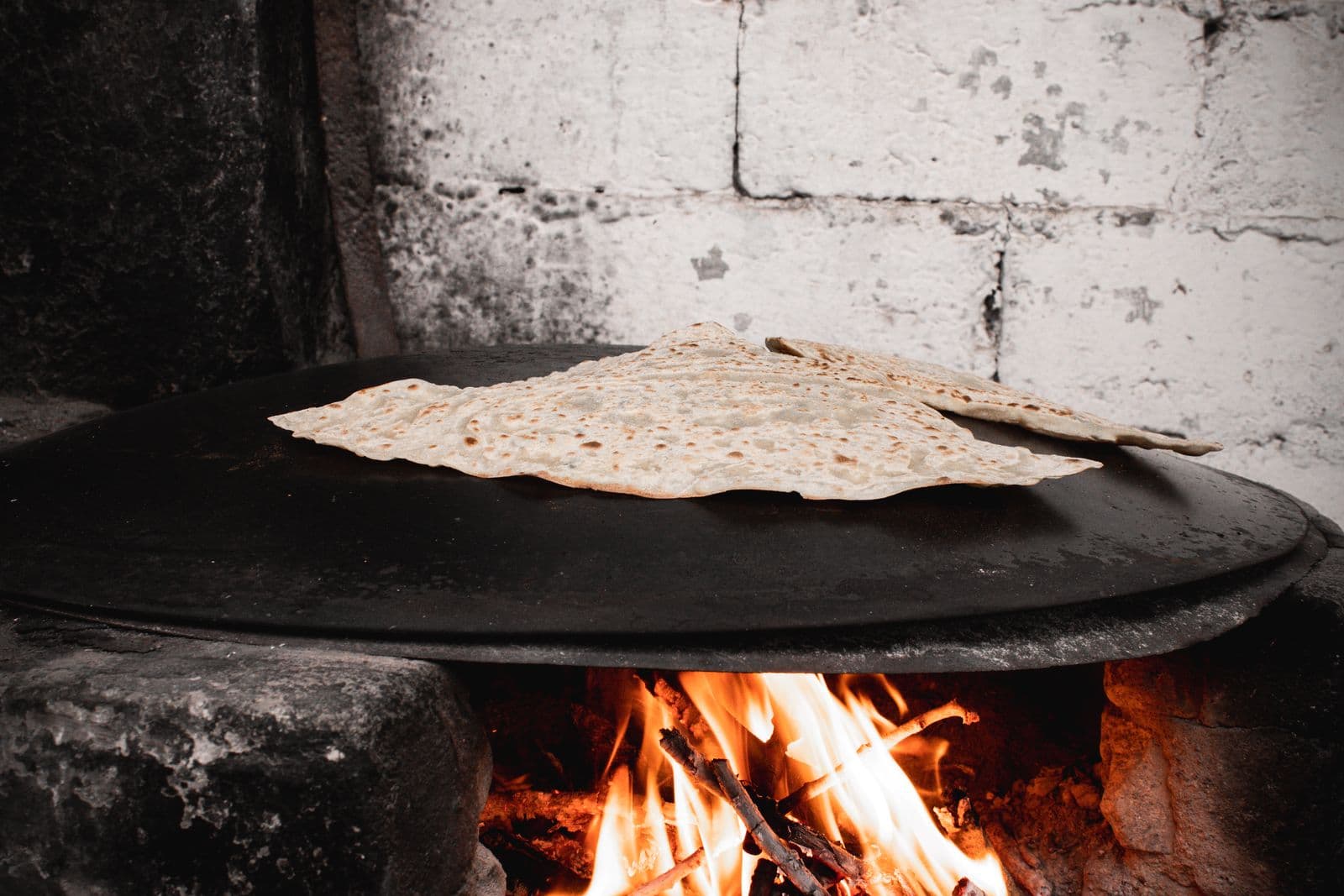
The farran is one of the five institutions a traditional medina quarter was built around, alongside the mosque, the fountain, the hammam and the school. It is the communal oven, and in parts of Fez it is still working exactly as intended.
How it works
Households make their own dough at home. Someone — often a child — carries the tray to the oven, where the baker slides it into the wood-fired chamber and returns it, baked, for a few dirhams.
The obvious question is how anyone gets the right bread back. The answer is that every family shapes their loaves slightly differently, and the baker knows all of them.
He does not label anything. He has simply been looking at the same two hundred households' bread for thirty years.
Why it persists
Home ovens exist now, and plenty of families have one. The farran survives anyway, for reasons that are only partly about baking:
- Fuel. One large wood oven heated all day is far more efficient than two hundred small ones.
- Heat. Running an oven at home in a Fez summer is genuinely unpleasant.
- Result. A wood-fired floor oven at high heat produces a crumb a domestic oven cannot match.
- Contact. The trip to the oven is a reason to be in the street twice a day.
Going yourself
You cannot really participate as a visitor — you have no dough and no standing in the queue — but you can buy directly, and it is worth doing early. Go before eight. Ask first, and ask properly; a working oven is not a photo opportunity, and the baker is busy.
Buy a loaf, tear it while it is too hot to hold, and eat it in the street.